This is a great clip from a TV show I have never watched, but which I understand is (or was?) quite popular. If there was more of this sort of thing on TV, I might actually watch it. Let me know if that ever happens, please.
HT - Keith Brooks at City of God.
Showing posts with label Liberal Theology. Show all posts
Showing posts with label Liberal Theology. Show all posts
Wednesday, August 17, 2011

Thursday, June 16, 2011
Homosexuality, Biblical Interpretation and the Christian Mind
As I noted in my last post, the moral and theological clarity of the Roman Catholic Church on the issue of homosexuality, as in the case of the formidable Archbishop Timothy Dolan of New York, is commendable. Unfortunately, the Protestant trumpet blows with a rather uncertain sound.
Evangelicals, for the most part, are standing firm on Scripture, but have failed to reflect theologically on the doctrine of human nature. As a result, the secular disciplines of psychology and sociology often exert more influence on Evangelicals' understanding of human nature, including sexuality, than Scripture, Tradition or systematic theology. This is a worrisome fact for the future of Evangelical faithfulness.
But if Evangelicals have a weak understanding of human nature, Liberal Protestants have completely abandoned the Christian doctrine of the human person and embraced a heretical tradition stemming from Rousseau, Marx, and Dewey, which views humans through the mechanical philosophy of Bacon, Newton, Kant and Nietzsche.
In Modernity, human nature is conceptualized dualistically as matter plus spirit. Matter is seen as completely under the control of blind, mechanistic, natural forces, while spirit is the realm of freedom. However, many moderns are not convinced that the human soul is anything more than myth. Those who do believe in the soul tend to reduce it to matter in various ways.
As a result of this kind of dualism (which is very different from the dualism of orthodox Christianity), Modernity is fundamentally confused about human nature, ethics and natural law. Modern dualism posits an agonistic conflict between the realm of freedom (spirit) and the realm of necessity (matter). They are related in a mysterious and tragic manner. But Christian dualism views the realms of freedom and necessity as intimately and harmoniously related to each other and the dissonance (perceived in both Modernity and Christianity) is caused, not by agonistic metaphysical mystery, but by sin. So the fundamental conflict in Christian anthropology is not between nature and freedom, but between the obedient and joyful will and the bent and destructive will (i.e. between love and sinful rebellion).
For Moderns, the assertion of will is not the natural function of the human being in the service of joyful obedience to the law, but essentially rebellion against nature. For Modernity, nature is incoherent chaos, not creation. Modernity seeks to rebel against nature in the name of humanism and thereby feels itself to be both noble and anti-Christian simultaneously for it cannot understand how or why Christianity can be so peacefully accepting of God's creation as revelatory of the plan of the Loving Creator. For Modernity, nature is to be feared, tamed and ultimately overcome. For Christianity, on the other hand, love brings nature and human freedom into harmony.
Liberal Protestantism has completely embraced the Modern understanding of human nature, God and creation. Therefore, it is no longer Christian. We have moved beyond differences of understanding of one theological reality into the realm of the denial of the Creed itself. While the hierarchy of the Roman Catholic Church, Eastern Orthodoxy, and Evangelicalism all remain within the realm of orthodoxy, Liberal Protestantism has separated itself from the Church universal and embraced heresy. Anyone who embraces the Liberal Protestant heresy is no longer a Christian except in the sense of having some sort of vague Christian heritage. The best name for this position is "post-Christian."
It is confusing for the general public, journalists, politicians and others who wish to know what Christianity thinks of public policy issues like abortion, homosexuality, marriage and so on. It is confusing because non-Christians have seized control of the denominational machinery, endowments and institutions of formerly Christian denominations. They still spout a lot of Christian phrases and slogans, but they have denied the content of the orthodox faith contained in Scripture and affirmed by all true Christians down through the centuries. Is it too radical to imagine that this shell of a religion may form the outward trappings of the anti-Christian religion that will be used by Satan and his minions, including the Antichrist, to deceive as many as possible in the last days?
What is the significance of the embrace of homosexuality by liberal Protestantism? It goes far beyond disagreement on just another ethical issue. Scripture itself clearly indicates that only a mind that is far gone into rebellion against God and the Truth can possible be so self-deceived and corrupt as to call homosexuality good. Romans 1 is often debated as to its meaning, but its real hermeneutical and theological significance is seldom appreciated.
I want to make three points that come out of Rom. 1:18-32, which is probably the most important passage in the Bible on the issue of homosexuality and hermeneutics. If you are not familiar with this passage, please go and read it carefully right now. What follows is not a complete exposition of the passage but just some important points it teaches.
1. In vv. 18-22 the Holy Spirit informs us that the natural man is under the wrath of God because of his rejection of natural revelation. Even apart from any knowledge of Scripture, the gentiles have rejected what can be known of God and human nature from creation and have thus incurred the wrath of God. As a result of this, we read in vv. 21-22:
2. The second point we need to note from this passage is the triple "God gave them up" in vv. 24, 26 and 28. It says that God gave them up to the lusts of their hearts in v. 24, to dishonorable passions in v. 26 and to a debased mind in v. 28. In v. 18 it says that men suppressed the truth and failed to honor God. In v. 25 it says that men exchanged the truth of God for a lie and in v. 27 it says that men gave up natural relations with women. So we see here a pattern in which men reject the truth and God rejects them. There are three stages. First, men reject the truth itself and then they reject the behavior which is the living out of that truth. Finally, they lose the ability even to know or understand the truth itself: their minds become darkened and they begin to call good evil and evil good.
3. The third point I wish to emphasize from this passage is that this rejection of the truth results in a generally debased mind which is no longer able to function properly as God intended. Conscience is seared, the mind is darkened and people can no longer perceive reality clearly. Those in this condition are untrustworthy guides to the interpretation of Scripture as a whole.
This "debased mind" is the opposite of the "Christian mind" that is needed in order for the interpreter of Scripture to discern correctly the meaning of Scripture. In vv. 29-31 we find those who have this debased mind no longer able to understand right from wrong and in v. 32 we find them giving approval to actions that lead to death. Such people are a menace because they advise the unwary to engage in actions that lead to death. These people are extremely dangerous spiritually because they have an appearance of religion and learning, but they are incapable of perceiving the truth.
Those liberal Protestants (and their Catholic fellow travelers) who have gotten to the place where they actually think that evil is good and good is evil actually encourage those who depend on their advice to do evil. Their darkened minds prevent them from interpreting Scripture according to its center in Jesus Christ; instead, they impose ideologies derived from modern philosophies upon Scripture and call it interpretation. Like the Gnostics of the second century, they actually make the philosophical systems derived from pagan culture the framework into which Scripture is pressed and distorted.
A good rule for lay people to follow in matters of religious authority is to let their common sense and Christian Tradition guide them in matters of Scriptural interpretation relating to obvious evils like homosexuality and to be very wary of religious teachers who try to invert morality as liberal Protestants do. In other words, if someone is so far out of touch with reality that he tries to convince you that up is down and homosexuality is normal, then have nothing to do with such a one. Such a person is unlikely to understand the Bible at all.
Peter warns the laity of the church that false teachers will rise up and bring in secret heresies. (II Pet. 2:1) Likewise Paul warns the Ephesian elders that after he is gone, wolves will come in speaking twisted things and draw away many. (Acts 20:29-30)
When Christians leave liberal Protestant denominations that have embraced homosexuality they are only doing what is logical and safe for the souls entrusted to their care. Pastors and parents must answer for how they shepherd their flocks and families and exposing them to religious leaders who have rejected Christ, the Gospel and the authority of Scripture in order to embrace modern heresies is irresponsible. As important as Christian unity is, we must realize that there can be no Christian unity between Christians and non-Christians. And heretical religious leaders who have rejected God and truth and twisted Scripture into a pretzel trying to justify their rejection of truth are not Christians.
Homosexuality is a kind of bright red line beyond which difference of interpretation between Christians mutates into a clear rejection of God. Beware especially of those who claim that homosexuality is just a minor issue about which Christians who agree on everything else can agree to disagree. This tactic buys time for the heretics to gather strength until they can impose their doctrine on the denomination or institution as a whole.
Also watch out for those who claim that you can't love someone unless you accept their sin as normal. No one does this consistently. In fact, no religious group in the world is more judgmental, moralizing and condeming of the politically incorrect than liberal Protestantism. When they plead with us who are orthodox and traditional not to judge or condemn those who engage in sexual vices, they are utter hypocrites and their arguments fall flat.
In short, homosexuality is a canary in the coal mine when it comes to Scriptural interpretation. It is an issue which reveals the condition of the mind of the one who discusses it more clearly than most specific issues. Homosexuality itself is rather beside the point; what is important is the kind of mind that could be confused about something as obvious and clear cut as this issue is.
Evangelicals, for the most part, are standing firm on Scripture, but have failed to reflect theologically on the doctrine of human nature. As a result, the secular disciplines of psychology and sociology often exert more influence on Evangelicals' understanding of human nature, including sexuality, than Scripture, Tradition or systematic theology. This is a worrisome fact for the future of Evangelical faithfulness.
But if Evangelicals have a weak understanding of human nature, Liberal Protestants have completely abandoned the Christian doctrine of the human person and embraced a heretical tradition stemming from Rousseau, Marx, and Dewey, which views humans through the mechanical philosophy of Bacon, Newton, Kant and Nietzsche.
In Modernity, human nature is conceptualized dualistically as matter plus spirit. Matter is seen as completely under the control of blind, mechanistic, natural forces, while spirit is the realm of freedom. However, many moderns are not convinced that the human soul is anything more than myth. Those who do believe in the soul tend to reduce it to matter in various ways.
As a result of this kind of dualism (which is very different from the dualism of orthodox Christianity), Modernity is fundamentally confused about human nature, ethics and natural law. Modern dualism posits an agonistic conflict between the realm of freedom (spirit) and the realm of necessity (matter). They are related in a mysterious and tragic manner. But Christian dualism views the realms of freedom and necessity as intimately and harmoniously related to each other and the dissonance (perceived in both Modernity and Christianity) is caused, not by agonistic metaphysical mystery, but by sin. So the fundamental conflict in Christian anthropology is not between nature and freedom, but between the obedient and joyful will and the bent and destructive will (i.e. between love and sinful rebellion).
For Moderns, the assertion of will is not the natural function of the human being in the service of joyful obedience to the law, but essentially rebellion against nature. For Modernity, nature is incoherent chaos, not creation. Modernity seeks to rebel against nature in the name of humanism and thereby feels itself to be both noble and anti-Christian simultaneously for it cannot understand how or why Christianity can be so peacefully accepting of God's creation as revelatory of the plan of the Loving Creator. For Modernity, nature is to be feared, tamed and ultimately overcome. For Christianity, on the other hand, love brings nature and human freedom into harmony.
Liberal Protestantism has completely embraced the Modern understanding of human nature, God and creation. Therefore, it is no longer Christian. We have moved beyond differences of understanding of one theological reality into the realm of the denial of the Creed itself. While the hierarchy of the Roman Catholic Church, Eastern Orthodoxy, and Evangelicalism all remain within the realm of orthodoxy, Liberal Protestantism has separated itself from the Church universal and embraced heresy. Anyone who embraces the Liberal Protestant heresy is no longer a Christian except in the sense of having some sort of vague Christian heritage. The best name for this position is "post-Christian."
It is confusing for the general public, journalists, politicians and others who wish to know what Christianity thinks of public policy issues like abortion, homosexuality, marriage and so on. It is confusing because non-Christians have seized control of the denominational machinery, endowments and institutions of formerly Christian denominations. They still spout a lot of Christian phrases and slogans, but they have denied the content of the orthodox faith contained in Scripture and affirmed by all true Christians down through the centuries. Is it too radical to imagine that this shell of a religion may form the outward trappings of the anti-Christian religion that will be used by Satan and his minions, including the Antichrist, to deceive as many as possible in the last days?
What is the significance of the embrace of homosexuality by liberal Protestantism? It goes far beyond disagreement on just another ethical issue. Scripture itself clearly indicates that only a mind that is far gone into rebellion against God and the Truth can possible be so self-deceived and corrupt as to call homosexuality good. Romans 1 is often debated as to its meaning, but its real hermeneutical and theological significance is seldom appreciated.
I want to make three points that come out of Rom. 1:18-32, which is probably the most important passage in the Bible on the issue of homosexuality and hermeneutics. If you are not familiar with this passage, please go and read it carefully right now. What follows is not a complete exposition of the passage but just some important points it teaches.
1. In vv. 18-22 the Holy Spirit informs us that the natural man is under the wrath of God because of his rejection of natural revelation. Even apart from any knowledge of Scripture, the gentiles have rejected what can be known of God and human nature from creation and have thus incurred the wrath of God. As a result of this, we read in vv. 21-22:
"For although they knew God, they did not honor him as God or give thanks to him, but they became futile in their thinking, and their foolish hearts were darkened. Claiming to be wise, they became fools." (ESV)So the first thing this passage says is that sin makes us stupid, or rather, that by sinning we make ourselves stupid. This is why what seems perfectly natural and common sensible is turned upside down by people professing to be religious, educated and intelligent.
2. The second point we need to note from this passage is the triple "God gave them up" in vv. 24, 26 and 28. It says that God gave them up to the lusts of their hearts in v. 24, to dishonorable passions in v. 26 and to a debased mind in v. 28. In v. 18 it says that men suppressed the truth and failed to honor God. In v. 25 it says that men exchanged the truth of God for a lie and in v. 27 it says that men gave up natural relations with women. So we see here a pattern in which men reject the truth and God rejects them. There are three stages. First, men reject the truth itself and then they reject the behavior which is the living out of that truth. Finally, they lose the ability even to know or understand the truth itself: their minds become darkened and they begin to call good evil and evil good.
3. The third point I wish to emphasize from this passage is that this rejection of the truth results in a generally debased mind which is no longer able to function properly as God intended. Conscience is seared, the mind is darkened and people can no longer perceive reality clearly. Those in this condition are untrustworthy guides to the interpretation of Scripture as a whole.
This "debased mind" is the opposite of the "Christian mind" that is needed in order for the interpreter of Scripture to discern correctly the meaning of Scripture. In vv. 29-31 we find those who have this debased mind no longer able to understand right from wrong and in v. 32 we find them giving approval to actions that lead to death. Such people are a menace because they advise the unwary to engage in actions that lead to death. These people are extremely dangerous spiritually because they have an appearance of religion and learning, but they are incapable of perceiving the truth.
Those liberal Protestants (and their Catholic fellow travelers) who have gotten to the place where they actually think that evil is good and good is evil actually encourage those who depend on their advice to do evil. Their darkened minds prevent them from interpreting Scripture according to its center in Jesus Christ; instead, they impose ideologies derived from modern philosophies upon Scripture and call it interpretation. Like the Gnostics of the second century, they actually make the philosophical systems derived from pagan culture the framework into which Scripture is pressed and distorted.
A good rule for lay people to follow in matters of religious authority is to let their common sense and Christian Tradition guide them in matters of Scriptural interpretation relating to obvious evils like homosexuality and to be very wary of religious teachers who try to invert morality as liberal Protestants do. In other words, if someone is so far out of touch with reality that he tries to convince you that up is down and homosexuality is normal, then have nothing to do with such a one. Such a person is unlikely to understand the Bible at all.
Peter warns the laity of the church that false teachers will rise up and bring in secret heresies. (II Pet. 2:1) Likewise Paul warns the Ephesian elders that after he is gone, wolves will come in speaking twisted things and draw away many. (Acts 20:29-30)
When Christians leave liberal Protestant denominations that have embraced homosexuality they are only doing what is logical and safe for the souls entrusted to their care. Pastors and parents must answer for how they shepherd their flocks and families and exposing them to religious leaders who have rejected Christ, the Gospel and the authority of Scripture in order to embrace modern heresies is irresponsible. As important as Christian unity is, we must realize that there can be no Christian unity between Christians and non-Christians. And heretical religious leaders who have rejected God and truth and twisted Scripture into a pretzel trying to justify their rejection of truth are not Christians.
Homosexuality is a kind of bright red line beyond which difference of interpretation between Christians mutates into a clear rejection of God. Beware especially of those who claim that homosexuality is just a minor issue about which Christians who agree on everything else can agree to disagree. This tactic buys time for the heretics to gather strength until they can impose their doctrine on the denomination or institution as a whole.
Also watch out for those who claim that you can't love someone unless you accept their sin as normal. No one does this consistently. In fact, no religious group in the world is more judgmental, moralizing and condeming of the politically incorrect than liberal Protestantism. When they plead with us who are orthodox and traditional not to judge or condemn those who engage in sexual vices, they are utter hypocrites and their arguments fall flat.
In short, homosexuality is a canary in the coal mine when it comes to Scriptural interpretation. It is an issue which reveals the condition of the mind of the one who discusses it more clearly than most specific issues. Homosexuality itself is rather beside the point; what is important is the kind of mind that could be confused about something as obvious and clear cut as this issue is.
Tuesday, May 10, 2011
The Heresy of Liberal Pacifism
John Deer is a Roman Catholic priest who advocates a fanatical brand of pacifism that refuses to recognize any difference between the Church and the State or between the future Kingdom of God that will come with the Return of Christ and the fallen world between the first and second comings of Christ.
He responds to the killing of Osama bin Laden by positing a disgusting moral equivalence between the US and Al Qaeda and between terrorists and the use of the sword by the civil authority to mete out justice. For him State punishment of evildoers is the same thing as personal revenge.
He writes as follows: [My comments are in square brackets and in red]
He responds to the killing of Osama bin Laden by positing a disgusting moral equivalence between the US and Al Qaeda and between terrorists and the use of the sword by the civil authority to mete out justice. For him State punishment of evildoers is the same thing as personal revenge.
He writes as follows: [My comments are in square brackets and in red]
"It had been a stimulating weekend. We spent three days reading the Gospel of Matthew, chapters 5-7, line by line. There we discovered that Jesus is clear, consistent and insistent about creative nonviolence: “Blessed are the peacemakers. Offer no violent resistance to one who does evil. When someone strikes you on the right cheek, turn and offer the other cheek. Love your enemies and pray for your persecutors. Do not judge. Forgive and you will be forgiven. Seek first God’s reign and God’s justice.”
We could not find one instance where Jesus waffles on nonviolence. [He never considers other parts of the Bible and fails to acknowledge that the interpretation of Jesus' words he offers makes the Gospel texts contradict Joshua, Kings, Romans and Revelation. This is to fall back into the ancient heresy of Marcionism.] He never says, “However, if your enemies are particularly vile, kill them all.” He does not offer a set of conditions to justify warfare. He commands universal, nonviolent love. He goes even further in his politics of peace to argue for this unusual practice because, he says, it is the very nature of God. Then you will be sons and daughters of God “who makes the sun rise on the bad and the good and causes the rain to fall on the just and the unjust,” he announces.
Many in our group expressed bewilderment at such teachings. It felt to some like a crash course in Mandarin. Too challenging, too hard, too impractical, too scary! they said over and over. [Their gut feeling was right on in this case.]These are the basic guidelines for Christian conduct in the world, I replied. Following these teachings, Christians reject violence, vengeance, retaliation, war, and killing, and instead practice universal love, boundless compassion, generous forgiveness and persistent peacemaking. Even if other Christians reject Jesus’ nonviolence and parade around like wolves in sheep’s clothing, I suggested, we are still summoned to walk this narrow path.
Gandhi took these words to heart, I pointed out. He is one of those rare figures who read from the Sermon on the Mount every day for many decades to strengthen his nonviolence and satyagraha. [In light of Pakistan's prominent place in world news this week, we might recall that the existence of Pakistan, a perpetually violent and close to failed state, is part of Ghandi's legacy.]
“Those who live by the sword will die by the sword,” Jesus told his disciples the night before he was assassinated. Violence in response to violence only leads to further violence, he taught. Retaliatory violence will not break the downward spiral of violence. It will only fan the flames of hatred and war. Active nonviolence breaks the cycle of violence. Nonviolently resist those who do evil; don’t become like them. Create justice for everyone and you will reap a great harvest of peace. [This is a Utopian perspective that owes more to Pelagius and J. J. Rousseau than to St. Paul, St. Augustine and mainstream Christianity.]
I think Jesus’ teachings on the futility of retaliatory violence and the possibilities of active nonviolence have long ago been proven true. Our wars, our weapons, our state terrorism have not brought peace. [Of course not! Who says anyone can bring peace other than our Lord Jesus Christ, who will bring peace when he returns. What hubris to think that there must be some magic solution we can discover to make a fallen world unfallen.] The U.S. assassination of bin Laden, like the death of Saddam Hussein, will not end terrorism or bring peace. It will only inspire further violence, and bring new terrorist attacks against us. [Maybe it will and maybe it will deter terrorist attacks. In any case, the alternative is surrender to radical Islam and to advocate that is treasonous and evil.]
Bombing and killing civilians in Iraq, Afghanistan and Pakistan only fuels the spiral of violence and inspires a new generation to retaliate against us. Jesus was right. Stop killing people, treat people nonviolently, and you will have a better chance of being treated nonviolently too. [A better chance? I don't think so. This is naive.]
But who follows these teachings anymore? Very few. We have twisted Christianity so that God will bless our wars. If Osama bin Laden did not represent true Islam and the All-Merciful One, neither do George W. Bush or Barack Obama represent true Christianity and the nonviolent Jesus.
In fact, Al Qaeda and the Pentagon are two sides of the same coin. [Here it comes: moral equivalence between liberal democracy and militant Islamofascism. This is morally obtuse. Look at Muslim countries like Iran and Saudi Arabia; only a morally deficient person could doubt that they are worse than Western, liberal democracies. The treatment of women alone is decisive.] In the end, both spend their resources trying to kill, and end up killing innocent civilians. [The difference is stark: one does it accidentally and reluctantly in defense of the innocent while the other does it as a matter of deliberate policy with no conscience.] If Osama bin Laden was guilty of killing innocent civilians, so are George W. Bush, Dick Cheney, Donald Rumsfeld, Barak Obama and Hillary Clinton guilty of killing innocent civilians. But the truth is that the U.S. military has killed many more people -- millions more -- than Al Qaeda. Both need to be stopped and dismantled. [This is not cute or a matter of "high ideals." This is utter depravity. If we followed this advice millions of innocents would die unnecessarily. This is dangerous advice.]
The U.S. should immediately end its evil wars in Afghanistan, Pakistan, Iraq and Libya, bring all its troops home, dismantle its nuclear weapons, close its military bases, feed the world’s poor, and institutionalize nonviolent, non-military methods of resolving global conflict. Its method of global domination and imperial policing has utterly failed. The cheering crowds outside the White House after Obama’s announcement symbolize our failure to make peace. Instead, we too are caught up in the contagion of bloodlust, violence and revenge. [This sounds like the Stalin-controlled Western Communist Party propaganda during the Cold War.]
I urge Christians everywhere to repent of the sin of war, quit the U.S. military and return to the Way and Wisdom of the Sermon on the Mount. Just as many Muslims are reclaiming their call to practice nonviolence, so too we Christians need to reclaim the mission of creative nonviolence and peacemaking which Jesus demands."
This man is not teaching Christianity. He is a smooth talking heretic who would lead sincere and naive people astray. His theology is based on left-wing, humanistic, Utopian thinking that refuses to take the Biblical view of sin seriously.
This kind of teaching has nothing to do with the pacifism of monks and nuns or the nonresistance of the Amish. It is liberal pacifism and it come right out of the heart of theological liberalism and its rejection of orthodox, biblical theology. Those who swallow this stuff are swallowing poison.
Monday, March 28, 2011
Manchester Cathredral Baptizes New Age Quackery
From the "You Can't Make This Stuff Up" department comes this report via Virtue Online of a New Age spirituality conference to be held at Manchester Cathedral (Anglican) in England.
Manchester Cathedral is to host a 'new age' festival featuring tarot card readers, crystal healers and 'dream interpretation'.Wonderful: Anglican bishops promoting Tarot cards and crystal in church. This sounds like something straight out of an end-times novel about the coming of the Anti-Christ. It makes the job of those who would parody the Church of England harder and harder. You really need a lot of imagination to exaggerate the insanity that passes for normal these days in the Anglican Church.
Local Anglican leaders have agreed to throw open the doors of the historic cathedral in a bid to embrace alternative forms of Christianity.
Fortune tellers, meditation experts and traditional healers will fill the pews during the day-long festival in May. The Bishop of Manchester, Rt Rev Nigel McCulloch, said he wanted to celebrate 'all forms of spirituality'.
The Spirit of Life festival on May 2 will also feature stalls and workshops on angels, prayer bead-making and massage.
Fire-breathing vicar Rev Andy Salmon, of Sacred Trinity Church and St Philip with St Stephen in Salford, will also perform.
Bishop Nigel said the unconventional activities were not incompatible with Christian belief.
He said: "The event is a chance to discover and explore old and new Christian spiritual traditions from living in a community to praying with icons, from healing to bead-making, from Franciscan spirituality to contemporary music and movement.
"Practitioners from all over the country will be on hand to offer their experience of how God speaks to us today through the cultural language and practices so common in mind, body, spirit fairs."
Monday, March 14, 2011
Interview with Mark Tooley
Andrew Walker at Mere Orthodoxy has an interview with Mark Tooley, President of the Institute on Religion and Democracy, the first installment of which can be found here.
Tooley has been involved long term in the efforts to turn the United Methodist Church around and move it back from the cliff of liberal Protestantism. This is the one mainline Protestant denomination that has a fighting chance to be saved, primarily because it allows its growing third world mission churches to vote in its highest councils.
The interview is very interesting and I invite you to listen in.
Tooley has been involved long term in the efforts to turn the United Methodist Church around and move it back from the cliff of liberal Protestantism. This is the one mainline Protestant denomination that has a fighting chance to be saved, primarily because it allows its growing third world mission churches to vote in its highest councils.
The interview is very interesting and I invite you to listen in.
Wednesday, January 19, 2011
Baptism without Christ
This article from Virtue Online, UK: Anglican church offers 'baptism lite' to attract non-worshippers, by Steve Doughty fits into the "you either have to laugh or cry" category. It requires a good fisking. [My comments in red and square brackets.]
Church of England baptism services may be re-written to remove some references to Christianity. [What hath Athens to do with Jerusalem? What hath Christianity to do with the good old C of E?]They haven't actually done this yet, of course. The fact that they could even seriously consider it is revealing, hilarious, sad and scandalous all at the same time. In honor of those proposing this idea, I give you my nominee for the C of E Baptism Rewriting Committee: Standford Nutting.
The plan for a new 'baptism lite' service designed to make christenings more interesting to non-churchgoers will be considered next month by the Church's parliament, the General Synod. ["Baptism lite"? What next? 8 minute sermons, 35 minute services, 7 Commandments (your choice), the Silver Rule?]
Supporters say the baptism service should be 'expressed in culturally appropriate and accessible language' that is readily understood by 'non-theologically versed Britons'. But traditionalist clergy said the idea amounted to 'dumbing down'. [There is a pretty big difference between saying the same thing in other words and de-Christianizing an act of worship. Otherwise bowing down to Jupiter and to the Holy Trinity would be the same thing.]
The plan for a new ¿baptism lite¿ service designed to make christenings more interesting to non-churchgoers will be considered next month by the Church¿s parliament. [More interesting? Will they feature go-go dancers and performing seals too? Just asking.]
The plan for a new 'baptism lite' service which uses 'accessible language' and makes christenings more interesting to non-churchgoers will be considered next month by the Church's parliament.
The new service would be used at 150,000 christenings each year. If the plan is accepted, it will be the third full re-write of the baptism ceremony in around 30 years - the version in the Church's Book of Common Prayer went virtually unaltered for more than 400 years until 1980. [Three re-writes in 30 years? This is just a joke. Will they use focus groups? Polling? Maybe they could hold a contest to suggest new names for the ritual. Or maybe they let the parents write their own services - wait don't anyone suggest that!]
Complaints centre on three sections of the baptism service from the Church's latest prayer book, Common Worship, authorised for use in 1997. [They actually got complaints?]
In one, parents, godparents or an adult being baptised are asked to 'reject the devil and all rebellion against God' and to renounce 'the deceit and corruption of evil'. They are asked to 'submit to Christ as Lord'. [I suppose renouncing the devil is a lot to ask of modern people; it could be considered 'exclusionary.' And as for submitting to Christ, how can that be expected of non-Christians? But wait, if they are non-Christians, why are they wanting baptism for their children?]
The Reverend Dr Tim Stratford, from Liverpool, who is putting the plans before the synod, said in a paper that 'there remains some unhappiness about the language not being earthed enough'. [What on does 'earth enough' mean? Is it some obscure British expression? Or is it some sort of pagan criterion? Sometimes you can't understand a word these liberal say.]
He added: 'The concern is one of the language not making strong enough connections to life choices in such a way that it can be heard.' [Hmm . . . what life choices could he mean? And what would the language have to do to make connection with those life choices? Is it just me or is this a case of trying to say something without actually saying it because it would sound utterly appalling and ridiculous if one just came out and said it plainly?]
Dr Stratford and his supporters have also called for a new version of prayers that refer to the symbolic role of water in baptism.
He said that among clergy from poor and inner city parishes 'there was a strong plea for a shorter prayer in direct but poetic language that allows the Gospel to resonate better with people's experience of life'. [Here we see straightforward liberal Protestant thelogical method in action: we discover truth is human experience rather than in Scripture.]
He added: 'This was not a plea for a prayer in Scouse, but for a prayer that the majority of non-theologically versed Britons would understand.' A third part of the service was condemned as too long and not 'direct'. [Wouldn't it be a better idea for the Church to try to teach some theology to these folks instead of pandering to their ignorance? That is what the people who evangelized England in the first place did and it seemed to work rather well.]
Stephen Parkinson, of the Anglo-Catholic Forward in Faith organisation, said there were problems with the 1997 service, but added: 'Simply dumbing it down is not the answer.' [Well, that much is incontrovertable.]
Bishops indicated yesterday that if the Synod accepts the argument a committee will be instructed to begin writing a new baptism service, but they warned that such re-writing would raise arguments over faith and doctrine. [Dastardly inconvenient stuff, all that faith and doctrine. Maybe the Church would be better off ditching it; might boost attendance, especially if they bring in the trained seals.]
William Fittall, secretary general of the synod, said that bishops are 'clear that now is not the time to embark on the long and complex process involved in such a revision or replacement'. [If not now, when? If not the CofE bishops, who?]
Tuesday, December 21, 2010
Stanford Nutting Asks G. K. Chesterton a Question
Here is the latest from Stanford Nutting. He asks G. K. Chesterton what he thinks of the "new theology" with predictable results.
Monday, December 20, 2010
Pope Benedict on the Roots of the Sexual Abuse Scandal
Catholic liberals and secularist alike delight in bashing the Roman Catholic Church, the Pope and traditional theology using the child sexual abuse scandal as a club. They seek to imply that, somehow, conservative moral theology is the problem and that if only the Church adopted liberal theology then all would be well.
There is absolutely no evidence in favor of this tendentious claim and much against it. In his annual Christmas address to the Curia, Pope Benedict XVI explains why it is not conservative moral theology and its commitment to absolute principles of morality, but the abandonment of these things things which is at the root of the problem.
There is absolutely no evidence in favor of this tendentious claim and much against it. In his annual Christmas address to the Curia, Pope Benedict XVI explains why it is not conservative moral theology and its commitment to absolute principles of morality, but the abandonment of these things things which is at the root of the problem.
In the vision of Saint Hildegard, the face of the Church is stained with dust, and this is how we have seen it. Her garment is torn – by the sins of priests. The way she saw and expressed it is the way we have experienced it this year. We must accept this humiliation as an exhortation to truth and a call to renewal. Only the truth saves. We must ask ourselves what we can do to repair as much as possible the injustice that has occurred. We must ask ourselves what was wrong in our proclamation, in our whole way of living the Christian life, to allow such a thing to happen. We must discover a new resoluteness in faith and in doing good. We must be capable of doing penance. We must be determined to make every possible effort in priestly formation to prevent anything of the kind from happening again. This is also the moment to offer heartfelt thanks to all those who work to help victims and to restore their trust in the Church, their capacity to believe her message. In my meetings with victims of this sin, I have also always found people who, with great dedication, stand alongside those who suffer and have been damaged. This is also the occasion to thank the many good priests who act as channels of the Lord’s goodness in humility and fidelity and, amid the devastations, bear witness to the unforfeited beauty of the priesthood.
We are well aware of the particular gravity of this sin committed by priests and of our corresponding responsibility. But neither can we remain silent regarding the context of these times in which these events have come to light. There is a market in child pornography that seems in some way to be considered more and more normal by society. The psychological destruction of children, in which human persons are reduced to articles of merchandise, is a terrifying sign of the times. From Bishops of developing countries I hear again and again how sexual tourism threatens an entire generation and damages its freedom and its human dignity. The Book of Revelation includes among the great sins of Babylon – the symbol of the world’s great irreligious cities – the fact that it trades with bodies and souls and treats them as commodities (cf. Rev 18:13). In this context, the problem of drugs also rears its head, and with increasing force extends its octopus tentacles around the entire world – an eloquent expression of the tyranny of mammon which perverts mankind. No pleasure is ever enough, and the excess of deceiving intoxication becomes a violence that tears whole regions apart – and all this in the name of a fatal misunderstanding of freedom which actually undermines man’s freedom and ultimately destroys it.
In order to resist these forces, we must turn our attention to their ideological foundations. In the 1970s, paedophilia was theorized as something fully in conformity with man and even with children. This, however, was part of a fundamental perversion of the concept of ethos. It was maintained – even within the realm of Catholic theology – that there is no such thing as evil in itself or good in itself. There is only a "better than" and a "worse than". Nothing is good or bad in itself. Everything depends on the circumstances and on the end in view. Anything can be good or also bad, depending upon purposes and circumstances. Morality is replaced by a calculus of consequences, and in the process it ceases to exist. The effects of such theories are evident today. Against them, Pope John Paul II, in his 1993 Encyclical Letter Veritatis Splendor, indicated with prophetic force in the great rational tradition of Christian ethos the essential and permanent foundations of moral action. Today, attention must be focussed anew on this text as a path in the formation of conscience. It is our responsibility to make these criteria audible and intelligible once more for people today as paths of true humanity, in the context of our paramount concern for mankind.
Here are a few observations:
First, is it not startling that in discussing this issue the Pope should be driven to quoting the Book of Revelation? Clearly, he sees the threat to the Church's witness as extremely serious and indicative of a great setback in spiritual warfare.
Second, Pope Benedict XVI goes back to the roots of the child sexual abuse scandal by referring to the rise of consequentialist thinking and the denial of the existence of objective right and wrong in the post-Vatican II rush to embrace secular and progressive thinking in the Roman Catholic Church.
Third, it is instructive to note that he highlights Pope John Paul II's great encyclical Veritatis Splendor and calls it "prophetic." In this encyclical, John Paul II forcefully and beautifully proclaims the permanent and objective character of moral truth in contradistinction to the subjective and shifting standards of morality found in contemporary left-wing theology.
Fourth, Benedict XVI notes that Veritatis Splendor must be utilized in the formation of conscience. Later in the address, Benedict XVI speaks of John Henry Newman and stresses that for Newman, as for the tradition in general, conscience does not denote the subjective feelings of an individual based on the current situation, but rather, the voice of the Spirit as it comes through Scripture, sound doctrine and a knowledge and love of the law of God.
Fifth, the clergy abuse scandal cannot be separated from other evils of the 70s and 80s including the rising acceptance of homosexuality, the breakdown of marriage, abortion and sexual licentiousness in general. In all cases the idea of a well-formed conscience was transformed into a fancy word for fleshly desires and the idea that some actions are always and in themselves evil was abandoned as "old-fashioned."
The Roman Catholic Church needs reform in doctrine, it is true, but one must admire her constancy in speaking the truth of moral theology in courageous opposition to the spirit of the age. In an age characterized by "the dictatorship of relativism" the Papacy is a liberation movement fighting for truth, goodness and joyful obedience to the law of Christ.
Any Protestant denomination or theological movement which purports to be "reformed" and "biblical" must demonstrate a similarly clear-headed approach to moral theology if it wishes to be taken seriously. Sadly, many Protestants and even many Evangelicals fall short of this standard, to our great shame and the world's great loss.
Saturday, September 11, 2010
The Saddest Statement Ever Made About a Church
The Anglican Church of Canada chose to allow itself to be taken over by secular liberalism and radical feminism during the past 50 years or so and now it is dying. Here is a story on how merging dioceses is the new money-saving trend to delay closing the doors for a few more years.
Aging congregations and falling attendance may force the mergers of the dioceses of Montreal and Quebec, the Montreal Anglican reports. The diocesan newspaper said the bishops, clergy and lay leaders of the two dioceses were considering proposals that would begin a “process of discernment toward a fuller partnership as diocesan institutional churches.”
In November 2009 Bishop Barry Clarke of Montreal, Bishop Dennis Drainville of Quebec, Archdeacon Janet Griffith Johnson of Montreal, and Archdeacon Garth Bulmer of Quebec met to craft a two year “discernment process.” An agreement between the two dioceses dated Dec 17 proposed a joint committee to look into “opportunities and obstacles to partnership” between the two dioceses.
Last year Bishop Drainville told the Canadian House of Bishops his diocese was “teetering on the verge of extinction.” Of the diocese’s 82 congregations, 50 were childless and 35 congregations had an average age of 75. These graying congregations often had no more than 10 people in church on Sundays, he said. “The critical mass isn’t there, there’s no money anymore,” he said.
Between 1961 and 2001 the Anglican Church of Canada lost 53 per cent of its members, with numbers declining from 1.36 million to 642,000. The rate of decline has increased in recent years, according to an independent report given to the Canadian House of Bishops in 2006 by retired marketing expert Keith McKerracher. The church has not released detailed statistics on attendance and membership for the last ten years.
After the report’s release, McKerracher said, “My point to the bishops was: Hey listen, guys, we’re declining much faster than any other church. We’re losing 12,836 Anglicans a year. That’s 2 percent a year. If you draw a line on the graph, there’ll only be one person left in the Canadian Anglican church by 2061.”
This whole story is sad; God's judgment falls on liberalism, secularism and the embrace of immorality. But possibly the saddest sentence in the whole article is: "Of the diocese’s 82 congregations, 50 were childless and 35 congregations had an average age of 75."
Childless? My mind goes to Abraham and Sarah and to Hannah and to the immense sadness of infertile couples down through the ages. In the OT, the child symbolized the continuation of life, hope for the future and ultimately God's Messianic promise of redemption. For a Church to be childless seems like a horrible curse - a writing of "Ichabod" over the door of that house. The Ark of the LORD has been taken into captivity by the Philistines and the Glory has departed.
Now we must watch to see what the Lord will raise up to be a witness to Himself in the place of the dying, heretical, apostate Anglican Church of Canada.
Monday, September 6, 2010
Standford Nutting: My Favorite Liberal Theologian
Just in case you missed one or more of the videos of Standford Nutting, here are the links to the three I have posted on this blog.
Who Else Wants to Share?
A Passive-Aggressive Liberal Clears Things Up for US "Far Right" Types
A Compendium of the Best of Postmodern Theology
Who Else Wants to Share?
A Passive-Aggressive Liberal Clears Things Up for US "Far Right" Types
A Compendium of the Best of Postmodern Theology
Sunday, September 5, 2010
A Compendium of the Best of Postmodern Theology
In this episode of "Authors Today" Kirkwood Derby interviews that well-known liberal theologian, Standford Nutting, editor of the new volume: A Compendium of the Best of Postmodern Theology.
Amazingly, Standford Nutting is becoming so famous that he now has his own Facebook page with over 10,000 views. Now, you too can be friends with a famous liberal theologian!
Apparently there has been some confusion over Standford Nutting's denomination. He claims to be part of the Church of the Whatever, but that may just be a nickname. Supposedly, he is Roman Catholic but rumor has it that The Episcopal Church claims him as one of their own and plans to make him a bishop, not having yet caught on that it is all a spoof!
Amazingly, Standford Nutting is becoming so famous that he now has his own Facebook page with over 10,000 views. Now, you too can be friends with a famous liberal theologian!
Apparently there has been some confusion over Standford Nutting's denomination. He claims to be part of the Church of the Whatever, but that may just be a nickname. Supposedly, he is Roman Catholic but rumor has it that The Episcopal Church claims him as one of their own and plans to make him a bishop, not having yet caught on that it is all a spoof!
Wednesday, September 1, 2010
A Passive-Aggressive Liberal Clears Things Up for Us "Far-Right" Types
Standford Nutting is back! This time he is being interviewed on "Religion Matters" and have no fear - the sweater is back too!
He explains what is wrong with us linear, black and white, absolutist, fascist-leaning, war-mongers. Watch and grow.
He explains what is wrong with us linear, black and white, absolutist, fascist-leaning, war-mongers. Watch and grow.
Tuesday, August 31, 2010
Who Else Wants to Share?
Pull up a chair and get ready for some edification "Spirit of Vatican II style." (It could just as easily be "liberal Protestant style" or "Emergent Church style.")
Saturday, July 24, 2010
Intolerant Liberals Take Over the Church of England
David Virtue surveys the wreckage following the recent Church of England synod where the promise made in 1992 when women were ordained that no one would be forced to go against his or her conscience by having the ministry of women forced upon him or her was decisively and shamelessly broken. His article, "Church of England Faces Biggest Exodus Since Reformation," looks at how the anglo-Catholic Forward in Faith movement and the conservative Evangelicals, led by the Reform movement, are likely to respond to the vote that women bishops will be imposed on the whole Church regardless of theological conviction.
The Archbishops of Canterbury and York jointly proposed an amendment that would have created breathing space for dissenters but it was defeated. Interestingly, it passed both the House of Bishops and the House of the Laity but failed in the House of the Clergy by a mere five votes. Thus, the women clergy were able to make the difference in preventing compromise and maintaining unity in the Church, choosing instead to ram the liberal agenda down the throats of the Evangelicals and Catholics.
I remember back in the late 1970s when the issue of woman's ordination was being debated in our Baptist denomination in the Atlantic Provinces that it was said that it was woman's ordination today and homosexual ordination tomorrow. It seemed absurd and most of us laughed off any connection. I am not laughing any more.
In denominations in which many women were ordained it appears that, although a minority are orthodox and Evangelical, the majority are liberal in theology. Thus the overall effect has been to make the denomination more liberal. Accompanying the ordination of women is the ideology that there must be equal gender representation on all committees, which means that the smaller, more liberal pool of females is over-represented. Those wondering how confessional denominations could shift to wild-eyed heresy in such a short period of time need look no further than this political reality for an explanation.
It now seems to me that the Church of England, having basically invited the Evangelicals and Anglo-Catholics to submit or get lost, is absolutely certain to go the way of the Episcopal Church in the US. Homosexual ordination and homosexual bishops are on the way now and it is only a matter of time. A weak, vacillating and theologically vague Archbishop of Canterbury cannot stem the tide or rally the faithful. Everything is politics and compromise for him; nothing is theologically non-negotiable. His most important doctrine is institutional unity above all - even theological truth.
Virtue sums up the future of the Church of England in a sad but probably accurate paragraph near the end of his article:
Once the Anglican Communion represented a via media between Roe and Protestantism and seemed to have an historic mission as a bridge to ecumenical unity. That mission now lies in taters because of intolerant, politicized, theological liberalism and it determination to accommodate the Church to the world instead of standing firm for the Gospel. This is unspeakably sad, but thankfully we know that the true Church cannot be destroyed by anything that happens on earth and that Jesus Christ reigns forever.
The Archbishops of Canterbury and York jointly proposed an amendment that would have created breathing space for dissenters but it was defeated. Interestingly, it passed both the House of Bishops and the House of the Laity but failed in the House of the Clergy by a mere five votes. Thus, the women clergy were able to make the difference in preventing compromise and maintaining unity in the Church, choosing instead to ram the liberal agenda down the throats of the Evangelicals and Catholics.
I remember back in the late 1970s when the issue of woman's ordination was being debated in our Baptist denomination in the Atlantic Provinces that it was said that it was woman's ordination today and homosexual ordination tomorrow. It seemed absurd and most of us laughed off any connection. I am not laughing any more.
In denominations in which many women were ordained it appears that, although a minority are orthodox and Evangelical, the majority are liberal in theology. Thus the overall effect has been to make the denomination more liberal. Accompanying the ordination of women is the ideology that there must be equal gender representation on all committees, which means that the smaller, more liberal pool of females is over-represented. Those wondering how confessional denominations could shift to wild-eyed heresy in such a short period of time need look no further than this political reality for an explanation.
It now seems to me that the Church of England, having basically invited the Evangelicals and Anglo-Catholics to submit or get lost, is absolutely certain to go the way of the Episcopal Church in the US. Homosexual ordination and homosexual bishops are on the way now and it is only a matter of time. A weak, vacillating and theologically vague Archbishop of Canterbury cannot stem the tide or rally the faithful. Everything is politics and compromise for him; nothing is theologically non-negotiable. His most important doctrine is institutional unity above all - even theological truth.
Virtue sums up the future of the Church of England in a sad but probably accurate paragraph near the end of his article:
Likely scenario in 20 years' timeRead the whole article here.
The Church of England will be very largely a homogeneous liberal body, like the Church of Sweden. It will have about 250,000 active members. The hierarchy will still be intact, but at the local level there will be many closed churches, and many more struggling to remain open. There will be no significant growth points, once Evangelicals and Catholics are gone. Former Anglo-Catholics will by now have been fully absorbed into the Roman Catholic Church with little trace remaining. There will be a number of large Evangelical churches around the country, but no longer in communion with the Church of England - congregational churches in all but name, with occasional visits from overseas prelates, in the tiny rump of the Anglican Communion that will have survived by 2030 - all those provinces which currently ordain women will have gone the same way as the Church of England.
The Church of England will have lost its identity. Church properties will be sold off just to pay the bills with disestablishment a real possibility. Prince Charles, now King, will be the "Defender of Faiths." He has already said he wants to be crowned King in a multi-faith coronation.
At that point, Global South leaders who represent more than 80% of the Anglican Communion might well ask themselves if the historical attachment to Canterbury is worth the paper it is printed on.
Once the Anglican Communion represented a via media between Roe and Protestantism and seemed to have an historic mission as a bridge to ecumenical unity. That mission now lies in taters because of intolerant, politicized, theological liberalism and it determination to accommodate the Church to the world instead of standing firm for the Gospel. This is unspeakably sad, but thankfully we know that the true Church cannot be destroyed by anything that happens on earth and that Jesus Christ reigns forever.
Wednesday, July 7, 2010
It's a Class Thing
I'd be willing to wager money that empirical studies could demonstrate that the biggest single predictor of whether a person believes in global warming, considers him or herself to be a feminist and is sympathetic to Marxism is their social location, especially their class.
Now, in North America we supposedly have no class structure and it is true that our's is not as rigid or based on birth as Europe's is, but we definitely have a class structure. To move from the working or lower middle class into the upper middle class is relatively easy in our society, which speaks well for our society. But, ironically, the one thing you need to make that transition is rage. You must be angry at your old class in order to demonstrate that you belong in your new class. So you must angrily reject anything associated with the lower classes in the minds of the upper middle class in order to show that you belong in the upper middle class. You must despise the society that enables easy class mobility in order to claim class mobility. Confused yet? If not, you don't understand what is going on.
Marxism, Feminism and Environmentalism all are upper middle class movements which presume to speak for the masses even though the masses are stubbornly resistant to the beliefs and values of the upper middle class. School boards in Kansas insist on questioning evolution, Texas puts good things about Ronald Reagan into school textbooks, the Senator from Oklahoma presumes to question global warming alarmism. Will it never end? When will the ignorant masses admit that their betters know what is good for them? Abstinence based sex education, anti-abortion views, a stubborn clinging to guns and religion - the fact that the masses refuse to toe the politically correct line leads to rage in the media and academic coastal elites and so the price of admission to the club becomes the willingness to join in the rage against the working classes.
I think that this reality explains why young Evangelicals are often attracted to liberal theology, leftist politics and progressive social movements. It is not a matter of logic or following the evidence; Marxism has been discredited long ago, Feminism is rejected by most women and Environmentalism is more of a tool to fight capitalism than a serious concern for the land, the water and the air. So why are young Evangelicals attracted to leftist causes?
The old joke about where liberals come from has two liberal Anglican bishops talking about the future. One says to the other: "You know, we liberal Anglicans never convert anybody and we don't have enough babies to keep up the numbers, so where will liberal Anglicans come from in the future?" The other bishop laughs and says: "Why, where they have always come from . . . from the ranks of the Evangelicals!"
This joke is funny because it is so true; the puzzle is why Evangelicals would sign up for a ride on the Titanic. I guess it must be because all the cool people are taking that ship and the ticket prices make it something only those of a certain class can afford.
Liberal theology is intellectually bankrupt, ethically incoherent and culturally accommodated. Whatever appeal it has could not possibly have anything to do with truth, justice or the Bible. I guess it must be a class thing.
Now, in North America we supposedly have no class structure and it is true that our's is not as rigid or based on birth as Europe's is, but we definitely have a class structure. To move from the working or lower middle class into the upper middle class is relatively easy in our society, which speaks well for our society. But, ironically, the one thing you need to make that transition is rage. You must be angry at your old class in order to demonstrate that you belong in your new class. So you must angrily reject anything associated with the lower classes in the minds of the upper middle class in order to show that you belong in the upper middle class. You must despise the society that enables easy class mobility in order to claim class mobility. Confused yet? If not, you don't understand what is going on.
Marxism, Feminism and Environmentalism all are upper middle class movements which presume to speak for the masses even though the masses are stubbornly resistant to the beliefs and values of the upper middle class. School boards in Kansas insist on questioning evolution, Texas puts good things about Ronald Reagan into school textbooks, the Senator from Oklahoma presumes to question global warming alarmism. Will it never end? When will the ignorant masses admit that their betters know what is good for them? Abstinence based sex education, anti-abortion views, a stubborn clinging to guns and religion - the fact that the masses refuse to toe the politically correct line leads to rage in the media and academic coastal elites and so the price of admission to the club becomes the willingness to join in the rage against the working classes.
I think that this reality explains why young Evangelicals are often attracted to liberal theology, leftist politics and progressive social movements. It is not a matter of logic or following the evidence; Marxism has been discredited long ago, Feminism is rejected by most women and Environmentalism is more of a tool to fight capitalism than a serious concern for the land, the water and the air. So why are young Evangelicals attracted to leftist causes?
The old joke about where liberals come from has two liberal Anglican bishops talking about the future. One says to the other: "You know, we liberal Anglicans never convert anybody and we don't have enough babies to keep up the numbers, so where will liberal Anglicans come from in the future?" The other bishop laughs and says: "Why, where they have always come from . . . from the ranks of the Evangelicals!"
This joke is funny because it is so true; the puzzle is why Evangelicals would sign up for a ride on the Titanic. I guess it must be because all the cool people are taking that ship and the ticket prices make it something only those of a certain class can afford.
Liberal theology is intellectually bankrupt, ethically incoherent and culturally accommodated. Whatever appeal it has could not possibly have anything to do with truth, justice or the Bible. I guess it must be a class thing.
Thursday, June 24, 2010
The Hypocrisy of Theological Liberals on Church-State Separation
Nancy Pelosi, Speaker of the House of Representatives, is a liberal Catholic who demands that the Catholic Bishops support openly her liberal political agenda both where it is in harmony with Church teaching and where it openly conflicts with Church teaching. She is uninhibited in trying to get the Catholic Bishops behind the Democratic Party's legislative agenda.
Yet, every time we turn around liberals scream "Theocracy" when conservative Christians support a Republican initiative, even though conservatives are not as captive to the Republican agenda as liberals are to the Democratic agenda.
The hypocrisy of liberals on this issue is revolting. Every religion has the right to influence public policy in any way it can using the democratic process. No religion has the right to impose its own beliefs on anybody by force. But neither abolishing abortion or universal health care are policies based on any one denomination or religion. They both claim to be based on universal human rights recognized by everyone regardless of creed. So the attempt to dismiss conservative attempts to influence politics comes down to a biased belief that only liberals should have the right to be involved in politics and conservatives are second-class citizens with no democratic rights.
From CatholicVoteAction.org Thomas Peters has a summary of Pelosi's hypocrisy:
Well, I think we know the answer, which can be summed up in two words: bias and hypocrisy.
Yet, every time we turn around liberals scream "Theocracy" when conservative Christians support a Republican initiative, even though conservatives are not as captive to the Republican agenda as liberals are to the Democratic agenda.
The hypocrisy of liberals on this issue is revolting. Every religion has the right to influence public policy in any way it can using the democratic process. No religion has the right to impose its own beliefs on anybody by force. But neither abolishing abortion or universal health care are policies based on any one denomination or religion. They both claim to be based on universal human rights recognized by everyone regardless of creed. So the attempt to dismiss conservative attempts to influence politics comes down to a biased belief that only liberals should have the right to be involved in politics and conservatives are second-class citizens with no democratic rights.
From CatholicVoteAction.org Thomas Peters has a summary of Pelosi's hypocrisy:
You know things are bad when Jay Leno thinks Nancy Pelosi’s Catholic faith is grounds for a good joke:So why do we not hear the ACLU screaming about separation of church and state when Pelosi makes statements like this? Why do columnists from the New York Times not wring their hands and murmur about Taliban-Democrats? Why does the Left not protest the imposition of Catholic views on a "secular" society when those views are left-wing?Nancy Pelosi told Catholic leaders they need to support the Democrat version of immigration reform. They need to preach the Democrat line from the pulpits. She would have said more to them but she had to leave to attend a big rally for the separation of Church and state.
Leno is referring to this speech Nancy Pelosi gave to a gathering of liberal catholycs in Washington DC some time ago (organized by the National Catholic Reporter, of course):
Specifically:“The cardinals, the archbishops, the bishops that come to me and say, ‘We want you to pass immigration reform,’” disclosed Pelosi. “And I say, ‘But I want you to speak about it from the pulpit.’
Let’s rewind and play that back: she wanted the bishops to preach this from the pulpit.
Well, I think we know the answer, which can be summed up in two words: bias and hypocrisy.
Sunday, June 20, 2010
Liberal Theologians Have a Devil of a Time Understanding Pope Benedict XVI
Somebody named Richard W. Kropf, writing in the liberal National Catholic Reporter, does not seem to be even remotely familiar with what the Catechism of the Catholic Church teaches about the Devil, temptation and sin. He writes:
Then Kropf cites Freud to make a point on which he could have cited St. Augustine. He writes:
It is hard to believe that someone as theologically sophisticated as Pope Benedict would resort to blaming the devil for the church’s present problems, but his allusion to “the enemy” in a speech given to a large group of priests last week (where he bemoaned and apologized again for the sins of some of the clergy) leaves one puzzled to say the least.I don't find it even slightly hard to believe that someone as orthodox and informed as Pope Benedict would believe in the Devil just as Scripture and Tradition teach. But I do find an ostensibly Catholic publication having such difficulty with basic doctrine to be puzzling. Kropf seems to be under the impression that if one believes in the Devil and temptation, then one is evading human responsibility for sin.
Then Kropf cites Freud to make a point on which he could have cited St. Augustine. He writes:
What Sigmund Freud thought of these particularly Christian interpretations of the Book of Genesis, I’m not sure, but he recognized that the manifestations of the human sexual drive could be, as I think he put it, “polymorphously perverse.”
In other words, we should not be surprised by the atrocious forms it can sometimes take – nor by the human propensity to blame someone else. That too, according to the story about Adam and Eve, was part of their sin, their refusing to take responsibility, even while they claimed the right to decide what is good or evil on their own.
But Kropf gets down to his real complaint about Benedict when he whines about the lack of postmodern, relativistic waffle coming from the Vatican these days:
So why do we find the pope, of all people, falling into the same trap and engaging in the all too predictable blame game – singling out those priests who are duplicitous or those who are inclined to an “objective moral disorder” (homosexuals), chiding bishops who failed to discipline them, and when all else fails, blaming “the enemy” or the evil one?Is it any great shock that someone who pooh poohs the existence of the Evil One also thinks homosexual behavior is perfectly appropriate for priests? I suppose it all fits together in the post-Vatican II mindset of the NCR. But it still seems pretty elementary and predictable bafflegab coming from what is supposed to be the "cutting edge" of the Church. Then again, originality has never been one of the Devil's strong points.
Friday, June 11, 2010
"The Shack:" A Theological Evaluation
This past Sunday, I continued my series on contemporary fiction in Christian perspective by focusing on Wm. Paul Young's The Shack in my adult Sunday School class. Here is a brief outline of that presentation.
The Shack has been an incredible publishing phenomenon. Originally self-published, it has sold over 5 million copies in the first two years. It has been translated into dozens of languages and a major movie is in the works. Where did this book come from?
The author was a missionary kid who suffered child abuse and later had a crisis of faith & found healing outside the institutional Church. (He is not a member of a Church today. He is "spiritual" but not "religious.") He wrote it to explain his faith to his children and never expected it to be widely read.
What is it About?
A man named Mack receives a note in his mailbox from God inviting him to visit a shack in the woods where Mack’s daughter Missy had been brutally murdered by a sociopathic killer two years previously.
He goes and meets the Trinity in the form of “Papa” (a large African-American woman), Jesus (a middle-Eastern man) and Sarayu (a slight Asian woman) and he spends a weekend being healed of his grief. On the way home he is in a car accident and gradually recovers – eventually leading police to his daughter’s buried body.
That is the bare outline, but what is really about?
It is really an invitation to think about religion, God, evil, salvation & church in a whole new way. Some say that we should not expect consistent or correct theology from a novel but this is disrespectful to the power & potential of fiction, not to mention the stories of the Bible itself. But the author admits explicitly that his intent is to teach people better theology than they now have. Evangelicals are split on this novel with some calling it heresy & others embracing it. So what do we make of the theology in this novel?
The Good
1. It presents theology as relevant, interesting and well worth discussing by ordinary people.
2. It stresses and makes powerfully apparent the wonderful love of God.
3. The novel presents the doctrine of the Trinity in ways that make us think without necessarily falling into outright heresy.
4. It takes seriously the reality of evil & all the problems that arise from that recognition.
5. It is not afraid to admit that there is such a thing as mystery (eg. why God allows evil & what good will ultimately come out of it) & the need for faith.
The Bad
1. The book rejects all hierarchy and submission in God, the Church and the world as inherently evil rather than seeing it as redeemed in Christ.
2. The idea that we are all forgiven already and the only issue is whether we accept that forgiveness places all God’s work in the past. This renders God passive in salvation and makes salvation into a human work. There is no room for calling or regeneration.
3. The rejection of the idea that God judges sin and the effective elimination of the wrath of God.
4. The teaching that the Father suffered along with Christ on the cross instead of turning his back on the Son as the Son bore our sins decenters (or possibly eliminates) the penal substitutionary understanding of the atonement.
5. The denigration of the institutional Church as if Christ rejects it is inconsistent with the New Testament.
An Example of a "Third Way" Movement
It appears to mingle elements of conservative Evangelical and liberal Protestant theology together in a “new” recipe. As such, it is part of what I call “Third Way Movements” along with such movements as the Emergent Church and Open Theism.
Third Way movements are usually pursued by Evangelicals who have become dissatisfied with their traditional theology. They accept at least part of the liberal critique of Evangelicalism – often beginning with politics. Then they seek to blunt the rough edges of traditional theology where it clashes with the world. Some of the most common issues they focus on are:
(1) the penal-substitutionary doctrine of atonement
(2) the wrath of God, judgment and hell
(3) the social gospel and poverty,
(4) evolution and Genesis 1-11
(5) feminism, equality of the sexes and egalitarianism
(6) biblical inerrancy and authority
(7) re-thinking homosexuality
As can be seen from this list, the agenda is taken from the world; it focuses on points the contemporary world had difficulty accepting. The issue is more social acceptance by the world than intellectual difficulties as such.
The Shack attacks hierarchy instead of seeking the redemption of hierarchy. It minimizes or defines away the wrath of God on sin and makes it unclear why Jesus had to die. It makes salvation into a human work in which we must respond to a passive God and what He has done in the past. It is anti-institutional and reduces the Church to the level of a human institution and it promotes individualism over community.
What can we learn from The Shack?
1. We can learn to read critically & carefully
2. We can gain a new appreciation for the love of God – we agree with The Shack’s view of God’s love as far surpassing our expectations
3. We can gain deeper insight into the nature of God as Trinity
4. We can learn how to understand people in grief
5. We can learn how to trust God even when we don’t & can’t understand why certain things happen.
What do we need to beware of?
1. Not to lift up the love of God by downplaying the wrath of God
2. God is not a “buddy” or an “equal” but the High & Holy One
3. Hierarchy & authority is being redeemed not destroyed
4. Salvation is faith in what God is doing now as well as what He did in the past
5. The cross is about Jesus bearing our sin, not just about revealing God’s forgiveness
6. The Church is necessary for salvation & the Christian life: where else do we hear the Gospel?
The Shack has been an incredible publishing phenomenon. Originally self-published, it has sold over 5 million copies in the first two years. It has been translated into dozens of languages and a major movie is in the works. Where did this book come from?
The author was a missionary kid who suffered child abuse and later had a crisis of faith & found healing outside the institutional Church. (He is not a member of a Church today. He is "spiritual" but not "religious.") He wrote it to explain his faith to his children and never expected it to be widely read.
What is it About?
A man named Mack receives a note in his mailbox from God inviting him to visit a shack in the woods where Mack’s daughter Missy had been brutally murdered by a sociopathic killer two years previously.
He goes and meets the Trinity in the form of “Papa” (a large African-American woman), Jesus (a middle-Eastern man) and Sarayu (a slight Asian woman) and he spends a weekend being healed of his grief. On the way home he is in a car accident and gradually recovers – eventually leading police to his daughter’s buried body.
That is the bare outline, but what is really about?
It is really an invitation to think about religion, God, evil, salvation & church in a whole new way. Some say that we should not expect consistent or correct theology from a novel but this is disrespectful to the power & potential of fiction, not to mention the stories of the Bible itself. But the author admits explicitly that his intent is to teach people better theology than they now have. Evangelicals are split on this novel with some calling it heresy & others embracing it. So what do we make of the theology in this novel?
The Good
1. It presents theology as relevant, interesting and well worth discussing by ordinary people.
2. It stresses and makes powerfully apparent the wonderful love of God.
3. The novel presents the doctrine of the Trinity in ways that make us think without necessarily falling into outright heresy.
4. It takes seriously the reality of evil & all the problems that arise from that recognition.
5. It is not afraid to admit that there is such a thing as mystery (eg. why God allows evil & what good will ultimately come out of it) & the need for faith.
The Bad
1. The book rejects all hierarchy and submission in God, the Church and the world as inherently evil rather than seeing it as redeemed in Christ.
2. The idea that we are all forgiven already and the only issue is whether we accept that forgiveness places all God’s work in the past. This renders God passive in salvation and makes salvation into a human work. There is no room for calling or regeneration.
3. The rejection of the idea that God judges sin and the effective elimination of the wrath of God.
4. The teaching that the Father suffered along with Christ on the cross instead of turning his back on the Son as the Son bore our sins decenters (or possibly eliminates) the penal substitutionary understanding of the atonement.
5. The denigration of the institutional Church as if Christ rejects it is inconsistent with the New Testament.
An Example of a "Third Way" Movement
It appears to mingle elements of conservative Evangelical and liberal Protestant theology together in a “new” recipe. As such, it is part of what I call “Third Way Movements” along with such movements as the Emergent Church and Open Theism.
Third Way movements are usually pursued by Evangelicals who have become dissatisfied with their traditional theology. They accept at least part of the liberal critique of Evangelicalism – often beginning with politics. Then they seek to blunt the rough edges of traditional theology where it clashes with the world. Some of the most common issues they focus on are:
(1) the penal-substitutionary doctrine of atonement
(2) the wrath of God, judgment and hell
(3) the social gospel and poverty,
(4) evolution and Genesis 1-11
(5) feminism, equality of the sexes and egalitarianism
(6) biblical inerrancy and authority
(7) re-thinking homosexuality
As can be seen from this list, the agenda is taken from the world; it focuses on points the contemporary world had difficulty accepting. The issue is more social acceptance by the world than intellectual difficulties as such.
The Shack attacks hierarchy instead of seeking the redemption of hierarchy. It minimizes or defines away the wrath of God on sin and makes it unclear why Jesus had to die. It makes salvation into a human work in which we must respond to a passive God and what He has done in the past. It is anti-institutional and reduces the Church to the level of a human institution and it promotes individualism over community.
What can we learn from The Shack?
1. We can learn to read critically & carefully
2. We can gain a new appreciation for the love of God – we agree with The Shack’s view of God’s love as far surpassing our expectations
3. We can gain deeper insight into the nature of God as Trinity
4. We can learn how to understand people in grief
5. We can learn how to trust God even when we don’t & can’t understand why certain things happen.
What do we need to beware of?
1. Not to lift up the love of God by downplaying the wrath of God
2. God is not a “buddy” or an “equal” but the High & Holy One
3. Hierarchy & authority is being redeemed not destroyed
4. Salvation is faith in what God is doing now as well as what He did in the past
5. The cross is about Jesus bearing our sin, not just about revealing God’s forgiveness
6. The Church is necessary for salvation & the Christian life: where else do we hear the Gospel?
Sunday, June 6, 2010
Gimme That Old Time "Middle Ground"
Don't you just love the way that radical revisionists stake out a revolutionary, anti-Christian position way out there on the left and then send their institutional enablers out to proclaim the necessity of the Church occupying the middle ground between orthodoxy and heresy?
The Rev. Fred Hiltz of the Anglican Church of Canada, which is an organization for people who get vertigo when they sense themselves standing on one side or another of an issue, was at it again this week in the run-up to the Church's triennial meetings in Halifax. As this story from Virtue Online reports:
The worst thing you can be called these days is an extremist, so whoever gets to define the extremes wins automatically. In my student days in parliamentary debating it was a huge advantage to be able to define the terms of the debate and we took delight in doing so unscrupulously to our opponents' disadvantage. In church politics it is a huge advantage to be able to define the extremes and the radicals have a built-in unfair advantage. The conservatives have a basically fixed (or in some cases slow moving) position, but the radicals have a very easily movable one. Therefore, it is easy to take up a pose to the left of what you really want and then compromise at the last moment, thus simultaneously attaining victory and appearing moderate, because the most important thing (other than winning) is to be "moderate."
When you can no longer sing "Gimme that old time religion" with conviction, you begin to sing "Gimme that old time middle ground" instead. But it just doesn't have the same ring to it.
The Rev. Fred Hiltz of the Anglican Church of Canada, which is an organization for people who get vertigo when they sense themselves standing on one side or another of an issue, was at it again this week in the run-up to the Church's triennial meetings in Halifax. As this story from Virtue Online reports:
The head of Canada's Anglican Church appealed Friday to hundreds of bishops, priests and laity not to let talks on the thorny issue of same-sex unions further divide the church or take on the rancour of the past.It seems that the Rev. Hiltz is under the impression that with enough respect, charity and patience, it is possible to sanitize heresy, apostasy, sodomy and schism. The important thing is to do it "with a degree of grace." Just be civilized about it; sure we are in the process of undermining traditional marriage and handing a propaganda victory to those who wish to destroy the family, but this can only be pulled off if enough passions can be sufficiently "dulled." True that.
Most Rev. Fred Hiltz said at the opening of the General Synod that there are still varying opinions in the church about homosexuality, but that a new, more conciliatory approach might dull the passions around it.
"My hope clearly is that we will be able to continue this conversation, live with some difference and to do it with a degree of grace," he said at the triennial gathering in Halifax.
"I know that our deliberations on these matters will be watched by many within Canada and around the world. I hope they see no evidence of rejection, condemnation or demonization but every evidence of respect, charity and patience."
The worst thing you can be called these days is an extremist, so whoever gets to define the extremes wins automatically. In my student days in parliamentary debating it was a huge advantage to be able to define the terms of the debate and we took delight in doing so unscrupulously to our opponents' disadvantage. In church politics it is a huge advantage to be able to define the extremes and the radicals have a built-in unfair advantage. The conservatives have a basically fixed (or in some cases slow moving) position, but the radicals have a very easily movable one. Therefore, it is easy to take up a pose to the left of what you really want and then compromise at the last moment, thus simultaneously attaining victory and appearing moderate, because the most important thing (other than winning) is to be "moderate."
When you can no longer sing "Gimme that old time religion" with conviction, you begin to sing "Gimme that old time middle ground" instead. But it just doesn't have the same ring to it.
Thursday, April 29, 2010
United Church College Begins Muslim Studies Program
Emmanuel College, a member college of the Toronto School of Theology established for the purpose of training clergy for the United Church of Canada, has approved the beginning of a Muslim clergy training program.
Christian Week reports:
It seems to me that when you give up Scriptural authority and then proceed to making Trinitarian and Christological orthodoxy optional, the Unitarianism that results leads to being unable to distinguish adequately between Christian doctrine and Muslim doctrine. But where is this heading? We may recall the maxim of Richard John Neuhaus that: "Where orthodoxy becomes optional, it eventually will be proscribed."
It is very difficult to see this as anything other than a slow motion capitulation of liberal Protestantism to Islam. Emmanuel College apparently believes that they can make liberals out of Muslims. They had better be right because some of us are thinking that it is more likely that Muslims may end up making Muslims out of liberal Protestants.
Christian Week reports:
"The Christian Church has always existed in a context filled with a wide diversity of religious expressions."
So declares the vision statement explaining why Emmanuel College has begun training leaders for the Muslim faith.
Emmanuel, whose main role has been to train clergy for the United Church of Canada, is one of the schools that make up the Toronto School of Theology at the University of Toronto.
At the end of March, it began offering its first two Islamic courses: 'Islamic Spirituality in a Health Care Setting' and 'The Qur'an in the Canadian Context.' These are continuing education courses, which confer no academic credit. However, students who complete all nine planned continuing education courses will be given a Canadian Certificate in Muslim Studies.
The courses are geared to four groups of people: imams (Muslim clergy) and other leaders in the Muslim community; community workers and Islamic school teachers; people engaged in interfaith dialogue; and people who just want to learn more about Islam.
The courses will help students understand "what it means to be a committed Muslim in the Canadian context," says Emmanuel principal Mark Toulouse. The majority of Muslims in Canada are immigrants—and they struggle with how to relate to the Canadian Charter of Rights and Freedoms, for instance.
Toronto is the most logical place for such a program because it is "the most Muslim city in North America," Toulouse says. Muslims make up more than two per cent of the Canadian population, but five per cent of the population of Toronto. There are 60 mosques in the city.
Read it all here.
In addition to the non-credit certificate in Canadian Muslim Studies, there will be a two-year Masters degree in Pastoral Studies. In the first year, Christian students will study Bible, Theology, Ethics and Church History while Muslim students study the Qur'an, Islamic history, law and theology. Then, in the second year they would take pastoral studies together.
There are plans for Emmanuel to hire a full-time Muslim professor and to raise funds for the establishment of a chair in Muslim Studies. The story also reports the following contradictory position:The first paragraph claims "value neutrality" and a commitment to "university values." But the second paragraph reveals the operative theology presupposed by the college, namely, that "Muslims don't need to become Christians to be faithful to God." This theological position is the real bedrock faith foundation of the program, which must be believed by those who participate in order for the whole program to work. So it is only correct to claim that "no class will set out what you must believe" in the sense that every class presupposes that you believe the "right" way.Like Emmanuel's other programs, the Islamic studies programs will stress understanding and professional training. The courses will "embrace university values," Toulouse said, and "no class will set out what you must believe."
He stressed: "We are not out to make Muslims into Christians." He added that this approach is in keeping with the United Church position that "God is at work in Islam just as God is at work in Christianity" and that "Muslims don't need to become Christians to be faithful to God."
It seems to me that when you give up Scriptural authority and then proceed to making Trinitarian and Christological orthodoxy optional, the Unitarianism that results leads to being unable to distinguish adequately between Christian doctrine and Muslim doctrine. But where is this heading? We may recall the maxim of Richard John Neuhaus that: "Where orthodoxy becomes optional, it eventually will be proscribed."
It is very difficult to see this as anything other than a slow motion capitulation of liberal Protestantism to Islam. Emmanuel College apparently believes that they can make liberals out of Muslims. They had better be right because some of us are thinking that it is more likely that Muslims may end up making Muslims out of liberal Protestants.
Subscribe to:
Posts (Atom)



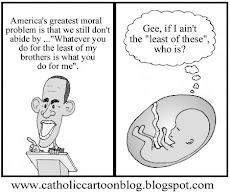

 Posts
Posts


