I am amazed, not only at how many people think that the answer to this question is yes, but at how many people think it is obviously and incontrovertibly yes and that anyone who can not see how blindingly obvious it is that justice requires income equality is either stupid or evil.
Actually, income inequality is not a very important issue at all for those concerned about the well-being of the poor. It is a red herring, a distraction from the main issue, which is poverty and its causes. There is such a fog of unwarranted assumptions surrounding this idea that it is second only to the phrase "social justice" in being useless if clear thinking is the goal.
I want to try and untangle some of the issues surrounding the question of whether or not Christians should be concerned about income inequality and it is going to take some time. The position I am putting forward is based on logic, facts and historical evidence and, unlike the opposing position, cannot be reduced to a few slogans ready to be chanted by mobs. (I am not going to document every assertion but if challenged on a particular point I will point you to some resources.)
The position I will put forward requires careful thinking and the ability to follow a chain of argument for several steps before arriving at the conclusion. If you wish to argue, you are welcome as long as you stick to actual arguments.
1. Defining Poverty:
First of all, we need to understand that there are two ways of defining poverty: absolute measures and relative measures. To measure poverty in absolute terms is to list what a family of four needs in order to have the necessities of life but no luxuries: shelter, transportation, food, clothes, education etc. This amount will obviously vary from place to place and can be skewed by such factors as amount of real estate owned if any and so on. The analysis can get extremely complicated but for measuring differences over time it can be simplified and standardized.
The other method is to peg the poverty line to a percentage of the median income. This means that the poverty line will go up and down depending on the income of the highest earners in society, which often fluctuates from year to year depending on the state of the economy. All sorts of distortions occur in this type of measure. For example the poverty line may go down in a year like 2008, which would mean that a family of four living in Toronto might be considered no longer to be under the poverty line even though its income for that year actually dropped due to the loss of an extra part-time job. But chances are, food etc. is no cheaper, so common sense tells us that can't be right.
2. The Goal: Helping Poor People Become Better Off
Another problem with the relative measure of poverty is that it has a buried assumption that income equality ought to the be long-term goal of our society. But let me propose a different goal: helping poor people become better off. You might say that you thought pursuing income equality automatically does this, but the example I gave above shows that this is not true. If we want to succeed in social policy, our goals must be crystal clear.
I suggest that if the average income of the poorest 20% of the population increases over time relative to inflation and the number of people living in poverty declines, we should count that as progress even if the average income of the middle 60% or the top 20% grows even faster. Why? Because the goal is to make sure that the average income of the bottom 20% does not drop.
3. What makes the poor even poorer?
Well-intentioned social democratic economic policies that involve high taxes and large social welfare programs can hurt the poor even more than benign neglect. The fact is that policies intended to help the poor often end up hurting the poor. Let me give two examples from the past; they are not theoretical but actually happened.
First, there is inflation. When budget deficits are high due to high government spending the temptation is very strong for governments to let interest rates rise, increase the money supply and pay off debts (or, more realistically, continue to increase deficits) using devalued currency. Thus 2011 dollars are borrowed and spent but repaid in devalued 2021 dollars. But, surprise, surprise, lenders are wise to this game (which we saw played out horrifically in the 1970s) and demand higher and higher interest rates.
Meanwhile, ordinary people (the bottom 60% especially) are hurt the most by high inflation. Wages seldom keep pace with inflation and most people see their purchasing power eroded. Those living in the tightest margains (the bottom 20%) suffer the most. So keeping government deficits low, national debt low as a percentage of GDP and inflation under control is extremely important. High inflation over time can undo the net effect of higher welfare payments and leave both those on welfare & unemployment, as well as the working poor, worse off despite ever growing government spending on poverty.
Second, the Great Society programs in the 1960s in the US destroyed the black family. Young women were given a financial incentive to move out on their own and have babies without being married. The gap between white and black income had been closing the late 50s but immediately and permanently (so far) began to widen. The gap between white families headed by single mothers and ones with married couples raising their biological children also widens steadily, suggesting that the cause is family structure not race.
The socialists and liberals who supported welfare saw themselves as compassionate and generous, but they hurt ordinary, working class people, diminished economic mobility and created a multi-generation underclass. This is tragic. Poverty rates for intact families has long been in single digits, while the rate for families headed by single women is north of 35%. Obviously, liberal support for the sexual revolution has contributed to the problem as well; sexual liberation for white, upper-middle class women is much more benign in terms of economics than it is for those in the bottom 20% of income levels.
4. Another Problem in Measuring Poverty:
It is a truism that you will never be able to fix a problem you can't even define. And defining poverty is tricky. If you divide the population into 5 groups by annual income: bottom 20% etc., then it is easy to forget that most people move through different income brackets as they move through the life cycle. Young people in their twenties typically do not earn as much as those same people do in their forties and fifties. And retired people don't earn as much as they did previously and they don't need to in order to maintain the same lifestyle.
In order for poverty statistics to mean anything they must measure two things: the number of people who never move out of the bottom 20% and how much mobility there is between the five groups. If a society has high mobility (eg. 60% of those in the bottom 20% in 1990 are in the highest or second highest group in 2010 and only 10% are still in the bottom 20%), then you are looking at a just society in which most people are getting ahead during their lifetimes. If an individual does not make it up the income ladder under those conditions, then the fault likely lies with the individual's lifestyle or character or some sort of physical or mental handicap. Prison may be the only alternative for some and charity will be necessary for others.
My retirement adviser tells me that most people only need about 65% of their pre-retirement income in retirement. Most retired people have their mortgages paid off, do not have the expenses associated with working and are not saving for retirement. My point is that they do not live on two-thirds of their previous income by eating cat food. Their lifestyle is roughly the same. Such people should not count in statistics defining poverty. Another example is a family in which husband and wife both work for 3 years after marriage and live on one income while saving up a down payment on a house. Then the wife gets pregnant and quits her job. Their income drops and they go out and buy a house! Like a long-anticipated retirement, this is not a failure in terms of a family dropping from one income group to another; it is a good planning.
5. Defining poverty not entry level job compensation:
So my point is that we need to focus on what happens to the bottom group, but even there we can let our romantic notions trump good economic sense. A good example of this is the fallacy of higher minimum wage laws helping poor people. Any solid economics textbook (like Basic Economics by Thomas Sowell) can explain in detail why raising the minimum wage does not help the poor.
Think of it this way. Not all jobs play the same function. Some jobs are good entry level jobs that pay low wages but offer the opportunity for young people to gain invaluable work habits, experience and content for the resume. Such jobs need to pay low enough wages so that there will be lots of them around for young people just starting out to get a first job. They should also provide incentive for people to gain marketable skills and try for better jobs.
If the lowest wage jobs are converted to high pay jobs there will be fewer of them. That will make the statistics look like income went up for the bottom 20%, but in reality what went up was unemployment and that is not good for poverty reduction.
6. What about those filthy rich?
I've saved the most important point for the last: isn't it unfair for the rich to get richer faster than the poor get richer? No, it isn't unfair, it isn't bad for society as a whole and it is actually a good thing for the poor. Let me explain.
For most of human history income disparity was not as great as it is now for a very good reason: the total wealth of the human race was only a tiny fraction of what it is today. In the past 2 centuries - for the first time in all of recorded history - billions of people have moved out of abject poverty and the middle class has exploded. What is the cause of this? It is not socialism, but rather capitalism - the biggest and most successful anti-poverty program in human history!
Throughout human history most people (over 90%) lived a hand to mouth subsistence lifestyle. Only a wealthy, privileged few lived anywhere close to the level of lower middle class working people today. And even when the king and nobility amassed most of the wealth in a given nation, they still didn't have that much compared to the Bill Gates, Steve Jobs, Warren Buffets and so on of our day. The gap keeps getting bigger because of the success of capitalism and we should not be concerned about that reality.
A much bigger concern should be the possibility of economic policies that prevent people from rising from the lower income groups to the top 1% of income earners by inventing useful goods that people want or need and are willing to pay for. In fact, I suggest that income mobility is far more important as an indicator of whether a society is just than poverty measures in themselves.
The poor need rich people to be rich and to grow richer by investment. Why? As Thomas Sowell might put it: "A poor man never gave me a job." The engine of economic growth in a just society is small businesses and the biggest problem entrepreneurs with a good idea face is a lack of capital investment. If capital gains taxes are too high (they actually should be abolished) then investors will not be able to get a rate of return sufficient to justify the risk.
If an investor wants to invest in 10 companies that want to start up or expand, he knows that 3-4 are likely to go bankrupt. Some of the rest will stagnate and provide little return and hopefully a few will be successful and provide a high return sufficient to cover the losses and give an overall rate of return higher than less risky investments like government bonds. If not, investment capital will dry up, businesses will stagnate, and employment will go down instead of up.
Who gets hurt in such a scenario? The person looking for a job who is unemployed is hurt significantly. The rich, on the other hand, have options. They can buy real estate or gold, invest off shore, or invest in the government bonds that are paying ever higher rates because the federal deficit is exploding. The point is that economic policies that appear to help the rich actually help the poor. The Democratic Party in the US and the Liberals and NDP in Canada successfully demagogue those who argue for business-friendly policies as insensitive to the poor when their opponents are, in fact, the ones promoting policies that help the poor. When the Republicans and the Conservatives promote policies that help small and medium sized businesses, they are doing the best things possible to help the poor.
Of course, Big Business and Big Government often are in bed together colluding to stifle competition and replace capitalism with mercantilism or state capitalism (which is not really capitalism) or cronyism. They often keep small businesses down by increasing regulation that the bigger corporations can afford to comply with but small ones cannot. Excessive government regulation of all kinds can damage the economy and hurt the poor. I do not understand why those who profess to care about the poor are not as suspicious of government as they are of business. Both need to be controlled and watched. Governments do not operate under market discipline so they are prone to do stupid things to the economy and voters are often so uninformed and unthoughtful that they are easily manipulated by slogans and heartfelt assertions of good intentions. Only results should be considered, not intentions.
Countries that pursue high tax policies that keep the rich from amassing large pools of capital in the name of "social justice" and "income equality" are successful in damaging the economy, increasing unemployment, creating inflation and freezing income inequality into rigid classes that keep people from being able to advance in life by hard work and individual initiative.
Governments have no money of their own; all they have is what they take from citizens. But governments famously waste about half the money they tax and spend, which is a tremendous drag on the economy. Private individuals and businesses, guided by market disciplines, create much more of real economic value for every dollar they spend than governments do. Yet every welfare state or socialist policy idea ever advanced advocates increasing the size of government.
Rich people invest their money, when tax and other government policies are rational enough to encourage them to do do, in money-making endeavours that are also job-creating endeavours. We should not "eat" the rich; we should honour them and respect them.
If people get rich by doing illegal things, that is of course different. But working hard, having good ideas, starting and growing businesses are all socially beneficial behaviours that ought to be encouraged.
As Christians, we should think more about how to create a business friendly environment, how to increase economic mobility and how to reward socially beneficial behaviours than about income inequality. As long as the poor are getting ahead in real terms and opportunity exists for all, we have as just a society as is possible under the conditions of the Fall.
Showing posts with label Economics. Show all posts
Showing posts with label Economics. Show all posts
Tuesday, November 1, 2011

Monday, June 27, 2011
Obama's Astonishing Economic Ignorance
Last week President Obama made a detour from his usual practice of blaming all America's economic woes on his favorite whipping boy, George W. Bush. Instead, he blamed the invention of ATM's for high unemployment.
Any first-year economics student could tell you that that was pure Luddite nonsense, but the Democrat-Media Complex ignored this stunning lack of basic economic ignorance because it did not fit their preconceived notions of "Democrats smart, Republicans stupid."
In this video, Senator Ron Johnson, who is built a successful manufacturing business and then defeated Russ Feingold in Wisconson, gives Obama the lashing he so richly deserves. This video is short and to the point:
I hope America puts the adults in charge of its economy - before it is too late.
Any first-year economics student could tell you that that was pure Luddite nonsense, but the Democrat-Media Complex ignored this stunning lack of basic economic ignorance because it did not fit their preconceived notions of "Democrats smart, Republicans stupid."
In this video, Senator Ron Johnson, who is built a successful manufacturing business and then defeated Russ Feingold in Wisconson, gives Obama the lashing he so richly deserves. This video is short and to the point:
I hope America puts the adults in charge of its economy - before it is too late.
Saturday, June 4, 2011
Why Britain is Doomed
News from Britain day by day confirms Peter Hitchens' assertion that the Conservative Party under David Cameron is just a continuation of New Labor under Blair/Brown and that real conservatives in Britain have no mainstream political option.
This past Thursday, the Daily Telegraph has an item which illustrates perfectly how bad this government is. Whether its greatest failing is its false ideology, its economic ineptitude or its lack of courage is difficult to decide. (HT American Thinker Blog)
Third, note that there was no consultation with industry representatives. Socialists always think the big companies are lying all the time about profitability so they don't see any point in talking or negotiating ahead of time. Just spring it on them before they have a chance to appeal to a bunch of inconvenient facts that might suggest this is not a good idea. [BAD IDEOLOGY]
Fourth, this is a perfect example of how raising taxes can reduce government revenues. There is a reason why conservatives are against raising taxes all the time and it is not - as the socialist think - because they want rich people to keep all their profits. It is because lower taxes make more economic activity profitable and that leads to more economic activity and lower unemployment, higher tax revenue and lower government expenditure on unemployment insurance and welfare. [ECONOMIC INCOMPETENCE]
Fifth, it is almost unbelievable that this action was taken by a Conservative government. If this is the conservative alternative to the socialists in the Labour Party, then Britain is utterly and completely doomed. There is simply no viable political alternative to economic collapse.
Conclusion: Is the problem bad ideology, economic incompetence or lack of political courage? The right answer is ALL OF THE ABOVE.
This past Thursday, the Daily Telegraph has an item which illustrates perfectly how bad this government is. Whether its greatest failing is its false ideology, its economic ineptitude or its lack of courage is difficult to decide. (HT American Thinker Blog)
George Osborne was applauded for his political acuity after the March Budget, when he imposed an unexpected windfall tax on energy, pushing up the production levy paid by North Sea oil and gas companies from 20 to 32 per cent. The £1.8 billion proceeds were earmarked to reduce fuel duty, so heading off the threat of a "summer of discontent" by hauliers and motorists. As we observed at the time, no Chancellor ever courted unpopularity by putting a squeeze on oil companies to help the motorist.
The measure does not seem quite so shrewd now. Centrica has decided to leave idle the UK's biggest gas field, South Morecambe, because the tax rise means extraction is simply not worth its while. You can see the firm's point. When other energy taxes are taken into account, the Budget increase lifted the total tax rate for the South Morecambe field from 75 per cent to 81 per cent. Centrica is better off leaving the gas beneath the sea and waiting for the price to rise, so that production once again becomes profitable.
The Chancellor cannot say he was not alerted to this development. A month ago John Cridland, the CBI's director-general, wrote to him warning that the tax rise had created fiscal uncertainty not only in the oil and gas sector, but right across the industry's infrastructure supply chain. He called for stable tax rates and greater consultation. In this business more than most, predictability is everything. The Treasury was unreceptive.
Aside from being a political problem for the Chancellor, this is an object lesson in the way tax rises can prove economically harmful. While South Morecambe is not producing, it is delivering no tax revenues; meanwhile, the shortfall will be filled by imported gas. So the tax take goes down and the cost to the consumer goes up: not a happy combination.
Let us think about what happened here for a few moments. Based on this example, is the government's greatest failing: (a) bad ideology, (b) economic incompetence or (c) lack of courage.
First, George Osborne seems to be in agreement with the widespread socialist opinion that it is impossible to tax large corporations too much. This idea is based on the belief that the big corporations have tons of money just lying around that they don't know what to do with and so it is there for the taking. This naive idea is ridiculous, but it is widespread. [BAD IDEOLOGY]
Second, the idea of taxing oil and gas companies and using the revenues to lower gas taxes on consumers is transparently a shell game. It is just moving taxes from the consumer (end user) to the producer. But how do producers stay in business? Why, they pass on costs (including higher government taxes) to - who else? - consumers. So the relief for consumers would be very short-lived. But the government is engaging here in very short term thinking; the clue in the article is the concern for the summer driving season. The government fears consumer outrage this summer. (By the way, gasoline is already the equivalent of more than $9.00 US per gallon, which is more than twice the price in the US and Canada.) This is a gambit to get to the Fall; that is how far ahead the government is thinking. [LACK OF COURAGE]
Fourth, this is a perfect example of how raising taxes can reduce government revenues. There is a reason why conservatives are against raising taxes all the time and it is not - as the socialist think - because they want rich people to keep all their profits. It is because lower taxes make more economic activity profitable and that leads to more economic activity and lower unemployment, higher tax revenue and lower government expenditure on unemployment insurance and welfare. [ECONOMIC INCOMPETENCE]
Fifth, it is almost unbelievable that this action was taken by a Conservative government. If this is the conservative alternative to the socialists in the Labour Party, then Britain is utterly and completely doomed. There is simply no viable political alternative to economic collapse.
Conclusion: Is the problem bad ideology, economic incompetence or lack of political courage? The right answer is ALL OF THE ABOVE.
Monday, April 18, 2011
US Receives Debt Warning from Standard & Poors: The Debt Crisis Begins Sooner Than Expected
Conservatives have been warning everyone who will listen that the orgy of spending that started under G. W. Bush and accelerated under Barack Obama cannot go on forever and that the piper will eventually need to be paid. Rep. Paul Ryan actually has a plan to deal with the crisis. But all Obama wants to talk about is taxing the "rich" and death panels. He must be the most inept and unserious president in the history of the Republic.
A few hours ago a bombshell fell on the playground of New Deal-Great Society Democrats and the fanatical partisans of tax and spend liberalism. Standard & Poors issued a debt warning to the US. Reuters reports:
So it begins . . .
A few hours ago a bombshell fell on the playground of New Deal-Great Society Democrats and the fanatical partisans of tax and spend liberalism. Standard & Poors issued a debt warning to the US. Reuters reports:
Read the rest here. If Obama merely seeks to spin this as an excuse to raise taxes and does not take seriously the absolute need to cut spending, the US is in big trouble and that means the rest of us are in big trouble too.Standard & Poor's threatened to downgrade the United States' prized AAA credit rating on Monday unless the Obama administration and Congress find a way to slash the yawning federal budget deficit within two years.
S&P, which assigns ratings to guide investors on the risks involved in buying debt instruments, said the move signals at least a one-in-three chance that it could eventually cut its long-term AAA rating on the United States within two years.
A downgrade, which would leave Germany and France with a higher rating, would erode the status of the United States as the world's most powerful economy and the dollar's role as the dominant global currency.
So it begins . . .
Sunday, April 17, 2011
Why Not Just Tax the Rich?
From the few clips of his show that I have seen Bob Schieffer of ABC's "Face the Nation," the host is not a complete shill for the Left like a Chris Matthews or a Rachel Maddow or a scary and angry demagogue like Ed Shultz.
But he asked Paul Ryan the same question everyone in Washington and the mainstream media is asking these days: "If we have such a serious deficit problem, why not tax the rich?" At least he framed it as a question, rather than as a demand. And at least he asked the right guy.
Ever since Obama's much-touted speech the other day in which he attempted to arrest the momentum away from Ryan and re-focus the debate on his own preferred talking points, everybody in the media has hammered away at the same themes: "Tax the rich, tax the rich, tax the rich - and all will be well." Don't worry your head about the problem, just repeat after me "Tax the rich, those millionaires and billionaires, tax the rich and our problems will go away."
Some sincere souls who don't understand much economics and only knows what they hear in the media ask the question sincerely. What would be so wrong with taxing the rich?
I don't have much hope of getting anywhere with the left-wing ideologues (they already know what I'm about to say and simply don't care), but I do think that honest questions deserve honest answers. Why not tax the rich to take care of the budget deficit?
First, references to "wealthy corporations" and to "millionaires and billionaires" are demagogic class warfare rhetoric designed to divide the country into the "good guys" (us) and the "bad guys" (the rich). The reality is that the interests of all Americans are intertwined to a much greater degree than the tired, old, Marxist, class warfare rhetoric allows.
The reality is that many of these supposedly "wealthy" people own small business or are self-employed professionals. They need to be encouraged to hire people, since most new job creation comes from small businesses. And high tax rates discourage job creation, the growth of small businesses and increased tax revenue. So they actually prevent a solution to the budget crisis.
Second, there is not enough wealth in the hands of the really well-off to solve the kind of budget deficits that America faces. So even if the government confiscated all the income of the "millionaires and billionaires" it would still face a shortfall. And how many times can you take it all away? Kings, parliaments, dictatorships and all forms of human government down through the ages have faced this problem: if you eat the sheep where will the wool come from next year?
Third, when you put the first two points together, you realize that Obama is being disingenuous when he tries to get you on his side against the "wealthy" today. He is using democracy in the worst possible manner to cobble together a coalition that is held together by a compact by the majority to fleece the minority.
The long range socialist goal always has been to get the majority of the voters to be net recipients of government goodies at the expense of the minority and then to convince the majority to vote for those politicians who will keep the minority in line and the goodies flowing. This is democracy manipulated for self-interest rather than used to pursue the common good. It is in the self-interest of the beneficiaries of government entitlement programs and it is in the self-interest of the politicians and the bureaucratic class of experts who run the government and engage in social engineering.
But if you are part of the middle class, you ought to realize that if fleecing the rich produces insufficient revenues (and it must be so for government appetite for spending is insatiable) and if you support a high tax policy that results in a stagnant economy, what inevitably comes next?
Anyone with any common sense can look at Greece or Spain or Portugal and see the long term effects of increasing government spending coupled with cripplingly high tax rates. The standard of living of all must decrease and the mechanism of this decrease is higher and higher taxes on the middle class.
Obama has consistently promised that he won't increase taxes on households making under $250,000 but what people need to grasp is that his policies on spending, entitlement reform, and tax reform (not to mention his penchant for environmental regulations and his unwillingness to address unsustainable public sector union benefit programs that are a ticking time bomb for state governments across America) - all this make his promise impossible for future presidents to keep. Yes, the word is impossible.
Rationing in health care and perpetually higher and higher taxation are the only plans Obama (and the Left generally) has for addressing the deficit. This week in Washington made that abundantly clear to anyone who did not already know it. The future of such policies is economic decline, higher taxes, a declining lifestyle for all American and the erosion of the social safety net for the poor, the handicapped and the elderly.
Why not tax the rich? The real answer is because it is bad for all of us.
Capitalism is a system that works on the basis of enlightened self-interest. It treats people as responsible adults who know what they want better than government bureaucrats do and allows people to work as hard or as little as they like. It is not a system based on greed but on individual freedom, which is a very different thing. Capitalism allows people maximal freedom to pursue their own priorities and their own self-interest and yet allows them to weave their own individual life projects into a tapestry in which the needs of all are met. Capitalism is not meant to address the problem of those who cannot work: that is what private charity and a modest, means-tested, government social safety net are for.
But the fact is that taxing the rich more and more (endlessly, in fact) is not in our enlightened self-interest. It is far better for us that more wealth be created, that more jobs be created and that more and more middle class people join the ranks of the wealthy because the more this happens the better off all of us will be. Social mobility and the absence of a European-style class structure have been among the most appealing features of America ever since its beginning.
The rich are the entrepreneurs who create jobs, wealth and who do pay taxes already. The corporate tax rate in the US is 35%, which is among the highest in the world. We need to respect entrepreneurs, not treat them like pariahs or milking cows for our use. These days, the only way rich people can avoid being treated like pariahs in progressive circles is to beat their breasts and call for higher government taxes and more government programs for the poor. Then, in exchange for being class traitors they typically get tax loopholes and the public gets stuck with higher deficits. This system of crony capitalism is inherently corrupting and contrary to the rule of law. There is a direct connection between the high tax rate and the high number of loopholes and simply increasing the tax rate will not help this problem. In fact, Doug Saunders, in The Globe and Mail, offers a rationally compelling case for abolishing corporate taxes.
When the government regulates everything it controls everything and true capitalism is destroyed. When business is forced to prostitute itself to government it means that we have socialism by other means. And the result is economic stagnation because the government does not create wealth - as any honest Marxist will tell you - it only redistributes it. As the pie shrinks due to misguided government interference in the economy, the individual slices shrink too. Everyone's energy is then directed toward fighting for a slightly bigger share rather than on creating a bigger pie.
Obama and the Left would rather everybody be poorer if that meant more relative equality. That kind of philosophy creates a Cuba and a North Korea and Greece. It does not create a United States of America. But it has the potential to destroy any nation that embraces it fully.
But he asked Paul Ryan the same question everyone in Washington and the mainstream media is asking these days: "If we have such a serious deficit problem, why not tax the rich?" At least he framed it as a question, rather than as a demand. And at least he asked the right guy.
Ever since Obama's much-touted speech the other day in which he attempted to arrest the momentum away from Ryan and re-focus the debate on his own preferred talking points, everybody in the media has hammered away at the same themes: "Tax the rich, tax the rich, tax the rich - and all will be well." Don't worry your head about the problem, just repeat after me "Tax the rich, those millionaires and billionaires, tax the rich and our problems will go away."
Some sincere souls who don't understand much economics and only knows what they hear in the media ask the question sincerely. What would be so wrong with taxing the rich?
I don't have much hope of getting anywhere with the left-wing ideologues (they already know what I'm about to say and simply don't care), but I do think that honest questions deserve honest answers. Why not tax the rich to take care of the budget deficit?
First, references to "wealthy corporations" and to "millionaires and billionaires" are demagogic class warfare rhetoric designed to divide the country into the "good guys" (us) and the "bad guys" (the rich). The reality is that the interests of all Americans are intertwined to a much greater degree than the tired, old, Marxist, class warfare rhetoric allows.
The reality is that many of these supposedly "wealthy" people own small business or are self-employed professionals. They need to be encouraged to hire people, since most new job creation comes from small businesses. And high tax rates discourage job creation, the growth of small businesses and increased tax revenue. So they actually prevent a solution to the budget crisis.
Second, there is not enough wealth in the hands of the really well-off to solve the kind of budget deficits that America faces. So even if the government confiscated all the income of the "millionaires and billionaires" it would still face a shortfall. And how many times can you take it all away? Kings, parliaments, dictatorships and all forms of human government down through the ages have faced this problem: if you eat the sheep where will the wool come from next year?
Third, when you put the first two points together, you realize that Obama is being disingenuous when he tries to get you on his side against the "wealthy" today. He is using democracy in the worst possible manner to cobble together a coalition that is held together by a compact by the majority to fleece the minority.
The long range socialist goal always has been to get the majority of the voters to be net recipients of government goodies at the expense of the minority and then to convince the majority to vote for those politicians who will keep the minority in line and the goodies flowing. This is democracy manipulated for self-interest rather than used to pursue the common good. It is in the self-interest of the beneficiaries of government entitlement programs and it is in the self-interest of the politicians and the bureaucratic class of experts who run the government and engage in social engineering.
But if you are part of the middle class, you ought to realize that if fleecing the rich produces insufficient revenues (and it must be so for government appetite for spending is insatiable) and if you support a high tax policy that results in a stagnant economy, what inevitably comes next?
Anyone with any common sense can look at Greece or Spain or Portugal and see the long term effects of increasing government spending coupled with cripplingly high tax rates. The standard of living of all must decrease and the mechanism of this decrease is higher and higher taxes on the middle class.
Obama has consistently promised that he won't increase taxes on households making under $250,000 but what people need to grasp is that his policies on spending, entitlement reform, and tax reform (not to mention his penchant for environmental regulations and his unwillingness to address unsustainable public sector union benefit programs that are a ticking time bomb for state governments across America) - all this make his promise impossible for future presidents to keep. Yes, the word is impossible.
Rationing in health care and perpetually higher and higher taxation are the only plans Obama (and the Left generally) has for addressing the deficit. This week in Washington made that abundantly clear to anyone who did not already know it. The future of such policies is economic decline, higher taxes, a declining lifestyle for all American and the erosion of the social safety net for the poor, the handicapped and the elderly.
Why not tax the rich? The real answer is because it is bad for all of us.
Capitalism is a system that works on the basis of enlightened self-interest. It treats people as responsible adults who know what they want better than government bureaucrats do and allows people to work as hard or as little as they like. It is not a system based on greed but on individual freedom, which is a very different thing. Capitalism allows people maximal freedom to pursue their own priorities and their own self-interest and yet allows them to weave their own individual life projects into a tapestry in which the needs of all are met. Capitalism is not meant to address the problem of those who cannot work: that is what private charity and a modest, means-tested, government social safety net are for.
But the fact is that taxing the rich more and more (endlessly, in fact) is not in our enlightened self-interest. It is far better for us that more wealth be created, that more jobs be created and that more and more middle class people join the ranks of the wealthy because the more this happens the better off all of us will be. Social mobility and the absence of a European-style class structure have been among the most appealing features of America ever since its beginning.
The rich are the entrepreneurs who create jobs, wealth and who do pay taxes already. The corporate tax rate in the US is 35%, which is among the highest in the world. We need to respect entrepreneurs, not treat them like pariahs or milking cows for our use. These days, the only way rich people can avoid being treated like pariahs in progressive circles is to beat their breasts and call for higher government taxes and more government programs for the poor. Then, in exchange for being class traitors they typically get tax loopholes and the public gets stuck with higher deficits. This system of crony capitalism is inherently corrupting and contrary to the rule of law. There is a direct connection between the high tax rate and the high number of loopholes and simply increasing the tax rate will not help this problem. In fact, Doug Saunders, in The Globe and Mail, offers a rationally compelling case for abolishing corporate taxes.
When the government regulates everything it controls everything and true capitalism is destroyed. When business is forced to prostitute itself to government it means that we have socialism by other means. And the result is economic stagnation because the government does not create wealth - as any honest Marxist will tell you - it only redistributes it. As the pie shrinks due to misguided government interference in the economy, the individual slices shrink too. Everyone's energy is then directed toward fighting for a slightly bigger share rather than on creating a bigger pie.
Obama and the Left would rather everybody be poorer if that meant more relative equality. That kind of philosophy creates a Cuba and a North Korea and Greece. It does not create a United States of America. But it has the potential to destroy any nation that embraces it fully.
Tuesday, March 8, 2011
A Liberal Explains Why We Should Support the Teacher's Unions in Wisconson: Well That Clears That Up!
Have a listen to this dialogue. It is illuminating and funny.
Thursday, March 3, 2011
Short Notices
Here are some stories worth reading that I don't have time to comment on extensively at the moment but which are important enough to take time to draw to your attention.
Michael Moore is a totalitarian who thinks that the total amount of money is finite, that all the money belongs the government, and that jobs are owned by "the people." He knows nothing about economics, yet sees fit to pontificate anyway. He is filthy rich capitalist himself, yet poses as a Marxist. Quite a piece of work! See here for proof.
Kermit Gosnell, abortionist and murderer, may get the death penalty according to CNN. If ever there was a case where the death penalty was warranted, this is it.
Barrack Obama should be considered to be an enemy of the Roman Catholic Church. Father Z comments on William Oddie's article that makes a case for this proposition here.
Khalid Ali-M Aldawsari was recently arrested by the FBI after he was discovered to have been planning a terrorist attack in Texas. One of his potential targets was George W. Bush. This is the 38th thwarted terrorist attack in the US since 9/11.
Ruth Marcus is a left-leaning journalist who is getting tired of Obama's lack of leadership. When you have lost the Washington Post, you are in trouble.
George Will explains why liberals love trains in Newsweek. Short answer: because they love to control other people's lives.
Shahbaz Bhatti, Pakistan’s minister of minority affairs, was assassinated by gunmen today while he sat in a car outside his mother’s house, where he lived. See Nina Shea's article in The Corner. His crime? Trying to reform Pakistan's totalitarian blasphemy laws.
Damian Thompson asks when Britain will wake up to the persecution of Christians by Muslims here. He documents the murder of Pakistan's Minister of Minorities, the massacre of Copts by Muslims, and the persecution of Christians in Iraq. But my question is: "Is Damian right to assume that the governing elites of Broken Britain are really against this sort of thing?"
Michael Moore is a totalitarian who thinks that the total amount of money is finite, that all the money belongs the government, and that jobs are owned by "the people." He knows nothing about economics, yet sees fit to pontificate anyway. He is filthy rich capitalist himself, yet poses as a Marxist. Quite a piece of work! See here for proof.
Kermit Gosnell, abortionist and murderer, may get the death penalty according to CNN. If ever there was a case where the death penalty was warranted, this is it.
Barrack Obama should be considered to be an enemy of the Roman Catholic Church. Father Z comments on William Oddie's article that makes a case for this proposition here.
Khalid Ali-M Aldawsari was recently arrested by the FBI after he was discovered to have been planning a terrorist attack in Texas. One of his potential targets was George W. Bush. This is the 38th thwarted terrorist attack in the US since 9/11.
Ruth Marcus is a left-leaning journalist who is getting tired of Obama's lack of leadership. When you have lost the Washington Post, you are in trouble.
George Will explains why liberals love trains in Newsweek. Short answer: because they love to control other people's lives.
Shahbaz Bhatti, Pakistan’s minister of minority affairs, was assassinated by gunmen today while he sat in a car outside his mother’s house, where he lived. See Nina Shea's article in The Corner. His crime? Trying to reform Pakistan's totalitarian blasphemy laws.
Damian Thompson asks when Britain will wake up to the persecution of Christians by Muslims here. He documents the murder of Pakistan's Minister of Minorities, the massacre of Copts by Muslims, and the persecution of Christians in Iraq. But my question is: "Is Damian right to assume that the governing elites of Broken Britain are really against this sort of thing?"
Sunday, December 5, 2010
Class Warfare: Isn't That an Old Movie from the 1930s?
The Senate voted against allowing the Bush tax cuts to expire for those making over $250,000 today as the Democrats waged class warfare in an apparent belief that such tactics win votes in this day and age. They insisted on getting on the record as being in favor of raising taxes in the middle of a recession with unemployment at 9.8%. They insisted on a vote. They insisted on publicity. They insist they are going to run on this record. The Republicans, meanwhile, said "Uh, OK, sure" and couldn't believe their luck. The Washington Times reports:
The Senate blocked President Obama's and Democratic leaders' tax cut plans Saturday in a foreordained symbolic vote that now sends both sides back to the negotiating table to work out a viable deal.A bipartisan filibuster, led by unified Republicans and joined by four Democrats and one independent, proved there isn't enough support to back Mr. Obama's preferred option to extend income tax cuts for couples making less than $250,000 and tax increases for those making more than that.
With that vote out of the way, attention turns back to the high-level working group Mr. Obama and congressional leaders set up this week to try to work out a solution. That group met three times already, but Sen. Jon Kyl, Arizona Republican and one of the negotiators, said it was clear to him that Democrats weren't going to negotiate until they had gone through the votes to prove to their political base that raising taxes on the wealthy wasn't viable.
"It's been very clear that we're not going to be negotiating anything until all of this political process is over, until the partisan votes have been cast," he said an hour before the votes in a rare weekend Senate session.
The negotiators seem to be headed toward an agreement that would extend all the 2001 and 2003 income tax cuts temporarily. Still to be decided was what sweeteners Democrats would secure to make swallowing the tax cuts more palatable. Possible options included extended unemployment benefits.
As even many moderately sensible Democrats are coming to realize, Obama/Pelosi/Reid are collectively crazy. They are total captives of the hippie wing of the Democratic Party and they are dragging the Democratic Party as a whole into a deep, dark, electoral hole where it is going to disappear for a long, long time.
Raising taxes on the rich during a recession is the triumph of ideology over reason. Take eight minutes to watch this video and see why. Be sure to watch for Obama's answer to the question on capital gains tax posed by the debate moderator during the primary debates. He didn't try to hide his Marxist, class warfare attitude then and I give him credit for that. His answer is absolutely shocking and totally incompatible with any kind of moderate or reasonable position on economic issues. It should come as no surprise that the Democrats are going down in a flame of class warfare rhetoric. It is sad, but not surprising.
Sunday, October 31, 2010
Obama as Roosevelt: Is the Great Recession Being Needlessly Prolonged?
Two economists from UCLA, Harold L. Cole and Lee E. Ohanian, have argued that the Great Depression lasted seven years longer than it had to because of the misguided, experimental and anti-market policies of Franklin Delano Roosevelt.
The article, "FDR's policies prolonged Depression by 7 years, UCLA economists calculate" presents this conclusion as a great surprise. They seem to think that no one has ever suggested before that it might have been FDR's fault. I suspect that it might come as an even bigger surprise to the article's author that this conclusion comes as no surprise whatsoever to conservatives. Progressivism can be such a narrow cocoon in some ways.
Here is a bit from the article:
The article, "FDR's policies prolonged Depression by 7 years, UCLA economists calculate" presents this conclusion as a great surprise. They seem to think that no one has ever suggested before that it might have been FDR's fault. I suspect that it might come as an even bigger surprise to the article's author that this conclusion comes as no surprise whatsoever to conservatives. Progressivism can be such a narrow cocoon in some ways.
Here is a bit from the article:
Two UCLA economists say they have figured out why the Great Depression dragged on for almost 15 years, and they blame a suspect previously thought to be beyond reproach: President Franklin D. Roosevelt.
After scrutinizing Roosevelt's record for four years, Harold L. Cole and Lee E. Ohanian conclude in a new study that New Deal policies signed into law 71 years ago thwarted economic recovery for seven long years.
"Why the Great Depression lasted so long has always been a great mystery, and because we never really knew the reason, we have always worried whether we would have another 10- to 15-year economic slump," said Ohanian, vice chair of UCLA's Department of Economics. "We found that a relapse isn't likely unless lawmakers gum up a recovery with ill-conceived stimulus policies."
In an article in the August issue of the Journal of Political Economy, Ohanian and Cole blame specific anti-competition and pro-labor measures that Roosevelt promoted and signed into law June 16, 1933.
"President Roosevelt believed that excessive competition was responsible for the Depression by reducing prices and wages, and by extension reducing employment and demand for goods and services," said Cole, also a UCLA professor of economics. "So he came up with a recovery package that would be unimaginable today, allowing businesses in every industry to collude without the threat of antitrust prosecution and workers to demand salaries about 25 percent above where they ought to have been, given market forces. The economy was poised for a beautiful recovery, but that recovery was stalled by these misguided policies."
He thought that "excessive competition was responsible for the Depression by reducing prices and wages." What an unbelievable thing to believe. If Roosevelt actually believed that, he was utterly incapable of thinking clearly about the situation. This smacks of a know-nothing, blame the rich, class-warfare approach.
The article discusses the National Recovery Administration's role in preventing the market's natural functioning:
Using data collected in 1929 by the Conference Board and the Bureau of Labor Statistics, Cole and Ohanian were able to establish average wages and prices across a range of industries just prior to the Depression. By adjusting for annual increases in productivity, they were able to use the 1929 benchmark to figure out what prices and wages would have been during every year of the Depression had Roosevelt's policies not gone into effect. They then compared those figures with actual prices and wages as reflected in the Conference Board data.
In the three years following the implementation of Roosevelt's policies, wages in 11 key industries averaged 25 percent higher than they otherwise would have done, the economists calculate. But unemployment was also 25 percent higher than it should have been, given gains in productivity.
Meanwhile, prices across 19 industries averaged 23 percent above where they should have been, given the state of the economy. With goods and services that much harder for consumers to afford, demand stalled and the gross national product floundered at 27 percent below where it otherwise might have been.
"High wages and high prices in an economic slump run contrary to everything we know about market forces in economic downturns," Ohanian said. "As we've seen in the past several years, salaries and prices fall when unemployment is high. By artificially inflating both, the New Deal policies short-circuited the market's self-correcting forces."
The policies were contained in the National Industrial Recovery Act (NIRA), which exempted industries from antitrust prosecution if they agreed to enter into collective bargaining agreements that significantly raised wages. Because protection from antitrust prosecution all but ensured higher prices for goods and services, a wide range of industries took the bait, Cole and Ohanian found. By 1934 more than 500 industries, which accounted for nearly 80 percent of private, non-agricultural employment, had entered into the collective bargaining agreements called for under NIRA.
Cole and Ohanian calculate that NIRA and its aftermath account for 60 percent of the weak recovery. Without the policies, they contend that the Depression would have ended in 1936 instead of the year when they believe the slump actually ended: 1943.
The parallels to today are stunning and frightening. Obama's artificial, ad hoc, arbitrary pattern of government intervention into various sectors of the economy are based on political calculations rather than economic theory (eg. the need to save the auto workers' pensions and preserve an important voting block and source of campaign contributions as the motivation for "saving" GM and Chrysler at the expense of bondholders).
If Cole and Ohanian are right, we can expect the recession to end right after the 2012 presidential election on one condition: that a Republican is elected to replace Obama.
__________
PS - It ought to be borne in mind that the longer the Great Recession goes on, the more the poorest people in North America will be hurt. Anyone concerned about the poor should be extremely concerned to determine for themselves if in fact Obama's progressive policies are actually extending the economic downturn, causing high unemployment and ultimately leading to government spending cuts in welfare programs.
Monday, May 24, 2010
Crisis in Europe: Chaos or Centralized Power?
Christopher Booker offers good insight into the meaning of the economic crisis in Europe in an article in the Daily Telegraph entitled: "The euro crisis is a judgment on the great lie of 'Europe'" He writes:
To say that Booker is pessimistic is an understatement and that is bad news for everyone. The crisis (whether it has been manufactured or is genuinely spontaneous) is pushing people toward fear of chaos. Eventually the idea of a highly-centralized government largely insulated from the voters will become "thinkable" and then "necessary." We may be witnessing history.
Aldous Huxley looks more prescient all the time. If you haven't read Brave New World, you might want to check it out. It is like reading the newspapers from 2020.
Read the rest here.Easily the most telling statement by any politician last week was that from an anguished Angela Merkel, in pronouncing that "the current crisis facing the euro is the biggest test Europe has faced for decades, even since the Treaty of Rome was signed in 1957". "If the euro fails," she went on, "Europe fails," warning that the consequences for the whole of Europe would be "incalculable".
Greece was just the antipasto: Italy, Spain, Portugal and others are now hanging over an abyss of debt which scarcely all the money in Europe could fill – created by countries living way beyond their means, thanks not least to the euro's low interest rates. The only possible consequence of the collapse of one of the world's leading currencies, leaving Europe with no money to trade in, would be utter chaos. What we are witnessing here is a judgment on the entire deceitful and self-deceiving way in which the "European project" has been assembled over the past 53 years. One of the most important things to understand about that project is that it has only ever had one real agenda. Everything it has done has been directed to one ultimate goal, full political and economic integration.We have still scarcely begun to wake up to the gravity of the crisis now upon us, not just for the eurozone but also for us here in Britain and for the entire global economy. The measures so far taken to prop up the collapsing euro, such as that famous "$1 trillion package", are no more than gestures.
. . . snip . . .
As was advised by Sir Donald MacDougall's report to Brussels in 1978, it could only work if, following the US model, between 20 and 25 per cent of Europe's GDP was available to such a government, to enable a huge transfer of wealth from richer countries such as Germany to the poorer, more backward countries of southern Europe – and how ironically has that come about!
. . . snip . . .
f the euro does disintegrate, as Mrs Merkel warns, the consequences would be incalculable. Replacing all the national currencies was a gargantuan task, by far the most ambitious ever attempted in the name of European integration, and there is no Plan B. Without a currency, trade would collapse – leaving Britain, dependent on Europe for 50 per cent of its trade, just as seriously affected as everyone else. A system failure on this scale would make the 1930s pale into insignficance.Inevitably, cries went up last week for the EU to be transformed into a proper economic government with control over national budgets and the power to raise taxes – exactly
what MacDougall and others were talking about in the 1970s. But it is too late, and all that remains are desperate gestures.
To say that Booker is pessimistic is an understatement and that is bad news for everyone. The crisis (whether it has been manufactured or is genuinely spontaneous) is pushing people toward fear of chaos. Eventually the idea of a highly-centralized government largely insulated from the voters will become "thinkable" and then "necessary." We may be witnessing history.
Aldous Huxley looks more prescient all the time. If you haven't read Brave New World, you might want to check it out. It is like reading the newspapers from 2020.
Monday, March 15, 2010
Are Profit Making Corporations Sinners?
Dan Gouge, in his post at the Evolving Church "Kingdom Economy Conference" blog entitled "What Marxism Shares with Christianity," argues that having the sole goal of profit-making makes business corporations evil. Since the business corporation is a central feature of capitalism, he therefore concludes that capitalism is something to be overcome - not in the eschaton after the return of Christ, but in history. He approvingly quotes Zizek to the effect that the meaning of being a Marxist is asserting this faith that something better than capitalism is coming.
There are some serious errors in logic in this post that need to be pointed out. But the most serious problem is thinking that capitalism ought to be opposed and, if possible, abolished in the name of morality. The line of thought in this post is interesting because it is so typical of how many people think and that is why I want to engage it.
First, Dan in this post notes that a corporation is a legal person and therefore able to own property, conduct business transactions etc. Then he proceeds to treat the legal personhood of the corporation as if it were a real person instead of an artificial legal entity. It is sort of like treating a robot or a computer as if it were an actual human being. He rightly says that a person who had no goal in life except to maximize profits would be a psychopath and a jerk. But saying this about a corporation makes about as much sense as calling a factory a psychopath and a jerk because it has no goal except to produce goods. Is a factory to blame because it has no friends and no hobbies? Is a corporation to blame because it does not go to church? A human being with no goal in life except to produce goods would be a severely cramped person, but a factory is not a real person and neither is a corporation.
Second, Dan argues that for the corporation to focus solely on profits inevitably leads to it acting immorally and exploiting people. But the fact that some corporations act in such ways does not prove (1) that doing so is intrinsic to having profit as their goal or (2) that seeking profits is immoral in and of itself.
Let us take the second point first. To seek a profit is, in effect, a matter of the business corporation paying its bills, just like paying for electricity or salaries or any other legitimate business expense. The shareholders invest money that is used by the corporation as a tool to make more money and those shareholders need to be paid for making this investment. When the corporation borrows money from the bank to finance the expansion of a plant nobody calls it immoral for trying to make enough money to include paying back the loan with interest as one of its legitimate business expenses.
The investors give the money without charging interest and they take a much bigger risk than the bank (which usually requires collateral) and so they deserve to earn dividends and see the share price increase as just compensation for their investment. The fact that you potentially can earn more return by taking a risk encourages investment, job creation and more taxes paid by the corporation to the government - all of which make the community richer and enable government to provide a social safety net for the poor and vulnerable. How is that immoral? Actually, it is not immoral at all - it is a positive good.
As for the first point, the assumption that having profit as a goal automatically leads to immoral behavior is simply false. A desire for profit more often leads corporations to moral behavior because if you don't serve the actual needs people have - if you don't provide a good or service at a price people can afford - then you go bankrupt. Corporations that try to cut corners with immoral behavior often end up cutting their own throats.
Now it is true that in a certain percentage of cases it appears that corporations can engage in immoral behavior and get away with it. But there is nothing in the profit motive itself that mandates this. As I argued above, the corporation is an artificial person - actually a tool of real persons - and real persons (unlike artificial ones) have moral obligations. It is the responsibility of the managers of corporations to act in a moral manner even if that decreases profits and it is the responsibility of shareholders to hold management accountable for doing so. Failure of either to do so may result in legal action against the corporation (and a resulting loss of profits) or a public boycott and shaming (which may also result in a loss of profits). The fact is that the profit motive is a powerful incentive not to act immorally, rather than a guarantee that one will act immorally.
But, you object, corporations do in fact act in immoral ways: they pollute, they exploit, they price gouge etc. Yes, they do act immorally sometimes just as people do and just as governments do. Sometimes individuals take illegal and harmful drugs, smoke, over-eat and indulge in other forms of self-harm. They do this in spite of the clear motive we all have to take good care of our own bodies for the sake of our health. The world has fallen into sin and sin is pervasive. But to blame sin on the profit motive is a false analysis. It is to locate what actually resides in the human heart in a structure of the business world and it is thus an evasion of human responsibility.
There are some serious errors in logic in this post that need to be pointed out. But the most serious problem is thinking that capitalism ought to be opposed and, if possible, abolished in the name of morality. The line of thought in this post is interesting because it is so typical of how many people think and that is why I want to engage it.
First, Dan in this post notes that a corporation is a legal person and therefore able to own property, conduct business transactions etc. Then he proceeds to treat the legal personhood of the corporation as if it were a real person instead of an artificial legal entity. It is sort of like treating a robot or a computer as if it were an actual human being. He rightly says that a person who had no goal in life except to maximize profits would be a psychopath and a jerk. But saying this about a corporation makes about as much sense as calling a factory a psychopath and a jerk because it has no goal except to produce goods. Is a factory to blame because it has no friends and no hobbies? Is a corporation to blame because it does not go to church? A human being with no goal in life except to produce goods would be a severely cramped person, but a factory is not a real person and neither is a corporation.
Second, Dan argues that for the corporation to focus solely on profits inevitably leads to it acting immorally and exploiting people. But the fact that some corporations act in such ways does not prove (1) that doing so is intrinsic to having profit as their goal or (2) that seeking profits is immoral in and of itself.
Let us take the second point first. To seek a profit is, in effect, a matter of the business corporation paying its bills, just like paying for electricity or salaries or any other legitimate business expense. The shareholders invest money that is used by the corporation as a tool to make more money and those shareholders need to be paid for making this investment. When the corporation borrows money from the bank to finance the expansion of a plant nobody calls it immoral for trying to make enough money to include paying back the loan with interest as one of its legitimate business expenses.
The investors give the money without charging interest and they take a much bigger risk than the bank (which usually requires collateral) and so they deserve to earn dividends and see the share price increase as just compensation for their investment. The fact that you potentially can earn more return by taking a risk encourages investment, job creation and more taxes paid by the corporation to the government - all of which make the community richer and enable government to provide a social safety net for the poor and vulnerable. How is that immoral? Actually, it is not immoral at all - it is a positive good.
As for the first point, the assumption that having profit as a goal automatically leads to immoral behavior is simply false. A desire for profit more often leads corporations to moral behavior because if you don't serve the actual needs people have - if you don't provide a good or service at a price people can afford - then you go bankrupt. Corporations that try to cut corners with immoral behavior often end up cutting their own throats.
Now it is true that in a certain percentage of cases it appears that corporations can engage in immoral behavior and get away with it. But there is nothing in the profit motive itself that mandates this. As I argued above, the corporation is an artificial person - actually a tool of real persons - and real persons (unlike artificial ones) have moral obligations. It is the responsibility of the managers of corporations to act in a moral manner even if that decreases profits and it is the responsibility of shareholders to hold management accountable for doing so. Failure of either to do so may result in legal action against the corporation (and a resulting loss of profits) or a public boycott and shaming (which may also result in a loss of profits). The fact is that the profit motive is a powerful incentive not to act immorally, rather than a guarantee that one will act immorally.
But, you object, corporations do in fact act in immoral ways: they pollute, they exploit, they price gouge etc. Yes, they do act immorally sometimes just as people do and just as governments do. Sometimes individuals take illegal and harmful drugs, smoke, over-eat and indulge in other forms of self-harm. They do this in spite of the clear motive we all have to take good care of our own bodies for the sake of our health. The world has fallen into sin and sin is pervasive. But to blame sin on the profit motive is a false analysis. It is to locate what actually resides in the human heart in a structure of the business world and it is thus an evasion of human responsibility.
Freedom and Capitalism
I have a post by this title over at the blog of the Evolving Church's "Kingdom Economy Conference." In it I critique capitalism in the way I think it needs to be critiqued, but I also try to show that socialism is not an adequate alternative to capitalism and that capitalism includes within itself certain worthwhile and fundamentally good ideas, which socialism threatens.
Probably I will make no one happy and be accused of making economics unduly complex. Well, no one ever said life was simple. Hard thinking is required rather than demography and sloganeering.
You can read it here.
Probably I will make no one happy and be accused of making economics unduly complex. Well, no one ever said life was simple. Hard thinking is required rather than demography and sloganeering.
You can read it here.
Sunday, September 27, 2009
Is This a Good Idea? Politicians Telling Bankers How to Bank
From the Times of London comes a story on a recent interview with Prime Minister Gordon Brown. It raised a question for me, well actually several questions.
Banks have been around for a long time and the profit motive drives their behaviour. If they operate inefficiently or take too many (or too few) risks, they lose money and people get fired. Seldom can employees trick their employers into keeping them on even though they are incompetent by hiring advertising firms and doing polling to figure out how to manipulate opinion in their favor - as politicians frequently do.
Now, it seems impossible for me to believe that government bureaucrats sitting in offices isolated from the rough and tumble of the marketplace can determine which rules should be applied to the banks at which times and in which ways? Doesn't that almost make the banks' own management a bit superfluous? Well, maybe that is an exaggeration: but doesn't it tolerate interference with a business enterprise that goes a tad too far? (I'm in favor of regulation that levels the playing field, staves off monopoly and protects consumers from being shafted. But there must be a limit somewhere.)
And is the motive of government here not driven by polls, elections and public opinion? I note that Brown claims to have had a "change of heart" at the G20 summit! Last week, he decided that this new regulation was needed! Are we supposed to think that public posturing for the next election has nothing to do with this "change of heart?" Wouldn't it be better to have a PM governing with his mind, rather than his "heart" on a matter of bank regulation?
Overall, the most troubling aspect of Brown's attitude to me is his apparent confidence (demonstrated over the past 12 years of New Labour) that the solution to the problems of the world are more government interference - in schools, in families, in churches, in businesses - in everything. He seems to think that tweaking the regulations can prevent the business cycle for having recessions as well as booms, despite the fact that the business cycle has been going on for hundreds of years and if it was so simple would not the government have done it just before the current recession? It reminds one of Obama's contention that he can save 500 million from waste in Medicare. Why not just save it and then discuss how to spend the money, if it is that easy?
The Enlightenment, I'm afraid, is not yet over. The hubris of the socialists persists through economic thick and thin. But I'm not convinced that more big government, more regulation, more merging of corporate and government culture into one huge bureaucracy no one can control is the way to save the world. But I think it might well be a way to ruin the world.
"Suggesting a major shift in his thinking, Mr Brown said that he would outline
tough new rules on the banking industry in his major speech to conference this
week.
He said that he had a change of heart at the G20 summit in Pittsburgh last week, which had prompted in him a determination to toughen the rules on banks that want to return to "business as usual" and "the bad old days".
He said: "In the last few days I’ve become utterly convinced just how far we all have to go. The banks are anxious to return to the bad old days. A lot of people haven’t understood the damage that banks have done. I think the banking system forgot that. I’m determined we clean up once and for all."
He then added he would be introducing "the toughest action of any country in the world". He suggested that a fiscal responsibility Bill would be introduced in the Queen’s Speech, which would legally commit current and future ministers to bring down debt. This morning he suggested this legislation would "ban the new bonuses".
He added: "It will also say that where there is a bad behaviour the FSA [Financial Services Authority] will have the right to intervene and where a company doesn’t [behave] there will be penalties imposed."
The Government has already said that banks would have to pay bonuses from a bonus pool linked to profitability – plans the banks are relaxed about. It was not immediately clear whether the proposals signalled by Mr Brown this morning would go further than what has already been announced. Downing Street suggested more details would emerge later today.
"We will be saying to people we are not going to allow in any way a return to the terrible days where bonuses were based on speculation and short-term deals," Mr Brown said."
OK, I don't know much about banking and I'm no economist. But it strikes me as a bit of a stretch to think that the British people should feel comforted that politicians (who can't even manage their own expense accounts) are going to be telling business how to do their business.
Banks have been around for a long time and the profit motive drives their behaviour. If they operate inefficiently or take too many (or too few) risks, they lose money and people get fired. Seldom can employees trick their employers into keeping them on even though they are incompetent by hiring advertising firms and doing polling to figure out how to manipulate opinion in their favor - as politicians frequently do.
Now, it seems impossible for me to believe that government bureaucrats sitting in offices isolated from the rough and tumble of the marketplace can determine which rules should be applied to the banks at which times and in which ways? Doesn't that almost make the banks' own management a bit superfluous? Well, maybe that is an exaggeration: but doesn't it tolerate interference with a business enterprise that goes a tad too far? (I'm in favor of regulation that levels the playing field, staves off monopoly and protects consumers from being shafted. But there must be a limit somewhere.)
And is the motive of government here not driven by polls, elections and public opinion? I note that Brown claims to have had a "change of heart" at the G20 summit! Last week, he decided that this new regulation was needed! Are we supposed to think that public posturing for the next election has nothing to do with this "change of heart?" Wouldn't it be better to have a PM governing with his mind, rather than his "heart" on a matter of bank regulation?
Overall, the most troubling aspect of Brown's attitude to me is his apparent confidence (demonstrated over the past 12 years of New Labour) that the solution to the problems of the world are more government interference - in schools, in families, in churches, in businesses - in everything. He seems to think that tweaking the regulations can prevent the business cycle for having recessions as well as booms, despite the fact that the business cycle has been going on for hundreds of years and if it was so simple would not the government have done it just before the current recession? It reminds one of Obama's contention that he can save 500 million from waste in Medicare. Why not just save it and then discuss how to spend the money, if it is that easy?
The Enlightenment, I'm afraid, is not yet over. The hubris of the socialists persists through economic thick and thin. But I'm not convinced that more big government, more regulation, more merging of corporate and government culture into one huge bureaucracy no one can control is the way to save the world. But I think it might well be a way to ruin the world.
Wednesday, June 3, 2009
Are the Terms "Socialism" and "Capitalism" Still Useful?
Socialism and Capitalism are the two great economic systems to arise in Modernity on the basis of modern assumptions about human nature and history. Both may be regarded as Christian heresies, especially Marxism. However, neither exists in anything like a "pure" form today. People tend to invent clumsy neologisms such as "state capitalism" to describe the political economy of China and it has been asserted on this blog with great fervor that the Soviet Union was not socialist. Even the most strongly capitalist country in the world, the United States, is far from the "unbridled, robber baron Capitalism" of the Nineteenth century, with its anti-trust legislation and its welfare state apparatus. And, after all, when the President of the US decides when the CEO of General Motors needs to be fired and the federal government regularly decides on political grounds which banks will be allowed to fall and which will be propped up - well, you get the idea. Whatever it is - it isn't anything Adam Smith would recognize as Capitalism.
I would suggest that the terms "Capitalism" and "Socialism" get in the way of debate. Often, our greatest problem is not finding agreement, but more modestly, finding clarity on our disagreements. And here is where these terms let us down.
For example, to claim that of course a thinking Christian simply must be a socialist surely means different things to different people. For many, I'm sure, it means little more than "sharing is good." But it does not necessarily mean big government and social engineering. Yet, it is difficult to point to a historical example of socialism that did not actually involve big government and social engineering. To take the socialist government of Spain for instance; one could get the impression from its recent legislative record that socialism has mainly to do with sexual permissiveness and institutionalizing the sexual revolution. And yet, socialism is supposedly an economic system.
Or, on the Capitalist side, what sense does it make to call a system of multi-national corporations that specialize in obtaining government grants, tax breaks, and other financial incentives from national governments rather than actually producing things and marketing them? What is going on when a government declares that a "private" business is too large to be allowed to fail? It is a well-known fact that increasing government regulation favors large businesses and often creates insurmountable obstacles for entrepreneurial small enterprises, which cannot afford the costly compliance with byzantine regulations. It seems that the line between big business and big government blurs more with each passing year.
I would suggest that we would do well to stop using the terms "Capitalist" and "Socialist" for the foreseeable future and, instead, define the political options in terms of "Distributivism" and "Corporatism."
Let us define Distributivism as an economic philosophy that stives to keep property distributed as widely as possible through widespread home ownership, preservation of the family farm and the encouragement of small, family-run business as the major employers in the economy. Monopolies, excessively large corporations and multi-nationals would be severely limited, if not eliminated.
Let us define Corporatism as a system in which the goal is to build up a total social system consisting of a partnership between government regulators and large, multi-national corporations, which strives for efficiency, equality and continuous economic growth. Corporatism has more than a little in common with Fascism, although the militarism and aggressive nationalism need not necessarily be part of Corporatism.
To use these terms would have several clarifying effects.
First, it would become clear that both major parties in the US lean more in the Corporatist direction than the Distributivist, so US voters do not really have a serious choice under the present system. The same goes for the Canadian political parties.
Second, it would frame the basic philosophical choice as being between a large, managerial, bureaucratic government/corporation structure and little need for civil society, on the one hand, and a small, limited government and a culture of small businesses and vibrant civil society, on the other.
Third, it would allow one to be in favor of entrepreneurship, small business, and limited government without being in favor of multi-national corporations and their tendency to exploit labour and blackmail governments.
Fourth, it would put the spotlight on what needs to be given up in order to achieve progressive social policies such as the increase of the welfare state and government mandated political correctness, namely civil society.
Fifth, it would allow Christians to see that their own interests do not coincide with either of the two great Enlightenment systems.
Sixth, it would make allow for public debate to center on pressing issues that do not get much of a hearing at present, such as the implications for freedom of a centralized social class of experts and managers replacing parents and ordinary citizens in the formulation of policy and law and the complicity of governments in the violation of the principle of subsidiarity and how this is weakening civil society.
The shift of the terms of the debate from an obsolete preoccupation with two failed economic systems would benefit everyone except those who have a vested interest in the continuation of our present social trend toward the all-encompassing, bureaucratic, managerial state and the soft totalitarianism it embodies.
I would suggest that the terms "Capitalism" and "Socialism" get in the way of debate. Often, our greatest problem is not finding agreement, but more modestly, finding clarity on our disagreements. And here is where these terms let us down.
For example, to claim that of course a thinking Christian simply must be a socialist surely means different things to different people. For many, I'm sure, it means little more than "sharing is good." But it does not necessarily mean big government and social engineering. Yet, it is difficult to point to a historical example of socialism that did not actually involve big government and social engineering. To take the socialist government of Spain for instance; one could get the impression from its recent legislative record that socialism has mainly to do with sexual permissiveness and institutionalizing the sexual revolution. And yet, socialism is supposedly an economic system.
Or, on the Capitalist side, what sense does it make to call a system of multi-national corporations that specialize in obtaining government grants, tax breaks, and other financial incentives from national governments rather than actually producing things and marketing them? What is going on when a government declares that a "private" business is too large to be allowed to fail? It is a well-known fact that increasing government regulation favors large businesses and often creates insurmountable obstacles for entrepreneurial small enterprises, which cannot afford the costly compliance with byzantine regulations. It seems that the line between big business and big government blurs more with each passing year.
I would suggest that we would do well to stop using the terms "Capitalist" and "Socialist" for the foreseeable future and, instead, define the political options in terms of "Distributivism" and "Corporatism."
Let us define Distributivism as an economic philosophy that stives to keep property distributed as widely as possible through widespread home ownership, preservation of the family farm and the encouragement of small, family-run business as the major employers in the economy. Monopolies, excessively large corporations and multi-nationals would be severely limited, if not eliminated.
Let us define Corporatism as a system in which the goal is to build up a total social system consisting of a partnership between government regulators and large, multi-national corporations, which strives for efficiency, equality and continuous economic growth. Corporatism has more than a little in common with Fascism, although the militarism and aggressive nationalism need not necessarily be part of Corporatism.
To use these terms would have several clarifying effects.
First, it would become clear that both major parties in the US lean more in the Corporatist direction than the Distributivist, so US voters do not really have a serious choice under the present system. The same goes for the Canadian political parties.
Second, it would frame the basic philosophical choice as being between a large, managerial, bureaucratic government/corporation structure and little need for civil society, on the one hand, and a small, limited government and a culture of small businesses and vibrant civil society, on the other.
Third, it would allow one to be in favor of entrepreneurship, small business, and limited government without being in favor of multi-national corporations and their tendency to exploit labour and blackmail governments.
Fourth, it would put the spotlight on what needs to be given up in order to achieve progressive social policies such as the increase of the welfare state and government mandated political correctness, namely civil society.
Fifth, it would allow Christians to see that their own interests do not coincide with either of the two great Enlightenment systems.
Sixth, it would make allow for public debate to center on pressing issues that do not get much of a hearing at present, such as the implications for freedom of a centralized social class of experts and managers replacing parents and ordinary citizens in the formulation of policy and law and the complicity of governments in the violation of the principle of subsidiarity and how this is weakening civil society.
The shift of the terms of the debate from an obsolete preoccupation with two failed economic systems would benefit everyone except those who have a vested interest in the continuation of our present social trend toward the all-encompassing, bureaucratic, managerial state and the soft totalitarianism it embodies.
Friday, November 7, 2008
First Banks, Now Auto Manufacturers: It's Time to Say No!
First it was the banks lining up to get taxpayers to bail them out on problems caused by their poor business practices, irresponsible profit-taking and short-term thinking. Now GM, Ford and Chrysler, after decades of pocketing profits, now are calling on taxpayers to bail them out of problems caused by their failure to build and market fuel-efficient cars even though peak oil was entirely predictable and their preference for short term profits rather than sustainable business practices. I say don't give them a penny.
The problem here is that there is too much concentration of the market in too few corporations. Huge multi-national corporations constitute virtual cartels and hold customers and employees hostage in order to extort money from the government. They are no better than the drug cartels in Columbia and they deserve to go under.
Capitalism is all about the private sector being more effecient than the public sector, about supply and demand, the laws of the market and business either going bankrupt or flourishing depending on how well they are run. So why not let big business go under? We are told that these business are so big that they have hundreds of thousands of employees who would all be unemployed. The loss of tax revenue, the payments of unemployment insurance etc. make it financially preferable for government to pay out large sums to private companies and thier shareholders. It is just protection money.
The biggest problem with our economic system is that there are too many large corporations and not enough smaller ones. A car company does not have to be worldwide in order to be efficients. That is just a function of a marketplace that is regulated in such a way as to produce that result. What is needed is for governments to make policies that punish companies that take over whole markets and eliminate all competition. Keep companies smaller and owned by as diverse a group of owners as possible. Then, when some fail, it does not destroy the whole industry. The unemployed workers are simply hired by the surviving companies and opportunities are created for new companies. Engtrepreneurship and risk-taking should be encouraged and rewarded.
Just sitting there like a fat cat extorting taxpayers' money from governments because you are too large to be alllowed to fail is not risk-taking entrepreneurship. It is morally no better than running a protection racket. And it works only because we let them get away with it. Our problem is not that we have too much capitalism; we have too little and too much of what we have is of the wrong kind.
The problem here is that there is too much concentration of the market in too few corporations. Huge multi-national corporations constitute virtual cartels and hold customers and employees hostage in order to extort money from the government. They are no better than the drug cartels in Columbia and they deserve to go under.
Capitalism is all about the private sector being more effecient than the public sector, about supply and demand, the laws of the market and business either going bankrupt or flourishing depending on how well they are run. So why not let big business go under? We are told that these business are so big that they have hundreds of thousands of employees who would all be unemployed. The loss of tax revenue, the payments of unemployment insurance etc. make it financially preferable for government to pay out large sums to private companies and thier shareholders. It is just protection money.
The biggest problem with our economic system is that there are too many large corporations and not enough smaller ones. A car company does not have to be worldwide in order to be efficients. That is just a function of a marketplace that is regulated in such a way as to produce that result. What is needed is for governments to make policies that punish companies that take over whole markets and eliminate all competition. Keep companies smaller and owned by as diverse a group of owners as possible. Then, when some fail, it does not destroy the whole industry. The unemployed workers are simply hired by the surviving companies and opportunities are created for new companies. Engtrepreneurship and risk-taking should be encouraged and rewarded.
Just sitting there like a fat cat extorting taxpayers' money from governments because you are too large to be alllowed to fail is not risk-taking entrepreneurship. It is morally no better than running a protection racket. And it works only because we let them get away with it. Our problem is not that we have too much capitalism; we have too little and too much of what we have is of the wrong kind.
Subscribe to:
Posts (Atom)




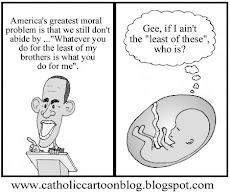

 Posts
Posts


