The Gospel Commission: Recovering God's Strategy for Making Disciples - Michael Horton (Baker, 20110.
Michael Horton has written an outstanding book on the mission of the church that moves us beyond vague and superficial slogans like "missional" and "emergent" to a consideration of Scriptural exegesis, systematic theological thinking and practical application to pressing issues facing the church today.
The book is divided into three parts: "I. The Great Announcement," "II. The Mission Statement," and "III. The Strategic Plan." Don't let the cute titles mislead: the first part is about the nature of the Gospel and the whole book is an exposition of the the Great Commission. Horton rightly presents the Gospel message the church is commissioned to take to the world as an announcement of the Lordship of Jesus Christ. The Gospel is that all authority in heaven and on earth has been given to Jesus Christ and that the ascended Lord rules from the right hand of the Father. "The Father's decision is irrevocable. Christ's mission is accomplished already, and the spirit will be just as successful in his labors. Therefore the Great Commission cannot fail." (31)
In chapter 2 Horton gives a mini-biblical theology of mission. He focuses on the question of what is the kingdom of God and he begins with the Exodus. He rejects two "Gentile" misunderstandings of the kingdom. The first extreme is the idea of the kingdom as a "purely spiritual reality, equivalent to the Greek idea of the immortality of the soul." (41) Against this Horton points to the Biblical idea of the renewal of all creation as God's ultimate purpose in redemption. The second extreme is the idea of the kingdom as "merely the moral development of the human race toward a world of love, peace and justice." (42) Against this Horton points to the Biblical teaching that it will be God's kingdom descending from heaven, not evolving on earth, that brings about the perfect society.
Horton emphasizes the two comings of Christ; in his first coming Jesus came as suffering servant, but in his second coming he will come as Judge and Lord. The purpose of the church between the two comings is to proclaim the Gospel and gather converts into the salvation that comes through the proclamation of Jesus Christ. The Great Commission is different from the Cultural Mandate, which is rooted in the covenant of creation. The Great Commission is the proclamation of the kingdom, which is the same as the proclamation of the Gospel.
Horton notes that some Evangelicals today are reverting to the tired old liberal Protestant attempt to drive a wedge between Jesus and Paul by claiming that Jesus proclaimed the kingdom (as a human project of social justice) but Paul got the church off track by proclaiming a new religion centered on the person of Jesus. Horton has little difficulty refuting such nonsense by simply reading the Bible comprehensively and carefully. He conclusion is that "The Gospel is the Kingdom and the Kingdom is the Gospel." (79)
I have spent a lot of time on chapter 2 because it is foundational to the book. Part II deals with the actual mission of the church. In chapter 3 he addresses the troubling rise of inclusivism among Evangelicals and the consequent decline of belief in the necessity of preaching the actual Gospel to people so they can be saved. He deals with the arguments for inclusivism made by Brian McLaren and shows that far from being postmodern, they are actually deeply rooted in the Enlightenment itself and are the fruit of late modern theological liberalism. (108f) In chapter 4 he addresses the issue of contextualization and in chapter 5 he examines the goal of disciple-making - the kind of disciple we seek to make. Two false models are dismissed: the self-actualization model and the social justice activist model. These are both forms of accommodation to the culture. The real goal is a matter of being fully incorporated into God's story in Jesus Christ.
In Part III Horton turns to the question of how to fulfill the Great Commission. Not surprisingly, he turns in chapter 6 to an examination of Christ's disciple-making methods as the key. (165f) He discusses preaching, teaching and the sacraments as means of grace and spiritual gifts, personal prayer and evangelism as means of gratitude. In chapter 7, he is very helpful in stressing the centrality of the local church in disciple-making and criticizes para-church organizations for tending to supplant the local church. However, he fails to note that the reason this happens is, in many cases, the failure of local churches to take disciple-making mission seriously. He is fair and accurate in his denunciations of Evangelical enthusiasm, but fails to give adequate consideration to the dead orthodoxy of denominations that occasioned it historically.
Chapter 8 deals with the relationship of evangelism and social justice and is clear-headed and helpful. He is not buying the widespread Evangelical (and Liberal) teaching that the Gospel includes social justice ministry and that therefore feeding the hungry is as much declaring the Gospel as proclaiming forgiveness of sins through Christ's atoning work. He also refuses to accept the idea that the Gospel can be proclaimed without words. I so appreciate all this clarity that I am willing to overlook the sloppy tendency to equate conservative Evangelical support for the Republican Party with liberal Protestant support for the Democratic Party as if both sides in the culture war were equally wrong. One gets the impression at times that Horton is able somehow to hover above the fray and criticize everyone else while he himself suspends judgment. It is one thing to say that the church per se should stay out of partisan politics (a view with which I agree), but it is quite another to say that the individual Christian is free to take either side in the culture wars as a citizen (a view which I regard as incompatible with serious disciplship). Perhaps Horton is not meaning to go as far as I am portraying him as going here; perhaps he is only seeking to emphasize the unique role of the church in proclaiming the Gospel and warning against turning the institutional church into an arm of any political party. On that point we agree.
Chapter 9, "Mission Creep," discusses the perennial temptation of the church to substitute human priorities, ideas and projects for the Great Commission in the mission of the church. Here we see the exegetical fruit of chapter 2 applied with great insight and profit to contemporary ideas of mission on both the left and the right. Brian McLaren's ideas are engaged extensively and the take away point is Horton's demonstration of just how conventional the emergent church approach actually is. There is so little new or original there. Chapter 10, "Until He Comes," deals with the hope that sustains the Christian mission in the world: the hope of Christ's return and Christ's continuing presence by His Spirit all through this age.
In summary, this is a fine book which could be read with profit by anyone interested in working through biblical and theological issues surrounding evangelism, missions and the Great Commission. It is popular rather than scholarly in level and it is written in an engaging style. Adult Sunday School classes and Bible study groups could study it with profit and it belongs in every church library. We are in Michael Horton's debt for producing a work of such biblical and faithful wisdom.
"Book has been provided courtesy of Baker Publishing Group and Graf-Martin Communications Inc. Available at your favorite bookseller or from Baker Books, a division of Baker Publishing Group."
Showing posts with label Evangelism. Show all posts
Showing posts with label Evangelism. Show all posts
Friday, April 1, 2011

Tuesday, January 11, 2011
Jesus Awareness Week at University of Toronto
Several Christian organizations, including Ravi Zacharias Ministries, Westminster Chapel, Chinese Gospel Church and others, are sponsoring "Jesus Awareness Week" at the University of Toronto from Jan. 21-27, 2011. Speakers include Joe Boot, Dan MacDonald, Andy Bannister and Scott Masson. Please pray for this evangelistic outreach to one of the most secular parts of Toronto.
Visit the website here for schedule and other information.
Visit the website here for schedule and other information.
Tuesday, November 9, 2010
The Evangelical Left Seems a Little Grumpy These Days
If this article in Christian Week is an accurate reflection of Rene Padilla's views, then he appears to be confused and angry.
He criticizes presentations at the recent Lausanne Congress in Capetown which emphasize evangelism and tries to re-define evangelism as discipleship. He is quoted as saying:
But Padilla doesn't seem to see it that way. He called one presentation by a speaker from Campus Crusade for Christ a "waste of time" that demonstrated "the syncretism of American evangelicalism," which he characterized as "the market mentality and the obsession with numbers and calculation." In this one statement he manages to combine anti-capitalism, anti-Americanism and anti-evangelism prejudices!
The article also describes him as being critical of John Piper for preaching that we as Evangelicals ought to be concerned about the eternal salvation of people as well as their material lot in this life.
If Padilla wants to promote the liberal agenda and denounce the priority of evangelization, he is free to do so. But he should not expect much of a hearing from Evangelicals. Maybe that is what makes him so cranky.
He criticizes presentations at the recent Lausanne Congress in Capetown which emphasize evangelism and tries to re-define evangelism as discipleship. He is quoted as saying:
"Superficial evangelism is not going to get the job done," says René Padilla, a renowned evangelical scholar from Latin America, currently living in Argentina. "Jesus talked about making disciples who learned to obey everything he has taught."OK, if this was all he said it would not necessarily be a problem. Jesus, in the Great Commission, commanded his followers to preach and baptize (evangelism) and to then teach these new believers to "obey all things I have commanded you" (discipleship). One cannot be a disciple without being converted and to convert people and then leave them in a state of only superficially understanding the faith is to fail in the mission. Both are necessary; to play them off against each other or debate which is more important is a non-starter. You can't disciple a person who has not responded to the preaching of the Gospel and you can't say that conversion/baptism is all that is needed.
But Padilla doesn't seem to see it that way. He called one presentation by a speaker from Campus Crusade for Christ a "waste of time" that demonstrated "the syncretism of American evangelicalism," which he characterized as "the market mentality and the obsession with numbers and calculation." In this one statement he manages to combine anti-capitalism, anti-Americanism and anti-evangelism prejudices!
The article also describes him as being critical of John Piper for preaching that we as Evangelicals ought to be concerned about the eternal salvation of people as well as their material lot in this life.
Padilla was also unhappy with John Piper's strongly stated desire for the global church represented by the Lausanne movement to agree, "for Christ's sake, we Christians care about all suffering—especially eternal suffering."
"Why especially?" asks Padilla. Why are the needs of people after they die a higher priority than their needs now? "This doesn't mean we don't proclaim. But proclamation is not the first thing." He points to Ephesians 2:14-18: "Jesus is our peace, does our peace and proclaims our peace. To be; to do; to say. Why say that the most important thing is to say? To be; to do; to say. Put them in that order. Christ is our peace."
I don't understand Padilla's objection here. All Evangelicals believe that lost people need Christ and that those who die outside of Christ are lost eternally. This is a matter of eternal life and eternal death. If Padilla does not believe that, he is free to believe whatever he likes but Evangelicals have always believed it and always will.
Why would he want to single out Piper for criticism? Is it because Piper is challenging the left-wing emphasis on "social justice" or "the social gospel" and calling people back to biblical basics? I don't know but Padilla certainly seems angry about something. He is quoted as saying:
Padialla may be encouraged that a lot of Third World people are critical of the strategy for world evangelization, but I am not. His priorities of "discipleship, globalization (poverty) and stewardship of creation" sound just like the liberal priorities of the World Council of Churches. An emphasis on evangelism is not somehow uniquely "American" and most third world Evangelicals would be surprised to hear that Padilla thinks it is because for them it is simply biblical.Padilla is encouraged that "a lot of third world people at the congress are critical of the strategy for the evangelization of the whole world." The three key global issues, he contends, are discipleship, globalization (poverty) and stewardship of creation. "In a congress like this, these are the key issues we should be exploring to see what we can do about it.
"But here we are again with the obsession for numbers—how to make more converts; how to build megachurches. I wonder when U.S. people are going to learn to listen to what others are saying, all over the world," says Padilla.
If Padilla wants to promote the liberal agenda and denounce the priority of evangelization, he is free to do so. But he should not expect much of a hearing from Evangelicals. Maybe that is what makes him so cranky.
Thursday, May 13, 2010
Revisiting "Holistic Mission"
The Lausanne Covenant of 1974 is a call to world evangelism that has helped to unite Evangelicals from all over the world in a common mission. It tackles the relationship between evangelism and social concern in Article 5. It says:
5. CHRISTIAN SOCIAL RESPONSIBILITY
We affirm that God is both the Creator and the Judge of all people. We therefore should share his concern for justice and reconciliation throughout human society and for the liberation of men and women from every kind of oppression. Because men and women are made in the image of God, every person, regardless of race, religion, colour, culture, class, sex or age, has an intrinsic dignity because of which he or she should be respected and served, not exploited. Here too we express penitence both for our neglect and for having sometimes regarded evangelism and social concern as mutually exclusive. Although reconciliation with other people is not reconciliation with God, nor is social action evangelism, nor is political liberation salvation, nevertheless we affirm that evangelism and socio-political involvement are both part of our Christian duty. For both are necessary expressions of our doctrines of God and man, our love for our neighbour and our obedience to Jesus Christ. The message of salvation implies also a message of judgment upon every form of alienation, oppression and discrimination, and we should not be afraid to denounce evil and injustice wherever they exist. When people receive Christ they are born again into his kingdom and must seek not only to exhibit but also to spread its righteousness in the midst of an unrighteous world. The salvation we claim should be transforming us in the totality of our personal and social responsibilities. Faith without works is dead.(Acts 17:26,31; Gen. 18:25; Isa. 1:17; Psa. 45:7; Gen. 1:26,27; Jas. 3:9; Lev. 19:18; Luke 6:27,35; Jas. 2:14-26; Joh. 3:3,5; Matt. 5:20; 6:33; II Cor. 3:18; Jas. 2:20)
A few comments are in order.
First, it leads with the affirmation that Christians are rightly concerned with "justice and reconciliation throughout human society and for the liberation of men and women from every kind of oppression." This was the Evangelical nod to the kernel of truth in liberation theology. We should be concerned about justice (but also with reconciliation). We do want to liberate people from every kind of oppression (but economic oppression is not singled out as of highest priority and no Marxist analysis is used). Liberation from addictions and from fear of death are as much concerns of Christian theology as liberation from poverty. The problem with most liberation theology is a narrowing of focus to the group (losing sight of the individual), to the here and now (losing sight of eternity) and to the material (losing sight of the spiritual). Lausanne does not engage in this kind of reductionism.
Second, a Christian anthropology is affirmed as the basis for social concern. It is our having been made in the image of God that gives us intrinsic worth and this is what makes exploitation of people so offensive. It is an attack on God.
Third, penitence is expressed "both for our neglect and for having sometimes regarded evangelism and social concern as mutually exclusive." This sentence is unclear: neglect of what? Is it neglect of social concern or of evangelism or both? In any case, the main point seems to be that the Covenant is a rejection of the idea that social concern and evangelism are mutually exclusive in the sense that only evangelism is important.
Fourth, several qualifications are now made to that last statement. Evangelism is not social concern: no reductionism along the lines of liberal Protestantism or liberation theology. Reconciliation with other people is not reconciliation with God and political liberation is not salvation (a salvo directed against Gustavo Gutierrez, the father of Liberation Theology). Activity on the horizontal level is important but is not evangelism and cannot substitute for evangelism.
Fifth, we have the key sentence: "we affirm that evangelism and socio-political involvement are both part of our Christian duty." It seems highly significant to me that it says "Christian duty" and not "Christian mission." Now it all depends on the meaning that we intend by the word "mission." If we speak of the unique mission of the Church as defined by Matt. 28:18-20, then it is important that social-political involvement not be included in the mission of the Church. However, if we are using the word more loosely to include everything Christians should do as parents, citizens, neighbors, friends, voters, businesspeople, educators, doctors etc., then socio-political involvement belongs on that list.
We can distinguish between the function of the Church qua Church, which is to evangelize, teach, worship and fellowship, and the outworking of Christian discipleship in the lives of believers in terms of love of neighbor and responsible stewardship. Socio-political is a Christian duty, but it should not replace the specific tasks assigned tothe ministry of the Church as Church. This is why we need Christian institutions like schools, hospitals, relief and development agencies etc. They are good but they do not replace evangelism. Faith without works is dead and works instead of faith are just as bad.
Sixth, the Kingdom of God is not defined in terms of social-political progress: "When people receive Christ they are born again into his kingdom and must seek not only to exhibit but also to spread its righteousness in the midst of an unrighteous world." Here the Kingdom is seen in the lives of converted sinners who enter it by faith in Jesus Christ. Their good works of social concern make it visible, but the Kingdom is not a secular, political project or something built by human beings.
Conclusion:
The Lausanne Covenant, written at the height of Liberation Theology and influenced by the theologians of the Two Thirds world, clearly affirms an orthodox theology of mission and constitutes a solid basis for the development of a proper understanding of the relationship between evangelism and social action.
Wednesday, May 5, 2010
Evangelism, Mission, Charity, Justice and the Gospel
I argued in a recent post, "Challenging the Sacred Cow of Holistic Mission" that it is not possible for social justice and personal evangelism both to be equal as the highest priorities of the Church. I also noted some difficulties with the concept of "social justice" as opposed to classical conceptions of justice that lie at the foundation of Western culture going back to Aristotle and the Old Testament. Now I want to attempt to articulate how we should understand the relationship between evangelism, mission, charity, justice and the Gospel.
In Matthew 28:18-20 we have the Great Commission of our Lord to His Church: our mission is defined by Jesus Christ Himself and is not really up for debate or ratification by us.
So we see here that the advocates of "holistic mission" are quite right when they say that the mission of the Church cannot be reduced to mere evangelism. Getting people to the point of conversion and baptism is not the entire mission of the Church. However, it is quite a jump from there to including working to end material poverty as equal in importance to preaching the Gospel. Let me make several observations about this text.
First, evangelism comes first both chronologically and logically. The mission of the Church is to make disciples, which involves preaching for conversion and teaching for obedience. But its ministry is directed towards individuals, not institutions. Strictly speaking, there is no such thing as a "social gospel." There is a personal Gospel with social implications, but that is a different thing entirely. The question is who is the target audience: nations, business enterprises and governments or people? It is people who need their sins forgiven and it is people who can be baptized.
Second, the other part of the mission of the Church - teaching them to obey - is also directed toward individuals, not institutions. Moreover, it presupposes baptism. We can't disciple the unbaptized; only those who confess faith in Jesus Christ can go on to the next step of learning obedience to Christ's teachings.
Third, when we investigate the teachings of Christ we find things like His great summary of the Law and the Prophets when asked which is the most important of the commandments:
Fourth, "love of neighbor" surely includes working for justice for all. We need to oppose all forms of injustice and ensure that people are not oppressed by unjust laws or by anyone or any organization working unjustly. But justice is rendering to each one what is due to that person. Justice is not equality of income nor is it charity. We are commanded to "love" the neighbor so clearly justice is just a base line, not a sufficient objective.
Fifth, in order to love the neighbor we must first and of greatest importance share Christ with him. Nothing else is as important as doing this, the greatest of all acts of charity. Of course, in emergency situations it may well be appropriate to relieve hunger or rescue from flooded lands or whatever. You obviously don't try to preach instead of digging through the rubble from an earthquake in order to rescue victims.
But relief and development work are not an alternative to or a substitute for evangelism. Ideally, they flow out of evangelism as converted people learn that to follow Jesus is to love their neighbors and therefore become involved in relief and development out of obedience to Him.
Sixth, there is a necessary relationship between evangelism and good works of charity. Loving the neighbor is not an optional aspect of the Faith. As Paul teaches us clearly, we are saved by faith alone, not by works lest anyone boast (Eph. 2:8-9). However, as James teaches clearly, true saving faith in Jesus Christ will result in works and any so called faith that does not lead to visiting the fatherless and the orphan in their distress (Ja. 1:27) is dead (Ja. 2:14-17).
To play off James and Paul against each other is to opt for a non-canonical reading of Scripture that denies the authority of Scripture as a unified witness to Jesus Christ. They go together. But note well: faith precedes works. If faith without works is dead, works without faith are not specifically Christian and therefore not mission.
Conclusions:
1. If by "holistic mission" we mean that evangelism and works of charity are both part of what Christians are called to do, then there could be no quarrel with the phrase. But this is not all that is meant in many instances.
2. In the mission of the Church evangelism has priority both logically and chronologically. It must come first if we are to make disciples and disciples cannot be made without it. Therefore it cannot be merely one of two equally important aspects of the Church's mission.
3. Social justice is a problematic term because it implies working for economic equality for society as a whole as a substitute for preaching the Gospel of sin and salvation to individuals. We must not bring the hope of heaven down to earth as simply the human project of reorganizing society in a better way by revolution and scientific social engineering. The Kingdom of God is a Divine work and our job is to witness to it not create it.
4. Wherever the Gospel has been preached with success and many baptisms have occurred, the society has been transformed as a result as people grow in obedience to the Lord Jesus Christ and love their neighbors in a multitude of ways.
In Matthew 28:18-20 we have the Great Commission of our Lord to His Church: our mission is defined by Jesus Christ Himself and is not really up for debate or ratification by us.
"Then Jesus came and said, 'All authority in heaven and on earth has been given to me. Therefore go and make disciples of all nations, baptizing them in the name of the Father and of the Son and of the Holy Spirit, and teaching them to obey everything I have commanded you. And surely I am with you always to the very end of the age.'" (Matt. 28:18-20 NIV)Here we have the locus classicus of the mission of the Church. There are two parts to the commission: (1) baptizing - which refers to preaching, evangelizing, converting and baptizing into the body of Christ, that is, to the work of making Christians, and (2) teaching - or better "making disciples," that is, teaching them what Christ has commanded so that they can become obedient, growing, witnessing Christians.
So we see here that the advocates of "holistic mission" are quite right when they say that the mission of the Church cannot be reduced to mere evangelism. Getting people to the point of conversion and baptism is not the entire mission of the Church. However, it is quite a jump from there to including working to end material poverty as equal in importance to preaching the Gospel. Let me make several observations about this text.
First, evangelism comes first both chronologically and logically. The mission of the Church is to make disciples, which involves preaching for conversion and teaching for obedience. But its ministry is directed towards individuals, not institutions. Strictly speaking, there is no such thing as a "social gospel." There is a personal Gospel with social implications, but that is a different thing entirely. The question is who is the target audience: nations, business enterprises and governments or people? It is people who need their sins forgiven and it is people who can be baptized.
Second, the other part of the mission of the Church - teaching them to obey - is also directed toward individuals, not institutions. Moreover, it presupposes baptism. We can't disciple the unbaptized; only those who confess faith in Jesus Christ can go on to the next step of learning obedience to Christ's teachings.
Third, when we investigate the teachings of Christ we find things like His great summary of the Law and the Prophets when asked which is the most important of the commandments:
"The most important one, answered Jesus, is this: 'Hear O Israel, the LORD our God, the LORD is one. Love the Lord your God with all your heart and with all your soul and with all your mind and with all your strength. The second is this: Love your neighbor as yourself. There is no commandment greater than these." (Mark 12:29-31 NIV)Surely, when we think about what it means to teach them "to obey everything I have commanded you" this is the best place to start in asking what making disciples is all about. It is about teaching converts to keep these two great commandments and thus fulfill in our lives the intentions of the Law of God.
Fourth, "love of neighbor" surely includes working for justice for all. We need to oppose all forms of injustice and ensure that people are not oppressed by unjust laws or by anyone or any organization working unjustly. But justice is rendering to each one what is due to that person. Justice is not equality of income nor is it charity. We are commanded to "love" the neighbor so clearly justice is just a base line, not a sufficient objective.
Fifth, in order to love the neighbor we must first and of greatest importance share Christ with him. Nothing else is as important as doing this, the greatest of all acts of charity. Of course, in emergency situations it may well be appropriate to relieve hunger or rescue from flooded lands or whatever. You obviously don't try to preach instead of digging through the rubble from an earthquake in order to rescue victims.
But relief and development work are not an alternative to or a substitute for evangelism. Ideally, they flow out of evangelism as converted people learn that to follow Jesus is to love their neighbors and therefore become involved in relief and development out of obedience to Him.
Sixth, there is a necessary relationship between evangelism and good works of charity. Loving the neighbor is not an optional aspect of the Faith. As Paul teaches us clearly, we are saved by faith alone, not by works lest anyone boast (Eph. 2:8-9). However, as James teaches clearly, true saving faith in Jesus Christ will result in works and any so called faith that does not lead to visiting the fatherless and the orphan in their distress (Ja. 1:27) is dead (Ja. 2:14-17).
To play off James and Paul against each other is to opt for a non-canonical reading of Scripture that denies the authority of Scripture as a unified witness to Jesus Christ. They go together. But note well: faith precedes works. If faith without works is dead, works without faith are not specifically Christian and therefore not mission.
Conclusions:
1. If by "holistic mission" we mean that evangelism and works of charity are both part of what Christians are called to do, then there could be no quarrel with the phrase. But this is not all that is meant in many instances.
2. In the mission of the Church evangelism has priority both logically and chronologically. It must come first if we are to make disciples and disciples cannot be made without it. Therefore it cannot be merely one of two equally important aspects of the Church's mission.
3. Social justice is a problematic term because it implies working for economic equality for society as a whole as a substitute for preaching the Gospel of sin and salvation to individuals. We must not bring the hope of heaven down to earth as simply the human project of reorganizing society in a better way by revolution and scientific social engineering. The Kingdom of God is a Divine work and our job is to witness to it not create it.
4. Wherever the Gospel has been preached with success and many baptisms have occurred, the society has been transformed as a result as people grow in obedience to the Lord Jesus Christ and love their neighbors in a multitude of ways.
Sunday, April 11, 2010
Evangelizing Northern Nigeria
We only hear ugly headlines about violence, but the Anglican Church is Nigeria is not on the defensive like the Church in North America. Instead it is growing, advancing and converting people to Christ. The following excerpts are from an article on Virtue Online about an address to a conference held this week in North Carolina:
For more information, go to: New Wineskins Missionary Network.
The Rt. Rev. Edmund Akanya, Archbishop of Kaduna and Bishop of Kebbi from the Anglican Province of Nigeria told conferees at the New Wineskins conference for Global Missions that outreach to Muslims in Nigeria with the gospel is "second nature" to Nigerian Anglicans and that Anglicans "face this challenge every day."We ought to pray for the Church in Nigeria where God is at work and the Kingdom of God is being made visible in the power of the Holy Spirit.
- snip -
Under the banner, New Wineskins for Global Mission 2010, the archbishop said news media stories only tell the ugly side of Nigerian violence, but it is not the whole story. "We are reaching out with the gospel to Muslims and those who practice African religions and creating missionary dioceses in the northern part of the country dominated by Islam. Islam came into Nigeria in the 11th century and today they have a political stronghold. We have started missionary dioceses. It has been geographically unreached till now. We already have 49 dioceses in the north of Nigeria in four provinces. We started with 10 and it has grown as we have evangelized planting churches among Muslims."
"How have we done this when you have a great crisis," he cried. "The crisis is happening because of the Spirit of God moving in the land. It is a work of God. We are seeing revival...God is taking over the north for Jesus Christ. People are being turned over from Islam to Christianity. Twenty years ago 5-7% of the population was Christians, now 30% of the people in northern Nigeria are Christians."
Asked what and where the secret of this evangelistic effort came from, Akanya said, "We pray and fast. We spend time on our knees. God gives us the methods in the power of the Holy Spirit. We leave the results to Him."
- snip -
"The city of Jos, which is closer to the center of the country, is the headquarters of every Christian organization. It is the launching pad to the north and that is why militant Muslims are attacking Christians in Jos", he said.
"We (Nigerians) are going to sweep throughout Africa starting with Nigeria. For every 10 people who are converted in one population group we can reach out to Africa, Asia and to the entire world. Nigeria is sending send out missionaries to other parts of Africa and we need your cooperation in reaching Francophone countries. There are still so many unreached tribes and people that are waiting to hear the Good News. Who will come and help us?"
The African archbishops said Nigeria is experienced in presenting a very holistic gospel. "We go into areas where HIV-AIDS is prevalent. The Mothers Union comes in to help with medical care and classes for young mothers with children. We are also digging wells and providing literacy classes, all of it designed to leading people to the knowledge of Jesus Christ.
"We will saturate the north with Jesus Christ. We will rebuild schools taken over by the Government and we are introducing the 1-1-1-1 program of one person a year who leads one other person to the lord."
For more information, go to: New Wineskins Missionary Network.
Monday, September 21, 2009
Breaking News: New Anglican Primate of Nigeria Also Believes in Evangelism!
Archbishop Peter Akinola, primate of the Anglican Church of Nigeria for the past 10 years, is retiring and his successor, Archbishop Nicholas Okoh, was recently elected. The Primate of the Anglican Church of Nigeria is the head of the largest province in the Anglican Communion and thus a key figure in the on-going reform of the Communion. Akinola was reviled by Western liberals because he was a truely post-colonial figure, that is, a man who refused to be cowed by Westerners whose faith had faded into cultural accomodation. He saw the role of the largest province in the Communion as being a leadership role, rather than being content to take orders from New York and Canterbury.
So the world has been waiting to see what kind of leader would follow Akinola. Would he be one who would be more "reasonable," that is, one who would be less willing to challenge the entrenched and wealthy power structures of the Communion? Would he be more "politically correct" and less oriented to evangelism? Would he be more open to Westerners re-defining the Gospel for Africans?
The answer to all these questions is clearly "No." So the predictable attacks have begun. Ruth Gledhill leads off in the Times of London with a story on a sermon preached by Okah when he was in England for the launch of the Fellowship of Confessing Anglicans in July. [My comments in red in square brackets.]
______________
Muslims mass-producing children to take over Africa, says Archbishop
Ruth Gledhill
One of the most powerful figures in the Anglican Church believes that Africa is under attack from Islam and that Muslims are “mass-producing” children to take over communities on the continent. [The fact that Gledhill sees this as the most controversial and newsworthy statement in the sermon already betrays her nervousness about potential infractions of political correctness.]
Archbishop Nicholas Okoh, 56, was elected Primate of Nigeria last week and his elevation could exacerbate tensions at a time when Anglicans are working to build bridges with Muslims. Dr Michael Nazir-Ali resigned as Bishop of Rochester earlier this year to work in countries where Islam is the majority religion. [Nazir-Ali isn't going on an Obama-like world apology tour. He is going there to strengthen the persecuted church.]
Nigeria is split almost half and half between Christianity and Islam. There are about 17 million practising Anglicans in the country, but they face persecution in the north, while the two faiths vie with local religions for supremacy in the rest of the country.
Archbishop Okoh made his controversial comments [Just think about this: to say that Islam is pushing for dominance in Africa is a controversial statement. It seems to me to be as straightforward a fact as "Africa is hot." What Muslim would deny it or want to deny it? This could only be controversial to the decadent, politically correct, liberal, Western mind. For everyone else it is a fact of life.] about Islam in a sermon in Beckenham, Kent, in July. He said that there was a determined Islamic attack in African countries such as Uganda, Kenya and Rwanda.
They spend a lot of money, even in places where they don’t have congregations, they build mosques, they build hospitals, they build anything.
“They come to Africans and say, ‘Christianity is asking you to marry only one wife. We will give you four!’ ” Archbishop Okoh described this as “evangelism by mass-production”. [This is the statement referred to in the headline. Archbishop Okah sounds like he is against polygamy. Muslims in Africa are for it. Why does Gledhill label this "controversial"? What is "controversial" anyway? Factually innacurate? Impolite? True, but we must not say it out loud lest we offend someone? It is a weasel word.]
He said: “That is the type of evangelism they are doing: mass-production, so if you have four wives, four children, sixteen children, very soon you will be a village.”
Africa was “surrounded by Islamic domination,” he said, and he urged Christians to speak out now or lose the authority to speak. “I am telling you, Islam is spending in Uganda and in other places, it is money from the Arab World,” he claimed, accusing Christians of abdicating their responsibilities. “Who is the leader in the Christian world? There is no leader.” [I'm not sure but is he here reprimanding the West, or at least the liberal Protestants, for letting the worldwide missionary movement of the 19th century slip into oblivion due to a growing lack of conviction in the truth of the Gospel? If so, he is right.]
One senior member of Britain’s Muslim community said: “The views presented by the Archbishop are extremist and overwhelmed by Islamophobia and his elevation will certainly foster misunderstanding and extremism. Knowing the communal geography of Nigeria, he will be a massive danger to community relations and cohesion in his country, besides places like London.” [Translation: This guy is a threat to our hegemony.]
___________________
Comments:
Islamophobia: isn't it interesting how they have learned how to utilize the Western lingo of political correctness to beat on Christians with? Note too that Christians who believe in evangelism are "extremists." Now where do you suppose a Muslim would get that idea? Hmm. I wonder - couldn't be liberal Anglican theologians and bishops, could it? I can just hear the Nigerians saying "Thanks guys - big help." I wonder if he thinks that Muslims who proselytize in Africa are "extremists"?
No doubt Christians preaching the Gospel does lead to a lack of "cohesion" in Islamic dominated societies. There is no help for that. Religious freedom is inherent in the image of God: no human has the right to forbid another to worship the Triune God.
It must be pretty discouraging for Christians on the front lines of Islam-Christian rivalry to know that the liberal Christians in the West are more interested in appeasing Muslims than supporting their fellow Christians.
So the world has been waiting to see what kind of leader would follow Akinola. Would he be one who would be more "reasonable," that is, one who would be less willing to challenge the entrenched and wealthy power structures of the Communion? Would he be more "politically correct" and less oriented to evangelism? Would he be more open to Westerners re-defining the Gospel for Africans?
The answer to all these questions is clearly "No." So the predictable attacks have begun. Ruth Gledhill leads off in the Times of London with a story on a sermon preached by Okah when he was in England for the launch of the Fellowship of Confessing Anglicans in July. [My comments in red in square brackets.]
______________
Muslims mass-producing children to take over Africa, says Archbishop
Ruth Gledhill
One of the most powerful figures in the Anglican Church believes that Africa is under attack from Islam and that Muslims are “mass-producing” children to take over communities on the continent. [The fact that Gledhill sees this as the most controversial and newsworthy statement in the sermon already betrays her nervousness about potential infractions of political correctness.]
Archbishop Nicholas Okoh, 56, was elected Primate of Nigeria last week and his elevation could exacerbate tensions at a time when Anglicans are working to build bridges with Muslims. Dr Michael Nazir-Ali resigned as Bishop of Rochester earlier this year to work in countries where Islam is the majority religion. [Nazir-Ali isn't going on an Obama-like world apology tour. He is going there to strengthen the persecuted church.]
Nigeria is split almost half and half between Christianity and Islam. There are about 17 million practising Anglicans in the country, but they face persecution in the north, while the two faiths vie with local religions for supremacy in the rest of the country.
Archbishop Okoh made his controversial comments [Just think about this: to say that Islam is pushing for dominance in Africa is a controversial statement. It seems to me to be as straightforward a fact as "Africa is hot." What Muslim would deny it or want to deny it? This could only be controversial to the decadent, politically correct, liberal, Western mind. For everyone else it is a fact of life.] about Islam in a sermon in Beckenham, Kent, in July. He said that there was a determined Islamic attack in African countries such as Uganda, Kenya and Rwanda.
They spend a lot of money, even in places where they don’t have congregations, they build mosques, they build hospitals, they build anything.
“They come to Africans and say, ‘Christianity is asking you to marry only one wife. We will give you four!’ ” Archbishop Okoh described this as “evangelism by mass-production”. [This is the statement referred to in the headline. Archbishop Okah sounds like he is against polygamy. Muslims in Africa are for it. Why does Gledhill label this "controversial"? What is "controversial" anyway? Factually innacurate? Impolite? True, but we must not say it out loud lest we offend someone? It is a weasel word.]
He said: “That is the type of evangelism they are doing: mass-production, so if you have four wives, four children, sixteen children, very soon you will be a village.”
Africa was “surrounded by Islamic domination,” he said, and he urged Christians to speak out now or lose the authority to speak. “I am telling you, Islam is spending in Uganda and in other places, it is money from the Arab World,” he claimed, accusing Christians of abdicating their responsibilities. “Who is the leader in the Christian world? There is no leader.” [I'm not sure but is he here reprimanding the West, or at least the liberal Protestants, for letting the worldwide missionary movement of the 19th century slip into oblivion due to a growing lack of conviction in the truth of the Gospel? If so, he is right.]
One senior member of Britain’s Muslim community said: “The views presented by the Archbishop are extremist and overwhelmed by Islamophobia and his elevation will certainly foster misunderstanding and extremism. Knowing the communal geography of Nigeria, he will be a massive danger to community relations and cohesion in his country, besides places like London.” [Translation: This guy is a threat to our hegemony.]
___________________
Comments:
Islamophobia: isn't it interesting how they have learned how to utilize the Western lingo of political correctness to beat on Christians with? Note too that Christians who believe in evangelism are "extremists." Now where do you suppose a Muslim would get that idea? Hmm. I wonder - couldn't be liberal Anglican theologians and bishops, could it? I can just hear the Nigerians saying "Thanks guys - big help." I wonder if he thinks that Muslims who proselytize in Africa are "extremists"?
No doubt Christians preaching the Gospel does lead to a lack of "cohesion" in Islamic dominated societies. There is no help for that. Religious freedom is inherent in the image of God: no human has the right to forbid another to worship the Triune God.
It must be pretty discouraging for Christians on the front lines of Islam-Christian rivalry to know that the liberal Christians in the West are more interested in appeasing Muslims than supporting their fellow Christians.
Saturday, August 22, 2009
Ten Theses on the Kingdom of God and Social Justice
Here is a list of ten theses on the kingdom of God and social justice by Matt Harmon, Associate Professor of New Testament Studies at Grace Theological Seminary at his blog "Biblical Theology." The first five are here and the second five here. I've listed them below, but if you follow the links he has a one paragraph elaboration of each one. I think they are quite good and extremely relevant.
1. We must learn from church history.
2. We must allow biblical and theological convictions to shape our engagement in social action.
3. We must not collapse the already/not-yet tension.
4. We must recognize that evangelical engagement with these issues will take different forms
within different political, cultural and social contexts.
5. We must prioritize proclamation of the gospel without neglecting social action
6. We must realize that our actions are not self-interpreting.
7. We must recognize the trend towards increasing social action and decreasing evangelism within the church.
8. We must think through and articulate the connection between specific social action and the
gospel.
9. We must not allow people's physical needs to blind us or them to their even greater spiritual needs.
10. We must recognize the challenges that come with working with others of different beliefs.
HT to Justin Taylor at "Between Two Worlds"
1. We must learn from church history.
2. We must allow biblical and theological convictions to shape our engagement in social action.
3. We must not collapse the already/not-yet tension.
4. We must recognize that evangelical engagement with these issues will take different forms
within different political, cultural and social contexts.
5. We must prioritize proclamation of the gospel without neglecting social action
6. We must realize that our actions are not self-interpreting.
7. We must recognize the trend towards increasing social action and decreasing evangelism within the church.
8. We must think through and articulate the connection between specific social action and the
gospel.
9. We must not allow people's physical needs to blind us or them to their even greater spiritual needs.
10. We must recognize the challenges that come with working with others of different beliefs.
HT to Justin Taylor at "Between Two Worlds"
Monday, August 17, 2009
The Church in Action: Wholistic Ministry as Jesus Intended
 See this guy? This my hero. We were privileged to have him speak at our church yesterday and to have him, and his wife Brenda, for lunch in our home. He is one of the greatest Christian leaders of our time, but hardly anyone knows about him because he is the opposite of a self-promoter. We have known David and Brenda for 25 years and they are the real deal.
David Mensah is the Director of twin organizations: Ghana Rural Integrated Development and the Northern Empowerment Association. The NEA is the organization founded by David and a group of his friends, all of whom grew up poor in Ghana, went to the West for higher education and then returned to Ghana to minister to the poorest sector of the country. David's story is incredible and can be read in his autobiography Kwabena: An African Boy's Journey of Faith, which is described here.
He came to Ontario Bible College (now Tyndale University College & Seminary, where I teach) and got a B.Th. He followed it up with an M.Div. from Acadia University (where I was one of his classmates) and then a Ph.D. from the University of Toronto. He married Brenda, an Ontario girl who has become his partner in the incredible ministry they now carry out, and they have three daughters, all of whom are doing graduate studies in development-related areas.
The NEA is a wholistic Christian ministry in an extremely poor Muslim/Animist section of northern Ghana (the population is concentrated in the South). It includes a peanut cooperative for women who would otherwise have no employment, various micoenterprises and cooperatives, fish farming, educational work, well-digging etc. They have a group of women who harvest shea nuts, which are sold to the Body Shop for Shea Butter. This enterprise generates 1.3 million dollars a year for salaries, community development etc. in a very poor region of Ghana. You can read more about their various projects here.
The NEA also plants churches. They usually do development, environmental and peace-making work in an area first and the chiefs watch them at work. Then, only with the approval of the village chief, they go to a village and begin to preach the gospel. This happens during a huge weekend convention featuring hundreds of believers from surrounding villages who come to hear preaching, testimonies and music. Those who believe are organized into a new church and a team of elders/pastors begin to visit regularly. In the last three years the number of churches has grown from 17 to 33, but the major impediment to further growth is the lack of trained leadership for the new churches. Only a few current leaders are able to read and even fewer can read English, which limits their opportunites to attend Bible college. One non-Christian chief recently complained that his village had been skipped, while another village further away was evangelized!
David has never done any real fundraising. He does accept donations, but seldom seeks them out. There are no direct mail appeals and no TV commericals; a few years ago his Canadian board finally got a website up and running. The Canadian organization, GRID, was formed by a few of David's friends who wanted to help. They give regularly and a few churches (including Westney, I'm proud to say) donate as well. All Canadian donations are matched 3:1 by the Canadian International Development Agency (CIDA), which regards the NEA as a model for devlepment work in Africa. However, NEA refuses to take money from the Ghanian government, which they regard as coming with too many strings attached.
Is this organization capitalist or socialist? Is it conservative or liberal? Is it statist or liberertarian? How do you pigeon hole it? The answer is that you can't define it with labels. David is an organic leader; he was recently elected as a chief of his tribe and he is recognized by the people in his region as an honest broker and as above partisan politics. In recent years, peace-making has become a major part of his work.
He is concerned about people - body and soul - and he wants them to be better off in this life and to go to heaven when they die. His theology is conservative, his methodology is pragmatic, his love for his country fervent. As a conservative who is wary of government, he might seem to be an unlikely candidate to be an environmental activist, but that is what he is. He is currently leading the fight against deforestation of the North to satisfy the lumber needs of the South. But he also wants to buy a bulldozer to help dig fish ponds more cheaply than by renting all the time. Some of the projects are co-ops; some are business opportunities for individuals. He is always working toward self-supporting, sustainable projects that leave the people independent of government, independent of foreign aid and independent eventually of David's organization.
Is it any wonder that he literally has a waiting list of villages to be evangelized?
Thursday, August 13, 2009
Evangelism, Politics and the Mission of the Church
In the last post, I expressed my discomfort with N. T. Wright's book, which (somewhat intemperately) attacks the traditional Christian preoccupation with heaven and recommends a focus on social justice based on the doctrine of the resurrection of the body. This theology fits hand in glove with contemporary Evangelical tendencies to put more emphasis on social justice work than Evangelicals have previously done.
Sometimes trends with labels like "missional" or "emergent" seem to stand for practical outcomes and theology that is not very different from the old-fashioned social gospel movement. This is especially true for Brian McLaren and Jim Wallis, though not for Lesslie Newbigin or John Stott. (Stott's Christian Mission in the Modern World is still well-worth reading and is superior to much of the more recent writing on the same subject. And Lesslie Newbigin's work needs to be read in toto and not simply reduced to a few slogans.)
I want to stress that I do not regard this as an "either/or." I'm not saying that there is no place for Christian concern for poverty, the environment or abortion. I'm talking about balance and clearly liberal Protestantism has completely lost its balance and has lost classcial orthodoxy in the bargain. How can we avoid having the same thing happen to us as Evangelicals? What makes us think it is impossible? How do we make sure the biblical gospel, which pertains to eternity, is not submerged below the cries for social justice in the here and now?
I think we should make three key distinctions.
I. Evangelism versus Social Improvement - We should be capable of distinguishing between the work of preaching the gospel to individuals and calling them to personal, saving faith in Jesus Christ, on the one hand, and the work of improving society whether through social service, social action or politics, as a witness to our faith.
This distinction should be kept in mind when deciding what action a Church qua Church should take with regard to social improvement. Social service is the direct meeting of the needs of individuals (food banks, relief work etc.) and is the primary work of the Church. Social action is the attempt to address the problems that create injustice through lobbying and public statements. This is not really the work of the Church qua Church and more appropriate for social justice organizations created and supported by Christians. Politics is direct involvement in democratic partisan activity with the goal of changing the law so as to facilitate either social service, social action or both. The Church and clergy should stay out of politics and Christians should participate as individuals in existing parties or through Christian parties.
The rule should be that the primary goal of the Church and the clergy is to preach the gospel and convert people. Some social service activity is certainly consistent with this mission, as long as it does not become central, but social action is questionable and politics is beyond the pale. (In extreme situations, social action may be necessary and appropriate. But it cannot become the focus of the institutional Church if the focus on evangelism is to be maintained.) The Church must keep evangelism and missionary work central. If people are genuinely converted, however, they will become involved in social improvement, but this will primarily be the work of the laity.
II. Moral Issue versus Political Issues - When the Church, as Church speaks out on politically charged issues it must not do so in a partisan manner. The best way to ensure that this does not happen is to limit the voice of the institutional Church itself to the morality of the issue and to leave aside the partisan political aspects. The Church must speak to actions which are good or evil and not to debatable methods of achieving desirable social outcomes. For example, abortion is an intrinsic evil and the Church must condemn it. On the other hand, the best way to address global warming is debatable and complex. The principle of stewardly responsibility for the environment can be proclaimed by the Church, but the best legislation dealing with carbon emmissions is beyond pastoral competence.
This will be difficult because even if the Church's pastors get it exactly right, those whose interests are harmed by the the moral stand of the Church will inevitably accuse the Church of partisan interference. But confronted with the demands of morality, it is the responsibility of those on the wrong side of the issue to change their stand and not the responsibility of the Church to pretend that it can change basic morality.
III. The Presence of the Kingdom Now versus the Presence of the Kingdom in the Future - When we pray the Lord's Prayer, we pray for the kingdom to come and this is an admission that there is a crucial sense in which the kingdom is not here already. Christians generally agree on the blessed hope of Christ's glorious return and the full manifestation of the Kingdom in the New Heavens and New Earth.
Yet, since the kingdom was present in the King and since we are the body of Christ, the kingdom already came in the past in one sense and is now present on earth in another sense. This raises a huge question: How is the Church related to the Kingdom? The short answer is, I think, as a witness to the kingdom. But what is the nature of that witness? Here we find Christians divided in their answers.
1. Christ's Presence in the Sacraments: This is the view of the Roman Catholic Church. The kingdom is present in the sacraments, especially the sacrifice of the mass where the real presence of Christ may be found. The Lutheran view, insofar as it tries to be Catholic but is inhibited by Luther's nominalism, may be regarded as a defective version of the Roman Catholic View.
2. Christ's Presence in the Word of God: This is the Reformed view. The kingdom comes in the reading, preaching and hearing of the Word of God, which bears testimony to Jesus Christ and makes him present. The authoritative voice of Christ is present in the proclamation of the Gospel. The exposition of the prophetic and apostolic Scriptures is constitutive both of the kingdom of God and of the true Church as well.
3. Christ's Presence in the Relationships Between Christians Within the Church: This is the Anabaptist view. It views the kingdom as visible in the sanctified lives of believers living in relationship to one another. If not disciplined by the Reformed view, it can easily slip into the Liberal Protestant view.
4. Christ's Presence in the Renewed Society Resulting From Social Improvement: This is the Liberal Protestant view. It views the kingdom as being present wherever one seek social justice, relief of poverty, peace etc. This may occur either in the Church itself or in the general society surrounding the Church. This is why the Church is called by those holding this view to discern where God is working and go there. The kingdom, in this view, is often reduced simply to secular ideals of peace and justice.
It seems to me that the fourth view is deficient and to be rejected. The third is dangerous insofar as it tends toward either perfectionism, on the one hand, or toward the fourth view, on the other. The debate is between the first two, especially between the Roman Catholic and Reformed views. Here the challenge is for the two sides to see that they have more in common with each other than with the other views because both see Christ present in a real and saving way in the Church.
Summary:
1. Evangelicals should take care to make preaching the gospel of personal faith in Christ central in their churches and to keep our focus on heaven and hell and the eternal destiny of every human being.
2. Evangelicals should understand social improvement as the work of the laity, a natural witness to the gospel by those who have been converted. The Church should equip its members for the work of influencing society for good, but the primary goal of pastors is not social improvement.
3. Evangelicals should be wary of any theology that pits the Synoptics against John and Paul or Jesus against Paul or which makes the coming of Christ's kingdom a human accomplishment in history. The Christian hope must not be reduced to secular, modern, liberal notions of progress or human perfectibility. It is much greater than that and the mission of the Church is to preach Jesus Christ and His Eternal Kingdom.
Sometimes trends with labels like "missional" or "emergent" seem to stand for practical outcomes and theology that is not very different from the old-fashioned social gospel movement. This is especially true for Brian McLaren and Jim Wallis, though not for Lesslie Newbigin or John Stott. (Stott's Christian Mission in the Modern World is still well-worth reading and is superior to much of the more recent writing on the same subject. And Lesslie Newbigin's work needs to be read in toto and not simply reduced to a few slogans.)
I want to stress that I do not regard this as an "either/or." I'm not saying that there is no place for Christian concern for poverty, the environment or abortion. I'm talking about balance and clearly liberal Protestantism has completely lost its balance and has lost classcial orthodoxy in the bargain. How can we avoid having the same thing happen to us as Evangelicals? What makes us think it is impossible? How do we make sure the biblical gospel, which pertains to eternity, is not submerged below the cries for social justice in the here and now?
I think we should make three key distinctions.
I. Evangelism versus Social Improvement - We should be capable of distinguishing between the work of preaching the gospel to individuals and calling them to personal, saving faith in Jesus Christ, on the one hand, and the work of improving society whether through social service, social action or politics, as a witness to our faith.
This distinction should be kept in mind when deciding what action a Church qua Church should take with regard to social improvement. Social service is the direct meeting of the needs of individuals (food banks, relief work etc.) and is the primary work of the Church. Social action is the attempt to address the problems that create injustice through lobbying and public statements. This is not really the work of the Church qua Church and more appropriate for social justice organizations created and supported by Christians. Politics is direct involvement in democratic partisan activity with the goal of changing the law so as to facilitate either social service, social action or both. The Church and clergy should stay out of politics and Christians should participate as individuals in existing parties or through Christian parties.
The rule should be that the primary goal of the Church and the clergy is to preach the gospel and convert people. Some social service activity is certainly consistent with this mission, as long as it does not become central, but social action is questionable and politics is beyond the pale. (In extreme situations, social action may be necessary and appropriate. But it cannot become the focus of the institutional Church if the focus on evangelism is to be maintained.) The Church must keep evangelism and missionary work central. If people are genuinely converted, however, they will become involved in social improvement, but this will primarily be the work of the laity.
II. Moral Issue versus Political Issues - When the Church, as Church speaks out on politically charged issues it must not do so in a partisan manner. The best way to ensure that this does not happen is to limit the voice of the institutional Church itself to the morality of the issue and to leave aside the partisan political aspects. The Church must speak to actions which are good or evil and not to debatable methods of achieving desirable social outcomes. For example, abortion is an intrinsic evil and the Church must condemn it. On the other hand, the best way to address global warming is debatable and complex. The principle of stewardly responsibility for the environment can be proclaimed by the Church, but the best legislation dealing with carbon emmissions is beyond pastoral competence.
This will be difficult because even if the Church's pastors get it exactly right, those whose interests are harmed by the the moral stand of the Church will inevitably accuse the Church of partisan interference. But confronted with the demands of morality, it is the responsibility of those on the wrong side of the issue to change their stand and not the responsibility of the Church to pretend that it can change basic morality.
III. The Presence of the Kingdom Now versus the Presence of the Kingdom in the Future - When we pray the Lord's Prayer, we pray for the kingdom to come and this is an admission that there is a crucial sense in which the kingdom is not here already. Christians generally agree on the blessed hope of Christ's glorious return and the full manifestation of the Kingdom in the New Heavens and New Earth.
Yet, since the kingdom was present in the King and since we are the body of Christ, the kingdom already came in the past in one sense and is now present on earth in another sense. This raises a huge question: How is the Church related to the Kingdom? The short answer is, I think, as a witness to the kingdom. But what is the nature of that witness? Here we find Christians divided in their answers.
1. Christ's Presence in the Sacraments: This is the view of the Roman Catholic Church. The kingdom is present in the sacraments, especially the sacrifice of the mass where the real presence of Christ may be found. The Lutheran view, insofar as it tries to be Catholic but is inhibited by Luther's nominalism, may be regarded as a defective version of the Roman Catholic View.
2. Christ's Presence in the Word of God: This is the Reformed view. The kingdom comes in the reading, preaching and hearing of the Word of God, which bears testimony to Jesus Christ and makes him present. The authoritative voice of Christ is present in the proclamation of the Gospel. The exposition of the prophetic and apostolic Scriptures is constitutive both of the kingdom of God and of the true Church as well.
3. Christ's Presence in the Relationships Between Christians Within the Church: This is the Anabaptist view. It views the kingdom as visible in the sanctified lives of believers living in relationship to one another. If not disciplined by the Reformed view, it can easily slip into the Liberal Protestant view.
4. Christ's Presence in the Renewed Society Resulting From Social Improvement: This is the Liberal Protestant view. It views the kingdom as being present wherever one seek social justice, relief of poverty, peace etc. This may occur either in the Church itself or in the general society surrounding the Church. This is why the Church is called by those holding this view to discern where God is working and go there. The kingdom, in this view, is often reduced simply to secular ideals of peace and justice.
It seems to me that the fourth view is deficient and to be rejected. The third is dangerous insofar as it tends toward either perfectionism, on the one hand, or toward the fourth view, on the other. The debate is between the first two, especially between the Roman Catholic and Reformed views. Here the challenge is for the two sides to see that they have more in common with each other than with the other views because both see Christ present in a real and saving way in the Church.
Summary:
1. Evangelicals should take care to make preaching the gospel of personal faith in Christ central in their churches and to keep our focus on heaven and hell and the eternal destiny of every human being.
2. Evangelicals should understand social improvement as the work of the laity, a natural witness to the gospel by those who have been converted. The Church should equip its members for the work of influencing society for good, but the primary goal of pastors is not social improvement.
3. Evangelicals should be wary of any theology that pits the Synoptics against John and Paul or Jesus against Paul or which makes the coming of Christ's kingdom a human accomplishment in history. The Christian hope must not be reduced to secular, modern, liberal notions of progress or human perfectibility. It is much greater than that and the mission of the Church is to preach Jesus Christ and His Eternal Kingdom.
Saturday, July 18, 2009
Reaction to Jefferts Schori's Condemnation of Individual Salvation
In her recent speech to the opening of the Episcopal Church's General Convention, the Presiding Bishop Katherine Jefferts Schori made a statement calling individual salavation a "heresy." She said: ""The individualistic focus on reciting a personal formula about Jesus Christ as Savior is a heresy."
David Virtue of Virtue Online, that idefatigable chronicler of all things Episcopalian, called her statement "dead wrong." He writes:
"Her ridiculing of personal salvation in favor of social amelioration through Millennium Development Goals is little more than a rehash of the Social Gospel of the Sixties that has seen a massive hemorrhaging of mainline denominations in America.
Jefferts Schori is on the wrong side of history. Her, and the church's understanding of mission - to save the world for God - is arrogance and hubris. No one human being, organization or ministry has that capacity. God alone has the power to save the world. Jesus himself admitted that the poor would always be with us.We are called to be obedient to The Great Commission, "to go into all the world and preach the gospel" of God's grace, inviting people into his kingdom based on the very (and personal) call to repentance."
Al Mohler admits that in certain contexts her words could be interpreted in a positive sense:
"Interestingly, the bishop's comments could, in other contexts, have been directed at a legitimate concern more commonly known among evangelicals. A good number of American evangelicals press a simple formula often known as the "sinner's prayer" as an instrument of demonstrating conversion. The use of such a formula can be a way of reinforcing a convert's understanding of the Gospel and of assisting a convert to articulate the Gospel in a way that makes sense and expresses the new convert's faith.
On the other hand, the sinner's prayer can be used in a mechanistic and manipulative way in order to insinuate --- if not outright to declare -- that the repeating of these words in itself constitutes the experience of salvation. Had the Presiding Bishop been concerned about evangelistic excesses and confusions in her church, her concern might have been both timely and legitimate. Regrettably, this bishop has made clear that her concern is something altogether different."
It seems to me that Mohler is right to be skeptical that her words were directed at "evangelistic excesses" in the Episcopal Church. "Evangelistic excesses" may be a fault to be discerned in say the independent, fundamental, Bible church movement or even the Southern Baptist Convention, but it is rather far-fetched to imagine that it is a big problem for Episcopalians! Mohler goes on to write:
"Indeed, her assertion of heresy was directed to the very idea of individual conversion to faith in Christ -- the faith that has always and everywhere defined authentic Christianity. In her address, she made her views clear: "I said that this crisis has several elements related to that heretical and individualistic understanding. We’ve touched on one – how we keep this earth, meant to be a gift to all God’s creatures. The financial condition of the nations right now is another element. The sins of a few have wreaked havoc with the lives of many, as greed and dishonesty have destroyed livelihoods, educational possibilities, care for the aged, and multiple forms of creativity – and that’s just the aftermath of Ponzi schemes for which a handful will go to jail."
Don't miss this -- the Presiding Bishop of the Episcopal Church openly lamented a focus on evangelization that would seek conversions for such a focus would divert the attention of her church from ecological, economic, and other political imperatives. This was the main thrust of her address, with this central theme indicative of her larger episcopal agenda."
Richard Mouw, president of Fuller Seminary, took a slightly more irenic line in an article for Christianity Today online but it is important to see that he understood Jefferts Schori's words in exactly the same way as Virtue and Mohler did. Under the heading of "The Heresy of Individualism?" he begins:
"In her opening address to the Episcopal Church's recent General Convention, the Rev. Katharine Jefferts Schori, the church's presiding bishop, made a special point of denouncing what she labeled "the great Western heresy"—the teaching, in her words, "that we can be saved as individuals, that any of us alone can be in right relationship with God." This "individualist focus," she declared, "is a form of idolatry."
There is good news and bad news here. The good news is that the Episcopal Church's presiding bishop is not afraid to denounce heresy. The bad news is that we evangelicals turn out to be the heretics she is denouncing."
Mouw is willing to meet Jefferts Schori half-way and admits that individual salvation is not enough:
"We never say that an individual's very personal relationship to God is not important. What we do say is that individual salvation is not enough."
But he ends by saying:
"Call that "individualism" if you want. But for us not only is it not heresy, it is at the heart of what it means to affirm the gospel of Jesus Christ."
David Virtue of Virtue Online, that idefatigable chronicler of all things Episcopalian, called her statement "dead wrong." He writes:
"Her ridiculing of personal salvation in favor of social amelioration through Millennium Development Goals is little more than a rehash of the Social Gospel of the Sixties that has seen a massive hemorrhaging of mainline denominations in America.
Jefferts Schori is on the wrong side of history. Her, and the church's understanding of mission - to save the world for God - is arrogance and hubris. No one human being, organization or ministry has that capacity. God alone has the power to save the world. Jesus himself admitted that the poor would always be with us.We are called to be obedient to The Great Commission, "to go into all the world and preach the gospel" of God's grace, inviting people into his kingdom based on the very (and personal) call to repentance."
Al Mohler admits that in certain contexts her words could be interpreted in a positive sense:
"Interestingly, the bishop's comments could, in other contexts, have been directed at a legitimate concern more commonly known among evangelicals. A good number of American evangelicals press a simple formula often known as the "sinner's prayer" as an instrument of demonstrating conversion. The use of such a formula can be a way of reinforcing a convert's understanding of the Gospel and of assisting a convert to articulate the Gospel in a way that makes sense and expresses the new convert's faith.
On the other hand, the sinner's prayer can be used in a mechanistic and manipulative way in order to insinuate --- if not outright to declare -- that the repeating of these words in itself constitutes the experience of salvation. Had the Presiding Bishop been concerned about evangelistic excesses and confusions in her church, her concern might have been both timely and legitimate. Regrettably, this bishop has made clear that her concern is something altogether different."
It seems to me that Mohler is right to be skeptical that her words were directed at "evangelistic excesses" in the Episcopal Church. "Evangelistic excesses" may be a fault to be discerned in say the independent, fundamental, Bible church movement or even the Southern Baptist Convention, but it is rather far-fetched to imagine that it is a big problem for Episcopalians! Mohler goes on to write:
"Indeed, her assertion of heresy was directed to the very idea of individual conversion to faith in Christ -- the faith that has always and everywhere defined authentic Christianity. In her address, she made her views clear: "I said that this crisis has several elements related to that heretical and individualistic understanding. We’ve touched on one – how we keep this earth, meant to be a gift to all God’s creatures. The financial condition of the nations right now is another element. The sins of a few have wreaked havoc with the lives of many, as greed and dishonesty have destroyed livelihoods, educational possibilities, care for the aged, and multiple forms of creativity – and that’s just the aftermath of Ponzi schemes for which a handful will go to jail."
Don't miss this -- the Presiding Bishop of the Episcopal Church openly lamented a focus on evangelization that would seek conversions for such a focus would divert the attention of her church from ecological, economic, and other political imperatives. This was the main thrust of her address, with this central theme indicative of her larger episcopal agenda."
Richard Mouw, president of Fuller Seminary, took a slightly more irenic line in an article for Christianity Today online but it is important to see that he understood Jefferts Schori's words in exactly the same way as Virtue and Mohler did. Under the heading of "The Heresy of Individualism?" he begins:
"In her opening address to the Episcopal Church's recent General Convention, the Rev. Katharine Jefferts Schori, the church's presiding bishop, made a special point of denouncing what she labeled "the great Western heresy"—the teaching, in her words, "that we can be saved as individuals, that any of us alone can be in right relationship with God." This "individualist focus," she declared, "is a form of idolatry."
There is good news and bad news here. The good news is that the Episcopal Church's presiding bishop is not afraid to denounce heresy. The bad news is that we evangelicals turn out to be the heretics she is denouncing."
Mouw is willing to meet Jefferts Schori half-way and admits that individual salvation is not enough:
"We never say that an individual's very personal relationship to God is not important. What we do say is that individual salvation is not enough."
But he ends by saying:
"Call that "individualism" if you want. But for us not only is it not heresy, it is at the heart of what it means to affirm the gospel of Jesus Christ."
Subscribe to:
Posts (Atom)



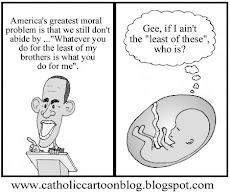

 Posts
Posts


