Since the Progressive Era, classical, 19th century liberalism, which emphasizes individual liberty, free markets and small government, has been on the decline in America. During the late 19th and early 20th centuries two different trajectories have been followed.
On the one hand, the cultural elites have increasingly rejected orthodox Christianity in favor of one sort of secularist ideas or another. The influence of Darwinism, German higher criticism, and scientific positivism led to the abandonment of basic Christian doctrines, especially in the liberal Protestant denominations.
On the other hand, liberalism's concept of equality before the law or equality of opportunity, was increasingly put on the defensive by the Marxist concept of equality of outcomes embedded in the welfare state ideal. Progressives, whose philosophy was rooted in romantics like Rousseau and Marx, pushed the idea that government should ensure social equality and the catchy phrase that came to express this idea was "social justice," which was seen as clearly superior to plain old-fashioned "justice."
This new notion of equality came to be treated as equal in importance to liberty; thus we see the philosopher John Rawl attempting to square the circle of having two at least partially incompatible first principles in liberal political philosophy in A Theory of Justice. His grand attempt was a failure and showed that when push comes to shove, liberals had nothing more substantial than utilitarianism to serve as a basis for resolving conflicts between equality and liberty. Alasdair MacIntyre shows in After Virtue that this utilitarianism resolves into emotivism and depends on social consensus for its legitimacy. When social consensus breaks down, as for example on abortion after the Supreme Court's ill-considered ruling in 1973, which did so much to call into question the legitimacy and impartiality of the judiciary, emotivism serves as nothing other than a mask for a Nietzschean will-to-power.
But if the new "social justice" liberalism or "socialist liberalism" was increasingly incoherent in terms of philosophical foundations, the old, classical, 19th century liberalism suffered from a similar deficit of philosophical foundations. The problem here was the drift of the cultural elites in America away from Christianity during the Progressive Era and the inadequacy of liberal democracy without a religious foundation was exposed. Liberalism is a fine social philosophy except when it loses a pre-political concept of the Good, which was supplied in the 18-19th centuries by Christianity. This is the significance of Tocqueville's remark in Democracy in America that the American constitution was fit for a religious people and no other. It is only safe to have a constitution that fails to name the highest Good as the foundation of society if the people for whom that constitution is designed share a common faith in God, morality and the soul that provide a commonly agreed upon core of behavior that all agree is basic to political life. The classical 19th century liberalism, which left individuals freer to pursue their own ideals than any political philosophy before in history only worked because a Christian culture made it "ordered liberty" rather than something more like amoral social Darwinism.
The intellectual incoherence of liberalism, as criticized by, for example, Louis Groarke in his article: "What is Freedom? Why Christianity and Theoretical Liberalism Cannot Be Reconciled," meant that liberalism increasingly became suspect for Christians and, at the same time, increasingly vulnerable to the arguments of socialists that equality can supply the missing content in an increasingly vacuous liberalism.
Some Christians, faced with the emptiness of liberalism and lacking the courage to advocate for the Judeo-Christian worldview as the necessary basis for Western culture in an increasingly secularized social context, were seduced into thinking that the Marxist idea of equality could make the empty liberalism (often scornfully known as "neo-liberalism," especially in Europe) more humanistic. They thought that the Marxist idea of equality could serve as a substitute for the Judeo-Christian doctrine of man created in the image of God. Just as Christianity had provided a moral foundation for 19th century liberalism, so Marxism might be able to provide a moral foundation for 20th century liberalism, they thought.
After the collapse of economic Marxism in 1979 as the Soviet Union dissolved and the Chinese Communist Party embraced a kind of "crony capitalism" or "state capitalism" in a series of pragmatic reforms that recognized the necessity of the market in wealth creation but retained the dominance of the Party in Chinese society, it seemed to some that Marxism was dead. But this was an illusion. Marxism continued to serve as a substitute religion for Western liberal elites who could no longer believe in traditional Christianity by purportedly contributing to political philosophy the ideal of equality of all as the raison de etre of the state.
Liberalism in the 21st century is really an amalgam of classical liberalism (J. S. Mill) and socialism (Karl Marx) and its intellectual incoherence, unresolved by the heroic efforts of John Rawls, remains problematic. Conservatives are those who believe that 19th century liberalism plus the West's Judeo-Christian heritage provides a way forward that marries tolerance and cultural creativity with solid pre-political, religious foundations.
The Conservative critique of contemporary liberalism is that of Dostoevesky in the Grand Inquisitor scene in The Brothers Karamazov: that the West is being tempted to give up freedom in exchange for security and equality. The Grand Inquisitor represents the State which has assumed religious functions to itself and presents itself to the populace as the Great Liberator and Provider which can be relied upon to make life safe and secure. Conservatives fear that the end point of contemporary liberalism is a soft totalitarianism of the sort described in Aldous Huxley's Brave New World.
Western culture, having roused itself for one last heroic battle against the hard totalitarianisms of Fascism, Nazism and Communism in the mid-twentieth century, is now exhausted and slowly declining into the soft totalitarianism of the welfare state. The current teetering of the Euro, the decline of Europe in general and the sovereign debt crisis threatening the Western world as a whole, however, make the West vulnerable to a new hard totalitarian threat in the form of militant, oil-money fueled Islam.
The liberal response to the conservative critique is simply to say: "Don't ask us to believe in Christianity again because we can't." Yet, one get the impression that the main problem they have with Christianity is not metaphysical or scientific in nature, but simply a refusal to give up the personal anarchism (let's not dignify it with the label of freedom) of the sexual revolution. They are open to believing in any god that allows sexual license, which makes pantheistic nature-worship attractive to some and a vague moralistic therapeutic deism attractive to others. But these gods do not provide a moral core of doctrine or a theory of human nature that could fund a reinvigorated political liberalism.
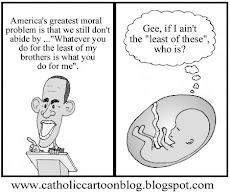
So debate about whether or not Obama is a socialist is moot. It is as equally meaningless to scornfully dismiss the idea that he is a Marxist Leninist as it is to dismiss the idea that he was not born in the United States. Of course, he is not a 1930s Stalinist and of course he is not an alien. But to think that saying this means that he is not an enemy of classical liberalism or a proponent of a socialist-shaped kind of liberalism is equally ridiculous. He is a product of the 20th century fusion of the socialist ideal of equality with a drifting, incoherent political liberalism, which has been detached from its Christian roots.
What contemporary liberals need to understand, and often don't, is that the conservatives are as strongly opposed to contemporary progressivism (contemporary socialist-shaped liberalism) as they are to Marxism itself. The critique is not just about levels of taxation, amount of government regulation or social conservative moral views. The critique is far deeper and more profound that that. The basic critique of contemporary liberalism is that it lacks the philosophical foundations that are necessary to resist creeping soft totalitarianism and therefore it is inadequate as a cultural foundation for the West going forward. It is shallow, out-of-date, and dangerous, and represents a hollowed-out, secularized form of Christianity that is merely a pale reflection of the real thing, a reflection that is rapidly fading into history as the West continues its long, sad, decline.
Showing posts with label Equality. Show all posts
Showing posts with label Equality. Show all posts
Monday, June 27, 2011

Wednesday, May 18, 2011
"Savage Capitalism" versus Socialist Savages
The bubble of smugness and overweening atmosphere of moral superiority in which European left-wing intellectuals dwell is just sickening. That bubble was on display this week when the essential difference between American and European ideas of equality came into clear focus.
America is built on the principle of equality before the law for rich and poor. This is Capitalist Equality. But Europe has re-defined equality to mean relative equality of income through the redistribution of wealth by the welfare state. This is Socialist Equality.
The European elites have a phrase they like to bandy about to make themselves feel superior to the Anglo-Saxon world: "savage capitalism." By this they apparently mean free market societies in which the poor actually have jobs and where the welfare state is minimalist and designed to get people back on their feet and self-reliant as soon as possible. The alternative to "savage capitalism" is a paternalistic welfare state that turns most of the population into wards of the State and the governing elite. For the contemporary European Left, "Equality" looks suspiciously like the old class-stratified Europe of the 19th century in which the rulers pay off the working classes with perks to keep them from bloody revolution. Despite all the Marxist rhetoric and socialist platitudes, Bismarck's welfare state is still the operative norm. The goal is to destroy liberalism by having the upper classes embrace a kind of socialism that provides bread and circuses for the masses in exchange for freedom. Dostoevesky's Grand Inquistor turns out to be a socialist, just as he prophesied.
All this was made clear once again in the Strauss-Kahn scandal in New York City. A "Master of the Universe" was hauled off a plane bound for France and charged with sexual assault. He stands accused of attacking a maid in a hotel like some sort of caveman. So far, this is certainly news but not totally unheard of; sociopaths sometimes achieve high positions and then do horrible things. I want to stress at this point, that I am not condemning socialism or the European welfare state because one particular politician stands accused of committing a crime. It is just as impossible to draw a line from his alleged criminal behavior (even if he turns out to be guilty) to his political convictions as it would be to do so when a conservative politician betrays his wife with an adulterous affair.
However, the reaction of French left-wing intellectuals to this case is an entirely different matter. Clearly, the left-wing intellectual elite in France has exhibited an attitude of entitlement, class-superiority and probably racism in their reaction. Instead of commending the New York police for doing their job, admiring American society for giving all people equality before the law and holding Strauss-Kahn responsible for his actions, they blamed the victim, condemned the police for treating a rich, powerful Eurocrat like anyone else and suggested that Strauss-Kahn was set up and actually innocent.
Instead of a rush to judgment there was a rush to rationalization.
This is no isolated case. These are the same people, Bernard-Henri Levy for example, who supported child rapist Roman Polanski when the authorities had the nerve actually to arrest him. Jonah Goldberg quotes Levy:
Jenn Q. Public at NewsReal Blog describes the media rape of the victim in the French press in sickening detail. This is her introducton:
You want to talk about American Exceptionalism: here it is on display. In Guniea and France, rich men can rape poor women and get away with it. In New York City, the rich guy wears handcuffs and is denied bail. There is American Exceptionalism in a nutshell.
Now, I ask you, which country of the three is really civilized? Which is the one you want to live in if you are poor? It looks like the "savage capitalists" win hands down. Why? Because equality before the law is fundamental to human dignity and justice and much more important than welfare for the masses and elite privileges for the socialist elite.
I'm with the "savage capitalists" and if that shocks the French, that is because they are socialist savages who need to catch up with history.
America is built on the principle of equality before the law for rich and poor. This is Capitalist Equality. But Europe has re-defined equality to mean relative equality of income through the redistribution of wealth by the welfare state. This is Socialist Equality.
The European elites have a phrase they like to bandy about to make themselves feel superior to the Anglo-Saxon world: "savage capitalism." By this they apparently mean free market societies in which the poor actually have jobs and where the welfare state is minimalist and designed to get people back on their feet and self-reliant as soon as possible. The alternative to "savage capitalism" is a paternalistic welfare state that turns most of the population into wards of the State and the governing elite. For the contemporary European Left, "Equality" looks suspiciously like the old class-stratified Europe of the 19th century in which the rulers pay off the working classes with perks to keep them from bloody revolution. Despite all the Marxist rhetoric and socialist platitudes, Bismarck's welfare state is still the operative norm. The goal is to destroy liberalism by having the upper classes embrace a kind of socialism that provides bread and circuses for the masses in exchange for freedom. Dostoevesky's Grand Inquistor turns out to be a socialist, just as he prophesied.
All this was made clear once again in the Strauss-Kahn scandal in New York City. A "Master of the Universe" was hauled off a plane bound for France and charged with sexual assault. He stands accused of attacking a maid in a hotel like some sort of caveman. So far, this is certainly news but not totally unheard of; sociopaths sometimes achieve high positions and then do horrible things. I want to stress at this point, that I am not condemning socialism or the European welfare state because one particular politician stands accused of committing a crime. It is just as impossible to draw a line from his alleged criminal behavior (even if he turns out to be guilty) to his political convictions as it would be to do so when a conservative politician betrays his wife with an adulterous affair.
However, the reaction of French left-wing intellectuals to this case is an entirely different matter. Clearly, the left-wing intellectual elite in France has exhibited an attitude of entitlement, class-superiority and probably racism in their reaction. Instead of commending the New York police for doing their job, admiring American society for giving all people equality before the law and holding Strauss-Kahn responsible for his actions, they blamed the victim, condemned the police for treating a rich, powerful Eurocrat like anyone else and suggested that Strauss-Kahn was set up and actually innocent.
Instead of a rush to judgment there was a rush to rationalization.
This is no isolated case. These are the same people, Bernard-Henri Levy for example, who supported child rapist Roman Polanski when the authorities had the nerve actually to arrest him. Jonah Goldberg quotes Levy:
And what I know even more is that the Strauss-Kahn I know, who has been my friend for 20 years and who will remain my friend, bears no resemblance to this monster, this caveman, this insatiable and malevolent beast now being described nearly everywhere. Charming, seductive, yes, certainly; a friend to women and, first of all, to his own woman, naturally, but this brutal and violent individual, this wild animal, this primate, obviously no, it’s absurd.There is more - much more - here. As Goldberg says, without knowing any of the facts Levy leaps to the defense of his friend and leaves himself very little wiggle-room. I suggest that the most telling part of Levy's remarks are the final sentence, which basically says that there should be one system of justice for the masses and another, more lenient, system for European big-shots like Strauss-Kahn, Polanski and Levy.
This morning, I hold it against the American judge who, by delivering him to the crowd of photo hounds, pretended to take him for a subject of justice like any other.
Jenn Q. Public at NewsReal Blog describes the media rape of the victim in the French press in sickening detail. This is her introducton:
One gets the sense that even the New York Times, which is the slavish follower of European social democracy most of the time, is not quite sure what to make of the French reaction. They simply reported it mostly without comment trying delicately to put the French concern for Stauss-Kahn and lack of concern for his alleged victim in the best possible light.The size of her breasts, the shape of her backside, and of course, her name. These are some of the details Le Monde, the French “journal de référence,” and its subsidiary Le Post published about the woman who says IMF chief Dominique Strauss-Kahn groped her genitals and forced her to perform oral sex on him in a room at the Sofitel near Times Square.
France-Soir described the cut of her hotel maid uniform and how good she looks for a woman in her thirties, while France’s RMC radio reported that Strauss-Kahn’s attorneys were surprised by how “unattractive” she is.
As our colleagues Steven Erlanger and Katrin Bennhold report, “The arrest in New York of one of France’s leading global figures and a possible next president, Dominique Strauss-Kahn, on charges of attempted rape produced an earthquake of shock, outrage, disbelief and embarrassment throughout France on Sunday.”
Though horrified by those alleged crimes, the French press and political elite on Monday seemed perhaps more scandalized still by the images of Mr. Strauss-Kahn’s brusque treatment by the New York police, and his exposure in the American media.
Even the NTY couldn't cover up the fact that the French reaction contained far more concern for a rich, powerful Eurocrat than for a victimized woman.
This is not an anomoly; this is standard operating procedure for the French Left and for the European media. This attitude is one of entitlement, pride, arrogance, self-righteous superiority and racial superiority. When elitist Leftists think that poor women are rightly to be regarded as the prey of powerful men, this is objectively and accurately described as a bunch of socialist savages prowling around our society devouring the weak and the defenseless.
These socialist savages support abortion to cover up their sexual promiscuity and they contribute to the culture of death in several other ways as well. The rule of law is for the "little people" and the idea of natural law or objective moral right and wrong is a primitive superstition. The rhetoric of concern for "the poor" is useful in getting the naive and idealistic clergymen to fall into line and it looks good on campaign posters. But that is all it means: slogans and manipulation. In this Orwellian world, servant means master and social democracy means raping the help.
You want to talk about American Exceptionalism: here it is on display. In Guniea and France, rich men can rape poor women and get away with it. In New York City, the rich guy wears handcuffs and is denied bail. There is American Exceptionalism in a nutshell.
Now, I ask you, which country of the three is really civilized? Which is the one you want to live in if you are poor? It looks like the "savage capitalists" win hands down. Why? Because equality before the law is fundamental to human dignity and justice and much more important than welfare for the masses and elite privileges for the socialist elite.
I'm with the "savage capitalists" and if that shocks the French, that is because they are socialist savages who need to catch up with history.
Thursday, June 10, 2010
Freedom and Equality: Contested Ideas in the Modern World
I find that in talking to people about ethics and politics, there is a lot of fuzzy thinking about certain key concepts. Many people have a vague idea that socialism is about sharing and capitalism is about the strong exploiting the weak and that is about it. Cultural Marxism has so infiltrated our institutions in the contemporary Western world that our Western intellectual heritage is in the process of being overwhelmed. Freedom and equality are two key ideas in modernity that need close definitions.
Freedom #1: There are two very different ideas of freedom abroad today. First, there is the classical/Christian definition of freedom as the ability to realize one's telos, to actualize one's true nature, to attain one's potential. This idea of freedom requires that the rational part of one's being control the appetites so as to direct us toward the goal of becoming all that we can be. Self-discipline, the cultivation of the virtues and practical wisdom are necessary here and, in a Christian perspective, heeding Divine revelation is necessary as well.
Freedom #2: The second idea of freedom is the late-modern degenerate concept of freedom as the ability to do whatever I feel I want to do at the moment: freedom from constraint. This idea of freedom is what is left when political liberalism is practiced in a totally secularized context by a post-Christian culture. Freedom from constraint is highly individualistic and practically indistinguishable from slavery to one's irrational appetites. It is a self-contradictory notion of freedom because it tries to expand personal freedom in such a way as to destroy freedom by allowing the strong to prey upon the weak with no moral constraints.
Equality #1: The first concept of equality is equality before the law, the idea that there is not one law for the rich and another law for the poor, but one law over all. This is the idea of the rule of law, which is seen as more objective than merely the will of the strong. This idea has deep roots in Western culture: in the Old Testament where even the king was under Torah and in republican Rome where all were under the law. The rule of law is incompatible with absolute monarchy or dictatorship.
Equality #2: The second concept of equality is the animating principle of the French Revolution and was formulated by the theoretician of the French Revolution, J. J. Rousseau. This concept of equality sees equality as equality, not of opportunity, but of outcome. It is equality not under the law, but equality of income under the administration of the bureaucratic state. This kind of equality is not found in nature; it must be created by rational, bureaucratic state.
In order to understand modern politics, it is necessary to distinguish clearly between these two sets of ideas. Freedom #1 and Equality #1 are rooted deep within Western culture and are held by conservatives. But Freedom #2 and Equality #2 are held by progressives, the heirs of the French Revolution. Extreme individualism (in the name of Freedom #2) and extreme statism (in the name of Equality) go together. The all-powerful State becomes the only limitation on the social Darwinism in which the strong prey on the weak. Intermediate institutions like the family are seen as ineffective and the State becomes that Protector of the Individual and Guarantor of Freedom and Equality.
What is confusing is that the progressive agenda is often pushed in the name of freedom and equality and Christians rightly believe that equality and freedom are good ideals, so they do not oppose the progressive agenda. But Freedom #2 and Equality #2 lead to statism, slavery and the loss of personhood, whereas Freedom #1 and Equality #2 lead to democratic governance, personal freedom, the rule of law, limited government and free enterprise.
Christians should seek a politics in which Freedom #1 and Equality #1 are the basis of public law. This is not to impose a theocracy, but merely to cultivate a humane and just politics.
Freedom #1: There are two very different ideas of freedom abroad today. First, there is the classical/Christian definition of freedom as the ability to realize one's telos, to actualize one's true nature, to attain one's potential. This idea of freedom requires that the rational part of one's being control the appetites so as to direct us toward the goal of becoming all that we can be. Self-discipline, the cultivation of the virtues and practical wisdom are necessary here and, in a Christian perspective, heeding Divine revelation is necessary as well.
Freedom #2: The second idea of freedom is the late-modern degenerate concept of freedom as the ability to do whatever I feel I want to do at the moment: freedom from constraint. This idea of freedom is what is left when political liberalism is practiced in a totally secularized context by a post-Christian culture. Freedom from constraint is highly individualistic and practically indistinguishable from slavery to one's irrational appetites. It is a self-contradictory notion of freedom because it tries to expand personal freedom in such a way as to destroy freedom by allowing the strong to prey upon the weak with no moral constraints.
Equality #1: The first concept of equality is equality before the law, the idea that there is not one law for the rich and another law for the poor, but one law over all. This is the idea of the rule of law, which is seen as more objective than merely the will of the strong. This idea has deep roots in Western culture: in the Old Testament where even the king was under Torah and in republican Rome where all were under the law. The rule of law is incompatible with absolute monarchy or dictatorship.
Equality #2: The second concept of equality is the animating principle of the French Revolution and was formulated by the theoretician of the French Revolution, J. J. Rousseau. This concept of equality sees equality as equality, not of opportunity, but of outcome. It is equality not under the law, but equality of income under the administration of the bureaucratic state. This kind of equality is not found in nature; it must be created by rational, bureaucratic state.
In order to understand modern politics, it is necessary to distinguish clearly between these two sets of ideas. Freedom #1 and Equality #1 are rooted deep within Western culture and are held by conservatives. But Freedom #2 and Equality #2 are held by progressives, the heirs of the French Revolution. Extreme individualism (in the name of Freedom #2) and extreme statism (in the name of Equality) go together. The all-powerful State becomes the only limitation on the social Darwinism in which the strong prey on the weak. Intermediate institutions like the family are seen as ineffective and the State becomes that Protector of the Individual and Guarantor of Freedom and Equality.
What is confusing is that the progressive agenda is often pushed in the name of freedom and equality and Christians rightly believe that equality and freedom are good ideals, so they do not oppose the progressive agenda. But Freedom #2 and Equality #2 lead to statism, slavery and the loss of personhood, whereas Freedom #1 and Equality #2 lead to democratic governance, personal freedom, the rule of law, limited government and free enterprise.
Christians should seek a politics in which Freedom #1 and Equality #1 are the basis of public law. This is not to impose a theocracy, but merely to cultivate a humane and just politics.
Wednesday, August 26, 2009
What is Social Justice?
Everywhere I go in Evangelical circles these days I hear people talking about "social justice." Whether it is a session on the "Missional Church" at AAR or a website promoting the "Emergent Church" the talk is not of how to evangelize, but how to promote social justice. Many of the books Evangelicals are reading by authors from Jim Wallis to Ron Sider to Rick Warren to Tony Campolo promote the view that the Evangelical churches have neglected social justice for too long and have a long way to go to "catch-up" with the liberal Protestants and other "progressive" movements.
So what exactly is social justice? It seems to me that two related but not identical themes are often conflated confusingly in the minds of those talking about social justice. Evangelicals, of course, are congentially sympathetic to the argument from Scripture; if you want to convince Evangelicals of the rightness of your view, appeal to Scripture. And advocates of social justice do that. They speak frequently - almost ritualistically - about the huge number of verses in the Bible that talk about the poor as compared to whatever issue is being proposed as the priority for Evangelicals. So, for example, there are more verses on poverty than homosexuality or abortion or whatever, therefore God's highest priority is social justice.
The Charitable Imperative
So what about all the verses that talk about the poor? It seems obvious that we can break them down into two distinct groups. The first group talks about neglect of the poor by those who have means to help but who don't choose to do so. This is a sin of ommission; it is apathy. So, for example, we have a passage like James 2:14-17.
"What good is it, my brothers, if a man claims to have faith but has no deeds? Can such faith save him? Suppose a brother or sister is without clothes and daily food. If one of you says to him 'Go, I wish you well; keep warm and well fed,' but does nothing about his physical needs, what good is it? In the same way, faith by itself, if it is not accompanied by action, is dead."
This passage is clearly teaching the same message as Jesus' parable of the Good Samaritan: namely that charity is a duty for Christians. We must not be so hard-hearted as not to share with our neighbour out of the abundance with which God has blessed us. We should personally make sacrifices in order to help the poor.
The Condemnation of Injustice
There are many other verses, on the other hand, which condemn the oppression of the poor. The classic one, I suppose, is the powerful story of Nathan confronting King David over his adultery with Bathsheeba and his murder of Uriah. In the story (II Samuel 12) Nathan tells the story of the rich man with many flocks and herds and the poor man who owned only one little lamb, which was a pet for his family. The rich man stole the poor man's lamb just because he could and for no reason other than the raw exercise of power and selfish will. Nathan condemns the king because he oppressed the poor by unjustly taking what was not his.
We know that during the time of David there was a great deal of centralization of land ownership, corrupt law courts that allowed the rich to cheat the poor and a growing number of impoverished people who were disconnected from the land. Surely, Nathan was making multiple points simultaneously with this powerful parable; adultery and murder are wrong, yes, but in addition so is cheating the poor who don't have the power to protect themselves. The king is supposed to be the shepherd of the flock and supposed to protect those who are unable to protect themselves. It was a personal morality point and a poltical point all wrapped up in one story.
Many of the condemnations of the prophets concerning the treatment of the poor have to do with cheating the poor (dishonest scales, bribery of government officials, corrupt courts). The main point of such preaching is that the poor man deserves equality before the law; no one is above the law. The poor deserve justice. This idea is not an invention of the French philosophes and it is not a modern idea; rather, it is rooted in the 3000 year old Judeo-Christian tradition.
Natural Justice versus Social Justice
Now, the idea of justice here is one of "natural justice" by which I mean equality before the law and equality of opportunity. No man is to be cheated, held back or have justice withheld from him just because he is poor or from a lower class. This is distinct from the peculiarly modern notion of "social justice," which states that if all men are to be equal they must have relatively equal wealth or status. This vision is democratic, levelling, and socialist. The minimum requirement for "social justice" is the bureaucratic welfare state that uses social engineering to administer all areas of life in order to create equality in status and wealth between all members of society.
"Social justice" is a concept distinct from both charity and natural justice. It is a distinctly modern idea and it is incompatible with limited government, a market economy, individual freedom, and a strong and flourishing civil society including strong families, churches and voluntary associations. "Social justice" is incompatible with "natural justice" rooted in the concept of man as created in the image of God and with the ideal of "charity" as taught in Scripture.
The Bible Does Not Teach Social Justice
"Natural justice" is incompatible with "social justice" because people are not by nature equal in IQ, work ethic, physical strength or genetic background. Additionally, people are born into vastly different socio-economic circumstances and different kinds of communities. All this natural inequality of endowment, however, is not incompatible with equality before the law and equality of worth and value as God's creatures. But it does have to be eradicated by a process of social engineering if equality of status and wealth is to be achieved.
And part of that social engineering will require that the law treat wealthy and poor people differently, taking from the former and re-distributing wealth to the latter. The rich cannot enjoy the same equality before the law as the poor or else wealth simply could not be re-distributed. Either the ideal of the law is that Justice is impartial and blind, or the ideal is that she is the bureaucratic nanny state which seeks to take from the rich and give to poor so as to create an artificial equality that nature has not been able to produce.
(If you believe that the Bible supports socialism or the redistribution of wealth, you are of course perfectly free to make that argument. All I am saying is that an exegetical argument needs to be made; you cannot assume from the charitable imperative and the condemnation of injustice before the law that the Bible is thereby saying that the welfare state is either just or required.)
The social justice ethic also scorns and ultimately undermines charity. The idea that the well-off should give of their personal resources and that civil society should foster a wide range of private charitable organizations (something Evangelicals have historically been very good at) is pooh-poohed as too little and too weak a response. Only the State has the power and the resources to make a real difference in the area of social justice; hence, Christian mission becomes basically one of trying to lobby the State so as to stir it to action and then to steer its efforts in the right direction.
So the Bible teaches the charitable imperative, i.e. the command to be charitable to the poor, and it strongly condemns all forms of injustice toward the poor. It teaches that all of us are equal in the sense that we are created in God's image and therefore all of us enjoy equality before the law. Justice requires that all be treated in the same way by the State.
This means that the relief of the suffering of the poor is the responsibility of the Church (and of all individuals whether Christian or not who have means to help) and this responsibility cannot be shuffled off onto the State. The State's responsibility is to ensure natural justice, i.e. equal treatment of all before the law. But the modern ethic of social justice, which requires a bureaucratic welfare state committed to social levelling is not the "obvious" implication of the extensive biblical emphsis on charity and justice for the poor.
Conclusion
Liberal Protestants have re-defined sin as economic inequality, salvation as social justice, eschatology as progress and the Kingdom of God as the welfare state. This is the program of the 19th century liberal "Social Gospel" movement and I fear that many contemporary Evangelicals are repeating the same decline into heresy as many of their forebears did a century ago. To read the modern idea of "social justice" into the Bible is to co-opt the Bible in suport of an alien agenda and to misconstrue it.
I know that many Evangelicals who talk about social justice do not consciously do so with the distinctions I have made in this article in mind. So it would be easy to brush this aside and say, "Well, that is not what I mean by social justice." But in the interests of clear communication and clear thinking, we ought to make sure that we are using terminology consistently. And I think you will find that if you make an effort to talk about natural justice and charity in certain circles, and are careful to make yourself understood, you will run into resistance and disagreement that you never realized was there before. Then it will be up to you to decide what you believe.
So what exactly is social justice? It seems to me that two related but not identical themes are often conflated confusingly in the minds of those talking about social justice. Evangelicals, of course, are congentially sympathetic to the argument from Scripture; if you want to convince Evangelicals of the rightness of your view, appeal to Scripture. And advocates of social justice do that. They speak frequently - almost ritualistically - about the huge number of verses in the Bible that talk about the poor as compared to whatever issue is being proposed as the priority for Evangelicals. So, for example, there are more verses on poverty than homosexuality or abortion or whatever, therefore God's highest priority is social justice.
The Charitable Imperative
So what about all the verses that talk about the poor? It seems obvious that we can break them down into two distinct groups. The first group talks about neglect of the poor by those who have means to help but who don't choose to do so. This is a sin of ommission; it is apathy. So, for example, we have a passage like James 2:14-17.
"What good is it, my brothers, if a man claims to have faith but has no deeds? Can such faith save him? Suppose a brother or sister is without clothes and daily food. If one of you says to him 'Go, I wish you well; keep warm and well fed,' but does nothing about his physical needs, what good is it? In the same way, faith by itself, if it is not accompanied by action, is dead."
This passage is clearly teaching the same message as Jesus' parable of the Good Samaritan: namely that charity is a duty for Christians. We must not be so hard-hearted as not to share with our neighbour out of the abundance with which God has blessed us. We should personally make sacrifices in order to help the poor.
The Condemnation of Injustice
There are many other verses, on the other hand, which condemn the oppression of the poor. The classic one, I suppose, is the powerful story of Nathan confronting King David over his adultery with Bathsheeba and his murder of Uriah. In the story (II Samuel 12) Nathan tells the story of the rich man with many flocks and herds and the poor man who owned only one little lamb, which was a pet for his family. The rich man stole the poor man's lamb just because he could and for no reason other than the raw exercise of power and selfish will. Nathan condemns the king because he oppressed the poor by unjustly taking what was not his.
We know that during the time of David there was a great deal of centralization of land ownership, corrupt law courts that allowed the rich to cheat the poor and a growing number of impoverished people who were disconnected from the land. Surely, Nathan was making multiple points simultaneously with this powerful parable; adultery and murder are wrong, yes, but in addition so is cheating the poor who don't have the power to protect themselves. The king is supposed to be the shepherd of the flock and supposed to protect those who are unable to protect themselves. It was a personal morality point and a poltical point all wrapped up in one story.
Many of the condemnations of the prophets concerning the treatment of the poor have to do with cheating the poor (dishonest scales, bribery of government officials, corrupt courts). The main point of such preaching is that the poor man deserves equality before the law; no one is above the law. The poor deserve justice. This idea is not an invention of the French philosophes and it is not a modern idea; rather, it is rooted in the 3000 year old Judeo-Christian tradition.
Natural Justice versus Social Justice
Now, the idea of justice here is one of "natural justice" by which I mean equality before the law and equality of opportunity. No man is to be cheated, held back or have justice withheld from him just because he is poor or from a lower class. This is distinct from the peculiarly modern notion of "social justice," which states that if all men are to be equal they must have relatively equal wealth or status. This vision is democratic, levelling, and socialist. The minimum requirement for "social justice" is the bureaucratic welfare state that uses social engineering to administer all areas of life in order to create equality in status and wealth between all members of society.
"Social justice" is a concept distinct from both charity and natural justice. It is a distinctly modern idea and it is incompatible with limited government, a market economy, individual freedom, and a strong and flourishing civil society including strong families, churches and voluntary associations. "Social justice" is incompatible with "natural justice" rooted in the concept of man as created in the image of God and with the ideal of "charity" as taught in Scripture.
The Bible Does Not Teach Social Justice
"Natural justice" is incompatible with "social justice" because people are not by nature equal in IQ, work ethic, physical strength or genetic background. Additionally, people are born into vastly different socio-economic circumstances and different kinds of communities. All this natural inequality of endowment, however, is not incompatible with equality before the law and equality of worth and value as God's creatures. But it does have to be eradicated by a process of social engineering if equality of status and wealth is to be achieved.
And part of that social engineering will require that the law treat wealthy and poor people differently, taking from the former and re-distributing wealth to the latter. The rich cannot enjoy the same equality before the law as the poor or else wealth simply could not be re-distributed. Either the ideal of the law is that Justice is impartial and blind, or the ideal is that she is the bureaucratic nanny state which seeks to take from the rich and give to poor so as to create an artificial equality that nature has not been able to produce.
(If you believe that the Bible supports socialism or the redistribution of wealth, you are of course perfectly free to make that argument. All I am saying is that an exegetical argument needs to be made; you cannot assume from the charitable imperative and the condemnation of injustice before the law that the Bible is thereby saying that the welfare state is either just or required.)
The social justice ethic also scorns and ultimately undermines charity. The idea that the well-off should give of their personal resources and that civil society should foster a wide range of private charitable organizations (something Evangelicals have historically been very good at) is pooh-poohed as too little and too weak a response. Only the State has the power and the resources to make a real difference in the area of social justice; hence, Christian mission becomes basically one of trying to lobby the State so as to stir it to action and then to steer its efforts in the right direction.
So the Bible teaches the charitable imperative, i.e. the command to be charitable to the poor, and it strongly condemns all forms of injustice toward the poor. It teaches that all of us are equal in the sense that we are created in God's image and therefore all of us enjoy equality before the law. Justice requires that all be treated in the same way by the State.
This means that the relief of the suffering of the poor is the responsibility of the Church (and of all individuals whether Christian or not who have means to help) and this responsibility cannot be shuffled off onto the State. The State's responsibility is to ensure natural justice, i.e. equal treatment of all before the law. But the modern ethic of social justice, which requires a bureaucratic welfare state committed to social levelling is not the "obvious" implication of the extensive biblical emphsis on charity and justice for the poor.
Conclusion
Liberal Protestants have re-defined sin as economic inequality, salvation as social justice, eschatology as progress and the Kingdom of God as the welfare state. This is the program of the 19th century liberal "Social Gospel" movement and I fear that many contemporary Evangelicals are repeating the same decline into heresy as many of their forebears did a century ago. To read the modern idea of "social justice" into the Bible is to co-opt the Bible in suport of an alien agenda and to misconstrue it.
I know that many Evangelicals who talk about social justice do not consciously do so with the distinctions I have made in this article in mind. So it would be easy to brush this aside and say, "Well, that is not what I mean by social justice." But in the interests of clear communication and clear thinking, we ought to make sure that we are using terminology consistently. And I think you will find that if you make an effort to talk about natural justice and charity in certain circles, and are careful to make yourself understood, you will run into resistance and disagreement that you never realized was there before. Then it will be up to you to decide what you believe.
Subscribe to:
Posts (Atom)





 Posts
Posts


