I suppose it was just a matter of time until people within Evangelicalism began to call for unmarried people to start using contraception as the "lesser of two evils," with the other evil being abortion. This story in Christianity Today by Matthew Lee Anderson, Why Churches Shouldn't Push Contraceptives to their Singles, is at once shocking and unsurprising.
[See Anderson's two blog posts: The Church and Contraception for its Single Members and A Hill to Die On: Evangelicals, Contraception and the Integrity of Our Witness.]
As Western Evangelicalism continues to become bigger, more worldly and more accommodated to the late modern secular society around it, its resources to resist the depraved immorality of late, modern, Western decadence continue to deteriorate.
Pope John Paul II and a growing host of intelligent Catholic writers such as Mary Eberstadt, Christopher West and Janet Smith have put forward the thesis that contraception and abortion stand or fall together and that the problem we face is not merely an issue of the sanctity of innocent life (though it certainly is that), but also a false understanding of the purpose of sexuality rooted in a false understanding of human nature itself that underlies both the recent rush to embrace both contraception and abortion. In other words, they argue that we must understand what human beings are and what role our sexuality plays in humans fulfilling their ultimate telos as creatures made in God's image, if we are to be able properly to evaluate the morality of contraception and abortion.
The sea-change in the 1970s that saw formerly apathetic Evangelicals quite suddenly become rightfully concerned about the rise of abortion-on-demand (i.e. abortion as birth control) led to an Evangelical-Catholic coalition in support of the sanctity of human life that is most welcome. The work of Francis Schaeffer and Harold Brown is especially notable here. Opposition to abortion, euthanasia and infanticide by this coalition has been key to slowing down the advance of the culture of death legally, socially, theologically and politically. It has also brought Evangelicals and John Paul II Catholics into an alliance in which each sees in the other side more congenial dialogue partners than either sees in the liberals of their own traditions. We can be thankful for these developments.
But Evangelical opposition to abortion has been predicated almost completely on the basis of the sixth commandment, whereas their Catholic counterparts have those reasons and also other, deeper, reasons rooted in the seventh commandment, Genesis 1-2 and Jesus' teaching on sexuality for opposing the whole mentality that lies behind the drive toward social approval of contraception, promiscuity and abortion. A few Evangelicals, notably Al Mohler, have understood that what the Catholics call "the contraceptive mentality" is a serious problem, but most have not probed into what this might mean.
Contemporary, conservative Evangelicals such as Daniel Heimbach, John Piper and Andreas Kostenberger have written good books on sexuality in which they try to hold the line against promiscuity - including both fornication and adultery - but they have seldom probed into the view of sexuality and human nature presupposed by the contraceptive mentality. They have done good service upholding the rule against extra-marital and pre-marital sex, but seem at a loss to explain the deep theological reasons for the rule, which, of course, inevitably leads some to suppose that the rule is entirely arbitrary and possibly unimportant.
Is it possible that the reason why the left wing of Evangelicalism is weakening in its opposition to homosexuality is that it is very difficult (and perhaps impossible) to specify the moral difference between homosexual behaviour and heterosexual acts in which artificial, contraception is used? Are not the two kinds of sexual behaviour similar in important ways?
For one thing, both are "unnatural" in that both employ the sexual organs for purposes for which they were not designed. Our sexual organs are part of the reproductive system and on a strictly biological level they are designed for reproduction. Marriage is also designed for reproduction; Genesis 1:27 makes it clear that there is a close connection between man being created in the image of God and as male and female. And Genesis 1:28 makes it clear that the Divine intention in creating man as male and female is procreation. Just as God is Triune and not unitary, so man is created in two sexes and just as God is in his nature creative with the mutual love of Father and Son issuing forth in the inevitable result of creative love in the Holy Spirit, so man as male and female is able to issue forth in fruit created through love. So to say that the telos of sexual intercourse is procreation is not to reduce man to his biological substratum; rather it is to raise him to his highest dignity. Although the animals reproduce sexually, they do not do so through personal love and this marks out mankind alone as being in the image of God. Non-procreative sex is therefore unnatural for humans and a denial of the dignity of man as the one creature made in God's image.
Secondly, sexual intercourse between married persons is not recreation or entertainment, but a deep personal knowing of the other person at a level of intimacy and trust that allows the two to become one flesh. When a man has intercourse with a woman he is saying: "I love you and desire to stay with you forever. If a child results from this act, I will devote my life to helping you raise the child." When a woman has intercourse with a man she is saying: "I love you and desire to stay with you. I trust that you will devote your life to helping me raise the child that may result from this act." That is what the act of intercourse intrinsically means, whether any individual couple know it or admit it or not. So any frivolous or casual sexual act is essentially a lie and is detached from the relational context that makes it different from animal sex and brings it into line with God's purpose in creating us male and female.
So, in these two ways, which can be summarized as mutual, personal, loving commitment, married sex is morally right and in harmony with the will of God for the human creature and the human creature's highest good. The rule serves the higher good for the man, the woman and the child - all of whom are involved in the act of sexual intercourse. When the Divine plan for human sexuality is abrogated, the following things happen:
1. Sex becomes a matter of self-focused pleasure and the satisfaction of lust rather
than a drive to deep, personal, committed intimacy and oneness.
2. Sex becomes detached from its procreative intent. Fornication and adultery are recognized as creating inappropriate contexts for bringing new human life into the world.
3. Potential children are fenced out of the act of sexual intercourse through artificial contraception.
4. Women are increasingly regarded as "sex objects" and they even internalize this degraded status.
5. A great temptation arises to resort to abortion as a "back-up" to failed contraception or sexual behaviour so driven by lust that contraception was not used.
6. Divorce can be contemplated as an option much more easily when sex is understood as the satisfaction of physical desires, rather than as a drive to total oneness because if marriage is understood as a contract for mutually satisfying sexual relations (as for Kant), rather than as a vehicle for total unity of husband and wife into one flesh, then breaking the marriage contract does not necessarily seriously wound and even potentially destroy one's personhood.
On this analysis, abortion does not appear suddenly out of nowhere as a sudden temptation to break the sixth commandment; rather, it has its context in the desire for non-procreative sex and the severing of the link between between the biological sex drive and the emotional and spiritual drive toward intimacy, commitment and oneness at the psychological and spiritual level with physical oneness as the sign of that greater oneness.
All this calls contraception into question on a moral level. Is the use of artificial contraception ever compatible with the Biblical understanding of human beings and the role of sex in the make up of our human nature as created in the image of God?
Why, apart from specific Biblical passages condemning it, is the theological basis for viewing homosexuality as morally deficient? I suggest that even pagans operating only with general revelation can see that there is a deep and important connection between sexual intercourse and reproduction, which is to say the family, and it is the fact that homosexual behaviour violates this connection that makes it suspect even to pagans. Of course, in an extreme state of idolatry and rebellion against the Creator, some pagans actually begin to believe that homosexuality is a good, as Paul argues in Romans 1:18-30. But this, to Paul, is iron-clad evidence of their extreme depravity rather than a respectable argument for the goodness of homosexual acts.
The important question is not: "Can one find a Bible verse specifically condemning artificial contraception?" but rather, "can the Biblical link between sexual intercourse and oneness of the husband and wife on the deepest level of their personality be preserved when sex becomes non-procreative and merely recreational?"
If decadent, late modern Western culture is committed unconditionally to anything, it is to the proposition that sex is just a recreational activity with no significance or meaning beyond the satisfaction of the lusts of the participants. This view of sexuality makes promiscuity seem good, marriage seem trivial, and contraception and abortion seem "necessary." What is "the contraceptive mentality" but this attitude toward human sexuality?
It seems to me that Evangelicals do not know what sex is for and so cannot give satisfactory reasons to our single adults why contracepted sex for pleasure before marriage is contrary to human nature as created in the image of God. The only way forward is serious theological reflection on human sexuality and contraception that goes way beyond the limits of a blog post.
Cross-posted at The Bayview Review.
Showing posts with label Marriage. Show all posts
Showing posts with label Marriage. Show all posts
Monday, April 30, 2012

Thursday, August 11, 2011
Can Men Be Trained?
Well, civilization depends on it so it better be possible or we are all doomed. Ed West, in his blog post today at the Daily Telegraph entitled "The riots remind us that polygamous societies are naturally violent," reflects on the meaning of the urban lawlessness in Britain the past few days and says:
When we discuss “fatherlessness” in urban areas what we are talking about, effectively, is polygamy. And countless studies have shown that, the more polygamous a society, the more aggressive its males. Polygamous hunter-gather societies are absurdly violent.Why? Because where male parental investment is low, the qualities that define a good male mate are strength, aggression and status. Where male parental investment is high, the most important quality becomes monogamy – because without it a woman’s children will starve. These qualities are partly hereditary, and on the male side this tendency for deadbeat lotharios to produce unfaithful sons was noted long before science dared to tread its feet into the field of evolutionary psychology. Science still cannot tell us to what degree male monogamy is influenced by nature; “allele 34” may influence vasopressin, the hormone associated with monogamy in male mammals, but then it may not (and even if it influences behaviour, men can still be “trained”).
It is interesting that West uses the word "polygamy" to describe the modern welfare state underclass. I would have said "promiscuity" but it comes to basically the same thing. Men want to have multiple partners and not stay with the the mother of their children and be good providers. Whether this is done through serial divorce, polygamy or unrestrained promiscuity with no marriage in the picture at all is only a matter of degree.
I find it interesting that he uses the theoretical framework of evolutionary biology to smuggle teleology back into the discussion after it was supposedly banned by modern science. But let's lay aside the pop psychology and pop biology and translate this discussion into the language of traditional Aristotelian and Biblical morality.
In our fallen world, men have a disordered sex drive. Strictly speaking, we are perverted. Our sexual desire is indiscriminate; the mere sight of a half-dressed, half-way attractive female stranger walking down the street is enough to arouse our desire. This is not normal; this is the result of the Fall into sin because lust is a perversion of natural sexual desire. Monogamy is natural; men should find their wives attractive and other women should not provoke lustful desires at all. But alas, we are sinners not only insofar as we make evil choices but because our sinful, fallen natures make us susceptible to making such choices even when we know better.
So, when West says that maybe a certain hormone makes us lustful he is simply talking about the efficient cause. The fact that our biology makes us promiscuous in our desires does not determine by itself the true purpose of our sexual desire. The fact that male sexual desire is strong is meant by nature to ensure the propagation of the race - to ensure that we get around to reproducing. But it is meant to operate monogamously -which is clear from the fact that mothers and children need fathers to help provide for the family - and not promiscuously. The indiscriminateness of male sexual desire is the problem, not the strength of the desire.
This is the germ of truth in the argument that sex is good and the Church therefore should not be against it. Of course the Church should not be against the goodness of strong sexual desire, but like any other great good, sex can be perverted and become destructive. So the Church rightly stands against the misdirection of strong male sexual desire outside the family.
This is why one of the Ten Commandments is "Thou shalt not commit adultery" and when Jesus deepens this commandment in Matthew 5 by saying that even looking lustfully on another woman is to commit adultery in the heart he is zeroing in on the real heart of what is wrong with adultery: the direction of the sexual desire away from one's wife to other women indiscriminately - promiscuity.
Civilization depends on marriage. Civilization involves training men to overcome the weakness they inherit from Adam: the fallenness of their sexual desires. Civilization depends on the family because it depends on channeling male energies constructively in support of women and children, rather than allowing they to wander all over the place indiscriminately and gradually peter out into destructive and meaningless behaviour. A society in which marriage is destroyed inevitably descends into barbarism and poverty. Does anything in today's headlines support such a thesis?
This is not some sort of novel social scientific theory. It is what your grandmother leaned from her grandmother. It is the hard won wisdom of several thousand years of civilizations rising, leveling off, declining and dying. The reason civilizations keep failing is original sin. History looks like we should expect it to look if the Bible is true. Brief periods of success punctuate longer periods of darkness and regression. There simply is no evidence for the truth of the false doctrine of Progress. You have to be an unscientific fanatic to believe in either unicorns or Progress.
If men can be trained to contain and control their promiscuous impulses through marriage, then there is hope. But if not, our civilization is destined to join the other twenty or so civilizations that once flourished but now are matters for investigation by archeologists.
The question of homosexuality is relevant here because we often hear that we must accept all sexual orientations as fixed, unchangeable and morally neutral. Does that include the orientation to promiscuity? The problem is that if we take whatever our fallen, sinful natures incline us to do as morally neutral, then we have no reason to fight for marriage as an institution that civilizes, directs and makes constructive male sexual desire. If the homosexual should just do what feels natural at the time, so should the married man whose secretary half his age seems to understand him better than the mother of his three children. Both have equally "natural" feelings. The problem with the modern sexual revolution is that it has no moral language to talk about the need to discipline and direct male sexual desire.
West's article is part of the problem because using the language of evolutionary biology is dangerous. Darwinism rejects teleology but then smuggles a different, more destructive, even demonic teleology in the back door. It is called social Darwinism and the Nazis used it logically. Once you elide the distinction between final cause and efficient cause by naively thinking the former is unnecessary, you open the door to people concluding that efficient cause (raging hormones) should be understood as final cause. Hence, promiscuity is seen as good. The will to power is natural and therefore justifiable.
The smart people who drove God out of the public schools and who rigorously exclude the traditional shame and blame morality from the curriculum didn't foresee the possibility that those taught evolutionary biology in an amoral fashion with final cause eliminated from the equation might just draw some logical conclusions from such teaching and use what they were taught to justify a descent in barbarism.
Or maybe they did foresee it and rejoiced ahead of time at what they were accomplishing. In that case, they must think the riots in Britain are just wonderful and noble.
Friday, May 20, 2011
The Greatest Marriage Proposal Ever!
Via Mark Shea at Catholic and Enjoying It comes this Youtube video. It is well worth watching. But all I can say is that I'm glad I am already married because it just raised the bar for marriage proposals to astronomical heights!
Wednesday, May 11, 2011
Same-sex "Marriage" and the Threat to Religious Freedom
Matthew J. Franck has an extremely well-written article entitled: "Religion, Reason and Same-sex Marriage" in First Things on how the current drive for homosexual "marriage" is a danger to religious freedom for traditionalists of all religions. He analysis of several recent court cases in the US and the UK shows that the movement to change the definition of marriage is driven almost entirely by judges and is getting very little popular traction. Yet, it poses a real threat to those who resist "re-education" and "progressivism."
Ironically, we have already passed the point where Christians are now more persecuted under the new regime than homosexuals were under the old regime. This is because the pro-same-sex "marriage" movement is determined actually to "re-educate" and control the thought processes of conservatives, whereas prior to the past few decades there was a long-standing understanding that what homosexuals did privately in their own bedrooms was not of importance in public affairs. They were free to think and act as they wished. Marriage, however, was a completely different matter; an institution centered on the raising of children. Homosexuals then and now have little interest in limiting the rights of adults for the sake of raising children, yet they wish to use marriage as a vehicle to impose their own version of the sexual revolution on the rest of us.
Franck concludes as follows:
It would seem that most of the people pushing the SSM agenda are not homosexuals themselves (although many are). What is the deepest motivation for such people? It might be a misguided sense of compassion for homosexual people, although it is hard to believe that a truly compassionate person could be so selectively and one-sidedly compassionate. It might be a mixture of naive idealism and illogical thinking and Franck certainly exposes plenty of poor reasoning in the court rulings he discusses. There is one other, very disturbing, possibility. It may be that secularists who want to eradicate the Christian influence on society in the name of an anarchistic kind of degenerate free-for-all have latched on to this issue as a club with which to beat Christians.
Again, if that latter is the real driver of the SSM issue, it is difficult to see the secularist position winning over the long term because it is fundamentally destructive of culture, civility and freedom. The worst it can do is provoke a right-wing reaction and lead to civil violence. There are signs in California post-Proposition 8 that violence is just below the surface and may well become inevitable if the anarchists don't get their own way. Then again, once the pendulum swings too far in the libertine direction violence may erupt anyway. It is too bad that we can't seem, as a culture, to find a way to live and let live. But extreme individualism coupled with a blind faith in the coercive power of the state to force those who disagree with you to change is a recipe for the erosion of social capital and the loss of freedom and civility.
Ironically, we have already passed the point where Christians are now more persecuted under the new regime than homosexuals were under the old regime. This is because the pro-same-sex "marriage" movement is determined actually to "re-educate" and control the thought processes of conservatives, whereas prior to the past few decades there was a long-standing understanding that what homosexuals did privately in their own bedrooms was not of importance in public affairs. They were free to think and act as they wished. Marriage, however, was a completely different matter; an institution centered on the raising of children. Homosexuals then and now have little interest in limiting the rights of adults for the sake of raising children, yet they wish to use marriage as a vehicle to impose their own version of the sexual revolution on the rest of us.
Franck concludes as follows:
It is no surprise that the handful of judges to rule so far in favor of same-sex marriage have uniformly employed shabby reasoning, for no sound reasoning about the Constitution will yield the desired result. But even bad logic has this characteristic: It brooks no compromise as it runs its course. Premises march to conclusions, and, even if the road goes through fallacies, they reach those conclusions, which become the new premises for marching on to the next ones. That’s how principles that began by protecting freedom of religion are converted into attacks on that freedom. That’s how the support that religion gives to morality is converted into an affirmative reason to reject that morality. That’s how people who bring the light of their faith openly into the life of the community—people like Owen and Eunice Johns—are told to take that light, put it under a bushel basket, and go away. That’s how one side in a great controversy about the future of our society gets told that its view amounts only to “hate” that deserves no hearing in the public square.I share Franck's long-term optimism, although I think the short-term looks rather more grim.
In the end, this strategy pursued by the advocates of same-sex marriage will be self-defeating. That final defeat, no doubt, will not come without a struggle, displaying more of what we have seen already from these advocates: sloppy reasoning, resort to undemocratic tactics, and animosity toward religious freedom and conscience. No movement claiming to stand for human rights in American history—with the possible exception of the “reproductive rights movement”—has so plainly set itself on a collision course with the moral and religious sentiments of the majority. That majority will not, I think, be argued out of the faith of its fathers and mothers and the historic commitment of that faith to the preservation of the family and the institution of marriage. Nor will it be intimidated out of it, even by the august authority of judges claiming to speak in the name of our Constitution.
It would seem that most of the people pushing the SSM agenda are not homosexuals themselves (although many are). What is the deepest motivation for such people? It might be a misguided sense of compassion for homosexual people, although it is hard to believe that a truly compassionate person could be so selectively and one-sidedly compassionate. It might be a mixture of naive idealism and illogical thinking and Franck certainly exposes plenty of poor reasoning in the court rulings he discusses. There is one other, very disturbing, possibility. It may be that secularists who want to eradicate the Christian influence on society in the name of an anarchistic kind of degenerate free-for-all have latched on to this issue as a club with which to beat Christians.
Again, if that latter is the real driver of the SSM issue, it is difficult to see the secularist position winning over the long term because it is fundamentally destructive of culture, civility and freedom. The worst it can do is provoke a right-wing reaction and lead to civil violence. There are signs in California post-Proposition 8 that violence is just below the surface and may well become inevitable if the anarchists don't get their own way. Then again, once the pendulum swings too far in the libertine direction violence may erupt anyway. It is too bad that we can't seem, as a culture, to find a way to live and let live. But extreme individualism coupled with a blind faith in the coercive power of the state to force those who disagree with you to change is a recipe for the erosion of social capital and the loss of freedom and civility.
Thursday, December 23, 2010
The Implications of the Repeal of DADT for the Church
The US military, like all Western institutions, used to regard homosexuality as a mental disorder and indulgence in homosexual acts as morally evil. Then came the sexual revolution of the 1960s and 70s and the affirmation of non-procreative sex with the sole object of pleasure for the participants became a widely-accepted cultural norm.
This blurring of the distinction between marital and non-marital sex quickly resulted in the social legitimization of many deviant behaviors such as pre-marital sex, cohabitation, prostitution, polyamory, the hook-up culture, no-fault divorce, serial monogamy, polyamory, polygamy and, eventually, homosexuality.
American society remains deeply divided, however, over the issue of marriage with many Jewish, Evangelical and Catholic Christians, as well as many others, seeking to uphold the ideal of marriage as the only proper place for human sexual expression. This position is becoming more and more difficult to maintain because the widespread acceptance of artificial contraception since the 1960s has blurred the clear distinction between marital (procreative) and non-marital (pleasure for its own sake) sexual activity.
Nevertheless, the attempt has been made to draw the line at marriage. In order to affirm traditional marriage, however, it is necessary to continue to reject all forms of non-marital sex including homosexuality.
Up to this point, the US military has remained neutral on the question of whether homosexuality is a good lifestyle and commendable. While other institutions such as the universities and the trade unions have embraced the logic of the sexual revolution and degraded traditional marriage to the level of merely one option among many others for how humans might choose to express themselves sexually, the military has taken no position and left it up to individuals. This is a classically liberal position.
But now, the US military officially approves of homosexuality as a good way of life and views traditional marriage as merely one option among many equally good ways of expressing human sexuality. So non-marital sex - sex with no goal other than pleasure for pleasure's sake - is officially endorsed as good.
What are the implications of this sea-change in a major American institution?
1. Official government approval of same-sex "marriage" as the same thing as traditional marriage is now inevitable and imminent. Make no mistake, the pro-sexual revolution activists have won a major victory and will not be slow to follow up on it. At yesterday's press conference Obama was already signaling his imminent capitulation to same-sex "marriage."
2. The traditional morality of Jews and Christians may still be held by individuals in private, but as far as the US military is concerned it cannot be the basis of military policy. This means that homosexuals must henceforth be treated equally to heterosexuals and this has millions of practical implications. For starters, homosexuals will be preferred in promotion so that there can be "equality" in leadership. Homosexuals will also have all the rights heterosexuals have and this will impact everything from pensions to housing to marriages performed by chaplains. Will dissenting chaplains be permitted to follow conscience and refuse to perform same-sex "marriages" or (in the intermim) civil unions? Of course not and if so only for a short interim period. Eventually, the chaplain corps will have to be all pro-homosexual. Southern Baptists can forget about the military.
3. We have already seen calls for dissenters who still believe in traditional marriage to be removed from command and this is just the beginning. In fact, this is why activists sought the repeal of DADT: so they could conduct witch hunts against dissenters and impose their (im)morality on everyone. They are not liberal; they are totalitarian. They will not tolerate any questioning of their "Truth."
4. Evangelical and Catholic chaplains gradually will be pressured to conform (burn the pinch of incense to Caesar) or else be disciplined and eventually forced out. You won't see this happen too quickly lest the frog jump out of the kettle but a gradual, steady, increasing pressure will be applied. If the pressure is too quick, the military might see mass resignations of many of its brightest and best in solidarity with its chaplains and even the resignations of 5-10% of key personal could cripple its war-fighting ability.
Don't think that has been thought about and prepared for. Tremendous pressure will be applied to persuade soldiers to remain in place to defend their country even at the cost of their own personal religious convictions. This will place hundreds of thousands of soldiers in a horrible, moral dilemma and will seem like a no-win situation for them.
5. The imposition of the (im)morality of the sexual revolution upon the military is a direct and powerful attack on the middle class, Evangelical church in America designed to split it down the middle and weaken it. The same is true of the Roman Catholic Church. The Catholics and Evangelicals stand in the way of the sexual revolution bulldozer and they must be weakened and eventually marginalized. The strategy is to separate Catholic laity from their bishops - as we saw in the health care debate over abortion - and to split the Evangelicals into pro-homosexuality and anti-homosexuality groups. What you cannot destroy, at least weaken to the point where it will self-destruct.
The implosion of Evangelicalism over homosexuality is a very real possibility and the unity of the Roman Catholic Church in America is is real peril. Christian unity will be tested in the day ahead to a degree not seen since the rise of the German Christians in the 1930s.
This blurring of the distinction between marital and non-marital sex quickly resulted in the social legitimization of many deviant behaviors such as pre-marital sex, cohabitation, prostitution, polyamory, the hook-up culture, no-fault divorce, serial monogamy, polyamory, polygamy and, eventually, homosexuality.
American society remains deeply divided, however, over the issue of marriage with many Jewish, Evangelical and Catholic Christians, as well as many others, seeking to uphold the ideal of marriage as the only proper place for human sexual expression. This position is becoming more and more difficult to maintain because the widespread acceptance of artificial contraception since the 1960s has blurred the clear distinction between marital (procreative) and non-marital (pleasure for its own sake) sexual activity.
Nevertheless, the attempt has been made to draw the line at marriage. In order to affirm traditional marriage, however, it is necessary to continue to reject all forms of non-marital sex including homosexuality.
Up to this point, the US military has remained neutral on the question of whether homosexuality is a good lifestyle and commendable. While other institutions such as the universities and the trade unions have embraced the logic of the sexual revolution and degraded traditional marriage to the level of merely one option among many others for how humans might choose to express themselves sexually, the military has taken no position and left it up to individuals. This is a classically liberal position.
But now, the US military officially approves of homosexuality as a good way of life and views traditional marriage as merely one option among many equally good ways of expressing human sexuality. So non-marital sex - sex with no goal other than pleasure for pleasure's sake - is officially endorsed as good.
What are the implications of this sea-change in a major American institution?
1. Official government approval of same-sex "marriage" as the same thing as traditional marriage is now inevitable and imminent. Make no mistake, the pro-sexual revolution activists have won a major victory and will not be slow to follow up on it. At yesterday's press conference Obama was already signaling his imminent capitulation to same-sex "marriage."
2. The traditional morality of Jews and Christians may still be held by individuals in private, but as far as the US military is concerned it cannot be the basis of military policy. This means that homosexuals must henceforth be treated equally to heterosexuals and this has millions of practical implications. For starters, homosexuals will be preferred in promotion so that there can be "equality" in leadership. Homosexuals will also have all the rights heterosexuals have and this will impact everything from pensions to housing to marriages performed by chaplains. Will dissenting chaplains be permitted to follow conscience and refuse to perform same-sex "marriages" or (in the intermim) civil unions? Of course not and if so only for a short interim period. Eventually, the chaplain corps will have to be all pro-homosexual. Southern Baptists can forget about the military.
3. We have already seen calls for dissenters who still believe in traditional marriage to be removed from command and this is just the beginning. In fact, this is why activists sought the repeal of DADT: so they could conduct witch hunts against dissenters and impose their (im)morality on everyone. They are not liberal; they are totalitarian. They will not tolerate any questioning of their "Truth."
4. Evangelical and Catholic chaplains gradually will be pressured to conform (burn the pinch of incense to Caesar) or else be disciplined and eventually forced out. You won't see this happen too quickly lest the frog jump out of the kettle but a gradual, steady, increasing pressure will be applied. If the pressure is too quick, the military might see mass resignations of many of its brightest and best in solidarity with its chaplains and even the resignations of 5-10% of key personal could cripple its war-fighting ability.
Don't think that has been thought about and prepared for. Tremendous pressure will be applied to persuade soldiers to remain in place to defend their country even at the cost of their own personal religious convictions. This will place hundreds of thousands of soldiers in a horrible, moral dilemma and will seem like a no-win situation for them.
5. The imposition of the (im)morality of the sexual revolution upon the military is a direct and powerful attack on the middle class, Evangelical church in America designed to split it down the middle and weaken it. The same is true of the Roman Catholic Church. The Catholics and Evangelicals stand in the way of the sexual revolution bulldozer and they must be weakened and eventually marginalized. The strategy is to separate Catholic laity from their bishops - as we saw in the health care debate over abortion - and to split the Evangelicals into pro-homosexuality and anti-homosexuality groups. What you cannot destroy, at least weaken to the point where it will self-destruct.
The implosion of Evangelicalism over homosexuality is a very real possibility and the unity of the Roman Catholic Church in America is is real peril. Christian unity will be tested in the day ahead to a degree not seen since the rise of the German Christians in the 1930s.
Wednesday, August 4, 2010
How Same-sex "Marriage" is Changing Marriage
What does support for homosexual "marriage" mean? Many naive people assume that it simply means that the institution of marriage remains unchanged while people who were previously excluded from it are now included. This is wrong. In fact, the only way homosexual relationships can be considered as "marriage" is if marriage is re-defined drastically.
The re-definition of marriage did not start with the push for homosexual "marriage." It began with the rise of promiscuity, the widespread acceptance of contraception, the advent of no fault divorce and the acceptance of cohabitation as "equal" to marriage. This is just another step (maybe step 5 of 10) in the complete and total destruction of marriage as the basis of society.
Canada's re-definition of marriage in Bill C-38 leaves out permanency as an essential part of the definition of marriage in addition to making marriage into a union of any two persons. Next on the agenda is the weakening of monogamy as the ideal. An article by Matthew Cullinan Hoffman shows that this is well underway:
David Fitch thinks the Church should adopt a stance of "welcoming and mutually transforming" toward homosexuals and refrain from saying that homosexual behavior is wrong. He is basically adopting the position adopted by the Anglican Church of Canada in the 70s, which is a step toward embracing the heretical position the ACC takes today. The constant calls for "dialogue" and "listening" are really meant to facilitate desensitization toward sin and soften up the Church for the radical step of calling good what Scripture calls evil.
A reader asked me what I thought of Fitch's position. I have read four or five of his posts and I think the whole trend of his thought is just a replay of the thought process through which liberal Protestantism moved to get to the culturally accommodated position it is in today.
Of course condemning what "everybody" says is good is unpopular, but Jesus did not say that discipleship was supposed to be easy.
The re-definition of marriage did not start with the push for homosexual "marriage." It began with the rise of promiscuity, the widespread acceptance of contraception, the advent of no fault divorce and the acceptance of cohabitation as "equal" to marriage. This is just another step (maybe step 5 of 10) in the complete and total destruction of marriage as the basis of society.
Canada's re-definition of marriage in Bill C-38 leaves out permanency as an essential part of the definition of marriage in addition to making marriage into a union of any two persons. Next on the agenda is the weakening of monogamy as the ideal. An article by Matthew Cullinan Hoffman shows that this is well underway:
Forty-seven percent of gay couples in a recently published study said that they had "sex agreements" with their partners, which clarify how often and in what circumstances they are permitted to have sex with others. Only 45% said that their relationships were monogamous, while another 8% disagreed about whether their relationship was "open" or exclusive, according to an ongoing study by the Center for Research on Gender & Sexuality at San Francisco State University.For once, the New York Times (even the New York Times!) gets it right. Read the rest here.
The Gay Couples Study said that the couples interviewed typically put a positive spin on "open" relationships, with three out of four participants describing non-monogamous agreements as "positive" because it eliminates the need to lie to one's partner.
The authors also claimed that, "we found that couples make sexual agreements because they want to build a strong relationship rather than for HIV protection."
"With straight people, it's called affairs or cheating," according to Colleen Hoff, the lead researcher for the Gay Couples Study, "but with gay people it does not have such negative connotations."
"Agreements about whether or not to allow sex with outside partners covered a wide range of types, including 'traditional' monogamous arrangements as well as those that permitted sex with outside partners," the study's authors write. "For those couples who allowed sex with outside partners, most placed rules or conditions limiting when, where, how often, and with whom outside sex was permitted."
The study's authors note that examining homosexual relationships is important because "previous research shows that gay and bisexual men in relationships engage in substantially higher rates of unprotected anal intercourse (UAI) with their primary partners than do single men with their casual partners."
Anal intercourse and other forms of homosexual behavior are associated with a variety of diseases and syndromes, including high rates of sexually transmitted diseases such AIDS, syphilis, and hepatitis, which homosexuals suffer at rates many times higher than the general population. It is also associated with damaged rectum linings and a variety of anal and intestinal diseases that were once known in the scientific literature as "gay bowel syndrome," until the term was dropped following pressure from homosexual activists.
The New York Times, writing about the study in January, before its release, noted that the study tends to vindicate those who have warned that homosexual "marriage" will lead to a redefinition of the institution itself, destroying its traditional meaning.
Noting that "gay nuptials are portrayed by opponents as an effort to rewrite the traditional rules of matrimony," the Times added that "quietly, outside of the news media and courtroom spotlight, many gay couples are doing just that," citing the Gay Couples Study. The Times also noted that the homosexuals they tried to interview were worried about what would happen to the gay "marriage" movement if the truth were known about homosexual behavior.
David Fitch thinks the Church should adopt a stance of "welcoming and mutually transforming" toward homosexuals and refrain from saying that homosexual behavior is wrong. He is basically adopting the position adopted by the Anglican Church of Canada in the 70s, which is a step toward embracing the heretical position the ACC takes today. The constant calls for "dialogue" and "listening" are really meant to facilitate desensitization toward sin and soften up the Church for the radical step of calling good what Scripture calls evil.
A reader asked me what I thought of Fitch's position. I have read four or five of his posts and I think the whole trend of his thought is just a replay of the thought process through which liberal Protestantism moved to get to the culturally accommodated position it is in today.
Of course condemning what "everybody" says is good is unpopular, but Jesus did not say that discipleship was supposed to be easy.
Monday, May 17, 2010
How "Same-sex Marriage" Changed the Definition of Marriage in Canada
In my last post I implied that the push for same-sex marriage is not something that homosexuals have pushed on society, but rather something that hard-core pro-promiscuity crusaders, aided and abetted by muddle-headed, post-Christian liberals, have pushed on society. Now I want to expand on that point in order to show that the nature of marriage has already been changed in Canada. We move beyond apocalyptic speculation about the future to a lament for what has already been lost.
Douglas Farrow, in his book, Nation of Bastards: Essays on the End of Marriage, writes:
Farrow points out that, in Bill C-38, which created by State diktat this new beast blasphemously named "same-sex marriage," we find the following definition of marriage:
You will notice what is missing from the new definition of marriage the Canadian State has attempted to impose arbitrarily on Canadian society: there is no reference to marriage being "life-long." And of course there is not, for life-long marriage makes no sense when procreation has been pushed to the periphery instead of being seen as the essence of marriage.
In Canada, "same-sex marriage," (so-called, for it is not real marriage no matter how many laws are passed in Parliament), has led to the redefinition of all marriage. Stop right there and reflect on that point. Those who claim in a beguiling manner, "But my 'same-sex marriage' won't affect your marriage at all," have been proven to be wrong. This always was just a ruse to muddy the waters.
Traditional marriage has been defined as being comprised of three goods: procreation, mutuality and faithfulness. With procreation marginalized and faithfulness seen as temporary at best and under suspicion, is the meaning of mutuality unchanged? No, it is not because the kind of "mutual help and comfort of husband and wife," as the Anglican Book of Common Prayer put it, is not longer a life-long covenant rooted in nature and directed toward parenting and grandparenting together. Instead it is a little more than a temporary contract for mutual sexual services that will last only as long as no alternative path promising greater individual fulfillment presents itself.
Yes, "same-sex marriage" has changed the definition of marriage in Canada. Or rather, to be more precise, it has codified in law the changes to marriage that have become widespread in our society as a result of the sexual revolution. They don't call it a "revolution" for nothing.
Douglas Farrow, in his book, Nation of Bastards: Essays on the End of Marriage, writes:
The success of the drive for genderless marriage is dependent on heterosexual interests as much as on homosexual interests. Marriage is a discipline that sets itself inter alia against the sexual porclivities of all men and women, whatever their sexual orientation or appetite. (p. 57)This is the point. Can we accept an institution that places limits on our bodily desires when we believe that there is no higher purpose to life than the maximal satisfaction of those bodily desires? Not without believing in the Christian doctrine of the human person as male and female created in the image of God with a rational mind and a will that can direct and discipline our bodily desires in such a way as to achieve the telos or end for which we have been created. It is the loss of the Christian understanding of the person, which itself is dependent on the Christian doctrine of creation and, ultimately, on the Christian doctrine of God, that is the problem here. Without God we are mere animals and animals do not marry.
Farrow points out that, in Bill C-38, which created by State diktat this new beast blasphemously named "same-sex marriage," we find the following definition of marriage:
"the lawful union of two persons to the exclusion of all others." (Farrow, p. 19)But the old common-law definition of marriage articulated in Hyde v. Hyde and Woodmansee (1866) was:
"the voluntary union for life of one man and one woman to the exclusion of all others." (p. 15)This was consistent with the definition in Roman jurisprudence as formulated by Modestinus in the third century:
Marriage is the union of a man and a woman, a consortium for the whole of life involving the communication of divine and human rights. (p. 15)Christianity did not not invent monogamy. It inherited it from Judaism and it joined forces with Roman legal understandings to create the foundation of Western culture - the most successful and humane civilization in the history of the world so far and one that pro-promiscuity crusaders hate with a vengeance and wish to tear down.
You will notice what is missing from the new definition of marriage the Canadian State has attempted to impose arbitrarily on Canadian society: there is no reference to marriage being "life-long." And of course there is not, for life-long marriage makes no sense when procreation has been pushed to the periphery instead of being seen as the essence of marriage.
In Canada, "same-sex marriage," (so-called, for it is not real marriage no matter how many laws are passed in Parliament), has led to the redefinition of all marriage. Stop right there and reflect on that point. Those who claim in a beguiling manner, "But my 'same-sex marriage' won't affect your marriage at all," have been proven to be wrong. This always was just a ruse to muddy the waters.
Traditional marriage has been defined as being comprised of three goods: procreation, mutuality and faithfulness. With procreation marginalized and faithfulness seen as temporary at best and under suspicion, is the meaning of mutuality unchanged? No, it is not because the kind of "mutual help and comfort of husband and wife," as the Anglican Book of Common Prayer put it, is not longer a life-long covenant rooted in nature and directed toward parenting and grandparenting together. Instead it is a little more than a temporary contract for mutual sexual services that will last only as long as no alternative path promising greater individual fulfillment presents itself.
Yes, "same-sex marriage" has changed the definition of marriage in Canada. Or rather, to be more precise, it has codified in law the changes to marriage that have become widespread in our society as a result of the sexual revolution. They don't call it a "revolution" for nothing.
Does "Same-sex Marriage" Change the Essence of Marriage Itself?
In the last issue of Christianity Today, Mollie Ziegler Hemingway writes in her column entitled "Same Sex, Different Marriage" that:
The push for "same-sex marriage" operates on two distinct but inter-related levels. On the first level we see hard-core activists of two types. There are cultural Marxists fired up with the spirit of revolution who believe that the middle-class family structure must be destroyed and that whatever rises from the rubble will undoubtedly be better. They are, as history shows, dangerously naive. And then there the hedonistic nihilists who reject everything except personal gratification at the level of animalistic passions. These two groups make up the hard core of "same-sex marriage" activists and they hate marriage and want to destroy it.
But on a completely different level we see middle-class, confused, post-Christian liberals, whose concept of freedom has degenerated into a simplistic and thin "freedom from constraint" and who no longer have any basis for saying "No" to the enemies of marriage. When the hard-core activists throw them a bone by pretending to be wanting "same-sex marriage" instead of the outright and immediate destruction of marriage altogether they eagerly seize on it as a "compromise." Oh joy, we can all just get along after all!
When pro-promiscuity, anti-monogamy crusaders pretend that this new beast called "same-sex marriage" will be exactly like traditional marriage except for that one little detail, the liberals trumpet how we are now converting the homosexuals to the traditional view of marriage as the life-long, exclusive union of two people. So what is the fuss if they both happen to be men? Everything is as before; we are just more tolerant and open-minded. This is the line that has worked well at liberal Protestant church conventions and synods where little old church ladies and puttering bishops have swallowed the bait hook, line and sinker.
How the hard-core activists must be laughing up their sleeves at the nativity and gullibility of liberal Protestant church leaders who are swept off their moorings by an incremental approach that plays up victimhood and turns the liberal narrative of progressive emancipation against the very core tenets of Christianity itself and against the family.
The struggle going on today is between those who see a life-long, exclusive sexual relationship as the core of the family and those who see it as an unwarranted constriction of individual freedom to grow and explore and pursue self-fulfillment.
Ziegler Hemingway sees into the core of the issue when she writes:
Modernity hates talk of fixed roles and duties because it is essentially a rebellion against human nature itself. But Christianity is a joyful "Yes" to our having been created in this way - as male and female in the image of God.
Same-sex marriage advocates frequently ask, "How would gay marriage affect your marriage?" The question is posed rhetorically as if marriage is a private institution with no social consequences. But The New York Times, of all papers, argues that gay unions could significantly alter marriage norms. A new study of gay couples in San Francisco shows that half are "open," meaning that partners consent to each other having sex with other people. The Times says that the prevalence of such relationships could "rewrite the traditional rules of matrimony" by showing straight couples that monogamy need not be a "central feature" of marriage and that sexually open relationships might "point the way for the survival of the institution."This challenge to monogamy is a direct and lethal attack on the heart of marriage itself, as it has been understood in the West and throughout human history in all cultures. Attacking monogamy has always been a central theme of the sexual revolution because it is viewed as limiting individual autonomy and potentially standing in the way of individual fulfillment.
The push for "same-sex marriage" operates on two distinct but inter-related levels. On the first level we see hard-core activists of two types. There are cultural Marxists fired up with the spirit of revolution who believe that the middle-class family structure must be destroyed and that whatever rises from the rubble will undoubtedly be better. They are, as history shows, dangerously naive. And then there the hedonistic nihilists who reject everything except personal gratification at the level of animalistic passions. These two groups make up the hard core of "same-sex marriage" activists and they hate marriage and want to destroy it.
But on a completely different level we see middle-class, confused, post-Christian liberals, whose concept of freedom has degenerated into a simplistic and thin "freedom from constraint" and who no longer have any basis for saying "No" to the enemies of marriage. When the hard-core activists throw them a bone by pretending to be wanting "same-sex marriage" instead of the outright and immediate destruction of marriage altogether they eagerly seize on it as a "compromise." Oh joy, we can all just get along after all!
When pro-promiscuity, anti-monogamy crusaders pretend that this new beast called "same-sex marriage" will be exactly like traditional marriage except for that one little detail, the liberals trumpet how we are now converting the homosexuals to the traditional view of marriage as the life-long, exclusive union of two people. So what is the fuss if they both happen to be men? Everything is as before; we are just more tolerant and open-minded. This is the line that has worked well at liberal Protestant church conventions and synods where little old church ladies and puttering bishops have swallowed the bait hook, line and sinker.
How the hard-core activists must be laughing up their sleeves at the nativity and gullibility of liberal Protestant church leaders who are swept off their moorings by an incremental approach that plays up victimhood and turns the liberal narrative of progressive emancipation against the very core tenets of Christianity itself and against the family.
The struggle going on today is between those who see a life-long, exclusive sexual relationship as the core of the family and those who see it as an unwarranted constriction of individual freedom to grow and explore and pursue self-fulfillment.
Ziegler Hemingway sees into the core of the issue when she writes:
To be sure, some advocates of same-sex marriage hope that heterosexual marital norms of monogamy and fidelity would be transferred to same-sex unions. But since these norms are based on the ideal that marriage is the union of a man and a woman making a permanent and exclusive commitment for the purpose of bearing and rearing children, it would be irrational to expect same-sex partners - whose sexual relations bear no risk of procreation - to share the same norms.Note the word "irrational" in that quotation. That is the crucial point. There is a logic in traditional marriage that points toward monogamy that is missing in same-sex relationships. That logic is built into the structure of the human person as male and female. We are essentially (not accidentally or by preference or choice) relational and the core of our being is our maleness and our femaleness. To be human is to be one or the other and to be male or female is to be oriented toward a certain vocation in terms of roles and duties.
Modernity hates talk of fixed roles and duties because it is essentially a rebellion against human nature itself. But Christianity is a joyful "Yes" to our having been created in this way - as male and female in the image of God.
Wednesday, January 27, 2010
Theology of the Body #4: Scripture and Metaphysics
This is #4 in an occasional series on John Paul II's Man and Woman He Created Them: A Theology of the Body.
One of the distinctive features of John Paul II's theology of the body is the way he combines philosophical sophistication in both contemporary phenomenology and also Thomism with expertise in biblical theology. John Paul II occasionally engages in detailed exegesis in TOB but he constantly engages with the text of Scripture; his method is more synthetic than analytical.
He is doing biblical theology by interpreting texts in the context of Scripture as a whole, rather than focusing on placing the text against the backdrop of the historical situation in which it was written (or edited). He is not against historical exegesis, the literal meaning or the historical-critical method, but his goal is to understand the canonical witness as a whole in terms of what it says about human sexuality and marriage. In this respect he stands very clearly in a tradition that extends back through Barth, Calvin, Luther, Thomas, Augustine and Athanasius.
Genesis 1-2 as Basis for a Philosophical Anthropology
In Part I, John Paul begins with Christ's words in Matt. 19 in reply to the Pharisees' question about divorce in which he directed them back to Gen. 1-2 to discern the truest and deepest intention of God concerning marriage. In this post, I want to examine how he grounds a Thomistic metaphysical doctrine of the human person in Gen. 1-2. Protestants may not be used to using biblical theology to under gird a metaphysics, and certainly not a Thomistic one, but that is the Pope's project here.
The second (older) creation narrative is the Yahwist account (named thus because it uses the covenant name for God revealed to Moses in Ex. 3:14)
Modern Subjectivity
In his penetrating study of Wojtyla, Kenneth Schmitz argues that the most significant challenge to which Wojtyla’s personalism responds is a certain understanding of personal subjectivity and interiority that gained wide currency in the modern age. A particular emphasis on subjectivity, Schmitz shows, emerged from the sixteenth century onward together with the rise of a mechanistic account of nature.” (At the Center of the Human Drama, p. 131-7) Schmitz writes:
He is saying 2 things in response to modern subjectivity:
1. That metaphysics cannot be rejected so easily as modernity thinks because man is a being whose historical existence is rooted in revealed, pre-historical theological truth
2. That the metaphysical truth of who man is is rooted in Genesis, (i.e. in the Word of God), not in mere philosophical speculation, which means that Christians cannot accept modern subjectivity with its starting point in the autonomous subject. This is so because Jesus drew a normative conclusion about our historical existence from our original state.
So we have a biblical-theological basis for a philosophical anthropology which is identical with the Thomist view of man. John Paul II rejects the modern dualism of mind and body and roots his understanding of subjectivity, not in the mind as opposed to the body as modern Cartesian philosophy does, but in the body itself, which speaks a language of its own and is not merely the tool of the person, but is the person.
This rooting of anthropology in biblical theology allows John Paul II to transcend the modern dualism and yet, at the same time, to give a personalist account of the human being that incorporates what is good about the modern emphasis on subjectivity and what we could call the integrated personhood of the human person.
One of the distinctive features of John Paul II's theology of the body is the way he combines philosophical sophistication in both contemporary phenomenology and also Thomism with expertise in biblical theology. John Paul II occasionally engages in detailed exegesis in TOB but he constantly engages with the text of Scripture; his method is more synthetic than analytical.
He is doing biblical theology by interpreting texts in the context of Scripture as a whole, rather than focusing on placing the text against the backdrop of the historical situation in which it was written (or edited). He is not against historical exegesis, the literal meaning or the historical-critical method, but his goal is to understand the canonical witness as a whole in terms of what it says about human sexuality and marriage. In this respect he stands very clearly in a tradition that extends back through Barth, Calvin, Luther, Thomas, Augustine and Athanasius.
Genesis 1-2 as Basis for a Philosophical Anthropology
In Part I, John Paul begins with Christ's words in Matt. 19 in reply to the Pharisees' question about divorce in which he directed them back to Gen. 1-2 to discern the truest and deepest intention of God concerning marriage. In this post, I want to examine how he grounds a Thomistic metaphysical doctrine of the human person in Gen. 1-2. Protestants may not be used to using biblical theology to under gird a metaphysics, and certainly not a Thomistic one, but that is the Pope's project here.
The second (older) creation narrative is the Yahwist account (named thus because it uses the covenant name for God revealed to Moses in Ex. 3:14)
“One can say that this depth is above all subjective in nature & thus in some way psychological. . . When we compare the two accounts, we reach the conviction that this subjectivity corresponds to the objective reality of man created ‘in the image of God’” (TOB, p. 137)So JP II is saying that Gen 2 explains what Gen 1 means by our having been created in God’s image. What JP II is doing here is seeking to root his Christian anthropology in metaphysical reality, rather than in human reason or will. The truth about marriage is thus rooted in the ontological nature of man as created in God’s image. He is saying that Jesus, in appealing to ‘the beginning’ was rooting the truth of historical man (i.e. our experience of fallenness) in the boundary between primeval innocence and historical man’s consciousness of sin. Gen. 2 deals with the boundary (and connection) between original innocence & original sin, the state of integral nature and the state of fallen nature.
Modern Subjectivity
In his penetrating study of Wojtyla, Kenneth Schmitz argues that the most significant challenge to which Wojtyla’s personalism responds is a certain understanding of personal subjectivity and interiority that gained wide currency in the modern age. A particular emphasis on subjectivity, Schmitz shows, emerged from the sixteenth century onward together with the rise of a mechanistic account of nature.” (At the Center of the Human Drama, p. 131-7) Schmitz writes:
“The mechanistic account of human nature in the wake of Bacon & Descartes denied the interiority of material beings and consequently the kinship of the human person with the subrational natural cosmos. Alone in an inhospitable world that had been deprived of inner meaning, the freedom of the conscious subject becomes ‘absolute,’ detached from sources of meaning: ‘This, then, is the genesis of the modern sense of self as subjectivity. We might say that subjectivity is the self-defense by which consciousness fends off a world either hostile to its inhabitation or at least without companionate room for it, even while consciousness subverts the integrity of that world by its imperious demands. The modern shift gave to the human subject an absolute status precisely in its character qua consciousness; for human consciousness not only sets its own terms but the terms for reality itself.” (Kenneth Schmitz, At the Center of the Human Drama, pp. 135-6)JP II versus Modern Subjectivity
He is saying 2 things in response to modern subjectivity:
1. That metaphysics cannot be rejected so easily as modernity thinks because man is a being whose historical existence is rooted in revealed, pre-historical theological truth
2. That the metaphysical truth of who man is is rooted in Genesis, (i.e. in the Word of God), not in mere philosophical speculation, which means that Christians cannot accept modern subjectivity with its starting point in the autonomous subject. This is so because Jesus drew a normative conclusion about our historical existence from our original state.
So we have a biblical-theological basis for a philosophical anthropology which is identical with the Thomist view of man. John Paul II rejects the modern dualism of mind and body and roots his understanding of subjectivity, not in the mind as opposed to the body as modern Cartesian philosophy does, but in the body itself, which speaks a language of its own and is not merely the tool of the person, but is the person.
This rooting of anthropology in biblical theology allows John Paul II to transcend the modern dualism and yet, at the same time, to give a personalist account of the human being that incorporates what is good about the modern emphasis on subjectivity and what we could call the integrated personhood of the human person.
Tuesday, January 5, 2010
Evangelicals and the Contraceptive Mentality
In teaching the Marriage course last semester at Tyndale I encountered no opposition of any kind to the fact that I assigned as my main text John Paul II's Man and Woman He Created Them: A Theology of the Body. The students liked it and no one from the administration or other faculty expressed any concern. Now, I'm well aware of the fact that my fortunate situation is not replicated on all Evangelical campuses. I was talking to a friend at another Evangelical liberal arts college who has witnessed significant anti-Catholicism, including prejudice against Natural Family Planning and the TOB (Theology of the Body).
The TOB in an Evangelical Context
There are two reasons why someone might be concerned about someone teaching TOB in an Evangelical context. One arises from anti-Catholic sentiment and the other from a liberal accommodation to the sexual revolution. I submit that the former is not so much of a concern in most Evangelical liberal arts colleges; there might well be opposition to hiring a Roman Catholic professor, but not to reading Catholic books. This is especially true in philosophy and moral theology, where the major theological differences between Evangelicals and Roman Catholics are not so prominent.
On the other hand, the real likelihood of opposition to the TOB comes from Evangelicals who have embraced aspects of the sexual revolution, second wave feminism and relatively liberal views of Scripture. The problem with John Paul II, in their view, is not that he is Roman Catholic, but rather that he is conservative. If a Protestant advocated the views on sexual morality taught in the Catechism of the Catholic Church, he would be rejected just as quickly as the Pope.
Embracing the Contraceptive Mentality
Are Evangelicals embracing the contraceptive mentality? I consider the contraceptive mentality (which I will define in a moment) to be the heart of the anti-Christian sexual revolution that has spread over the Western world during the past century and especially since the 1960s. The contraceptive mentality is a view of human sexuality that is uniquely modern and which views the meaning of sexual activity as having nothing essential to do with procreation. The separation of sexual activity from procreation means the separation of sex from children and, ultimately, from marriage. When sexual activity is detached from reproduction, women are objectifyed as sex objects by which the lusts of men can be satisfied.
The Pill plays a big role in this objectifying because it makes women available every day of the month and the monthly cycle that differentiates women from men becomes irrelevant to woman's sexual identity. Natural Family Planning works around the monthly cycle and makes family planning a joint project in which a woman's body is respected rather than medicated and mutilated.
The sexual revolution makes pleasure (in the sense of the physical and psychological sense of well-being that is derived from sexual intercourse) central to the meaning of sex. In the traditional view of marriage, pleasure is a by product of sexual activity but not its meaning. Procreation is the meaning and sex is designed to conceive children and also to bind the husband and wife together is a mutual relationship of love, which creates the ideal environment for the nurture, care, education and raising of children.
When pleasure becomes the main meaning of sex, the marriage becomes a matter of what each person gets out of it. It is a contract for the mutual use of each other's bodies for pleasure and when the pleasure ceases the relationship loses its purpose. It is the genius of John Paul II's TOB to join together the two purposes of sexuality, procreation and mutuality, into one thing. The problem with Evangelicals today is not just that they have accepted contraception; the greater problem is that in doing so they have allowed the use of artificial contraception to alter their understanding of the meaning of human sexuality.
The contraceptive mentality makes the woman continuously available for sex and removes the need for periodic continence. It thus has a negative and a positive effect. Negatively, it removes the necessity for husbands and wives to develop the virtue of self-control, which is a fruit of the Spirit. Positively, it puts the focus on pleasure as the heart of the sexual relationship instead of procreation. Thus, contraception trains us to think of sex as a "need" and as something good "in itself" (i.e. detached from its procreative purpose). The result is that sex becomes a "power," that is, a good structure of creation that bursts its boundaries and becomes an idol by assuming too much importance in and of itself.
The TOB does not have a negative view of sexual activity; on the contrary, it views the sexual relationship between husband and wife as having dignity and purity when it serves its natural end - the conception of children and the binding together of husband and wife as the foundation of the home in which those children can be nurtured with the love that parents naturally lavish on their own offspring.
The TOB does not say that sex has no purpose other than conceiving children - as if a couple with four children should only have had intercourse a handful of times in 20 years. But the TOB wisely teaches that sex for pleasure's sake reduces sex to a trivial recreation and deprives it of its power, its beauty and its seriousness.
The contraceptive mentality is not simply a natural law debate about the morality of a single act of intercourse; it is a vision of human sexuality which is shallow and depersonalizing. The implications of the contraceptive mentality are seen in the fact that when it has a chance to develop and become dominant in a society that society loses its ability to understand why homosexual "marriage" is not "just as good" as heterosexual marriage.
Conclusion
If Evangelicals do not recover the traditional understanding of marriage as an inter-generational institution that revolves around the raising and educating of the children by parents (and grandparents), then we will lose our ability to resist the sexual revolution and all its poison fruit (divorce, cohabitation, homosexuality, promiscuity, etc.)
I do not see how we can balance forever between the traditional and the revolutionary views accepting part of both and yet ever so slowly drifting toward the modern view. Evangelicals must reject the contraceptive mentality if they wish to build strong families and resist of acids of modernity that threaten to dissolve all human relationships into contracts that create shallow relationships and temporary "family structures" instead of the natural family built on a covenant between husband and wife, a covenant that is enacted and re-enacted in every act of marriage.
The TOB in an Evangelical Context
There are two reasons why someone might be concerned about someone teaching TOB in an Evangelical context. One arises from anti-Catholic sentiment and the other from a liberal accommodation to the sexual revolution. I submit that the former is not so much of a concern in most Evangelical liberal arts colleges; there might well be opposition to hiring a Roman Catholic professor, but not to reading Catholic books. This is especially true in philosophy and moral theology, where the major theological differences between Evangelicals and Roman Catholics are not so prominent.
On the other hand, the real likelihood of opposition to the TOB comes from Evangelicals who have embraced aspects of the sexual revolution, second wave feminism and relatively liberal views of Scripture. The problem with John Paul II, in their view, is not that he is Roman Catholic, but rather that he is conservative. If a Protestant advocated the views on sexual morality taught in the Catechism of the Catholic Church, he would be rejected just as quickly as the Pope.
Embracing the Contraceptive Mentality
Are Evangelicals embracing the contraceptive mentality? I consider the contraceptive mentality (which I will define in a moment) to be the heart of the anti-Christian sexual revolution that has spread over the Western world during the past century and especially since the 1960s. The contraceptive mentality is a view of human sexuality that is uniquely modern and which views the meaning of sexual activity as having nothing essential to do with procreation. The separation of sexual activity from procreation means the separation of sex from children and, ultimately, from marriage. When sexual activity is detached from reproduction, women are objectifyed as sex objects by which the lusts of men can be satisfied.
The Pill plays a big role in this objectifying because it makes women available every day of the month and the monthly cycle that differentiates women from men becomes irrelevant to woman's sexual identity. Natural Family Planning works around the monthly cycle and makes family planning a joint project in which a woman's body is respected rather than medicated and mutilated.
The sexual revolution makes pleasure (in the sense of the physical and psychological sense of well-being that is derived from sexual intercourse) central to the meaning of sex. In the traditional view of marriage, pleasure is a by product of sexual activity but not its meaning. Procreation is the meaning and sex is designed to conceive children and also to bind the husband and wife together is a mutual relationship of love, which creates the ideal environment for the nurture, care, education and raising of children.
When pleasure becomes the main meaning of sex, the marriage becomes a matter of what each person gets out of it. It is a contract for the mutual use of each other's bodies for pleasure and when the pleasure ceases the relationship loses its purpose. It is the genius of John Paul II's TOB to join together the two purposes of sexuality, procreation and mutuality, into one thing. The problem with Evangelicals today is not just that they have accepted contraception; the greater problem is that in doing so they have allowed the use of artificial contraception to alter their understanding of the meaning of human sexuality.
The contraceptive mentality makes the woman continuously available for sex and removes the need for periodic continence. It thus has a negative and a positive effect. Negatively, it removes the necessity for husbands and wives to develop the virtue of self-control, which is a fruit of the Spirit. Positively, it puts the focus on pleasure as the heart of the sexual relationship instead of procreation. Thus, contraception trains us to think of sex as a "need" and as something good "in itself" (i.e. detached from its procreative purpose). The result is that sex becomes a "power," that is, a good structure of creation that bursts its boundaries and becomes an idol by assuming too much importance in and of itself.
The TOB does not have a negative view of sexual activity; on the contrary, it views the sexual relationship between husband and wife as having dignity and purity when it serves its natural end - the conception of children and the binding together of husband and wife as the foundation of the home in which those children can be nurtured with the love that parents naturally lavish on their own offspring.
The TOB does not say that sex has no purpose other than conceiving children - as if a couple with four children should only have had intercourse a handful of times in 20 years. But the TOB wisely teaches that sex for pleasure's sake reduces sex to a trivial recreation and deprives it of its power, its beauty and its seriousness.
The contraceptive mentality is not simply a natural law debate about the morality of a single act of intercourse; it is a vision of human sexuality which is shallow and depersonalizing. The implications of the contraceptive mentality are seen in the fact that when it has a chance to develop and become dominant in a society that society loses its ability to understand why homosexual "marriage" is not "just as good" as heterosexual marriage.
Conclusion
If Evangelicals do not recover the traditional understanding of marriage as an inter-generational institution that revolves around the raising and educating of the children by parents (and grandparents), then we will lose our ability to resist the sexual revolution and all its poison fruit (divorce, cohabitation, homosexuality, promiscuity, etc.)
I do not see how we can balance forever between the traditional and the revolutionary views accepting part of both and yet ever so slowly drifting toward the modern view. Evangelicals must reject the contraceptive mentality if they wish to build strong families and resist of acids of modernity that threaten to dissolve all human relationships into contracts that create shallow relationships and temporary "family structures" instead of the natural family built on a covenant between husband and wife, a covenant that is enacted and re-enacted in every act of marriage.
Friday, December 11, 2009
Is the Tide Turning on Same-Sex "Marriage?"
We learn today that the vote on legalizing same-sex "marriage" in the New Jersey state senate has been canceled because nine Democrats were planning to vote against it, which would have doomed the bill. A bill to legalize same-sex "marriage" in New York recently was defeated and Maine voted solidly against it in a referendum held in early November. This all follows up on the success of Proposition 8 in California. A recent story by Peter J. Smith in Catholic On-line sums up the situation:
So, apart from top-down judicial activism, it appears that same-sex "marriage" has little future in the US. Much is often made of the idea that younger voters generally favor it, but that is true of many liberal issues and when those younger voters get older and wiser they often become more conservative.
So has the tide turned? The tide of same-sex "marriage" has been sweeping the Western world and had engulfed Europe and Canada. But it may have now crested with the US (which after all constitutes the majority of the West in terms of population and power) refusing to embrace it. If this trend continues and the rejection of same-sex "marriage" is a gain which gets consolidated then we might begin to see traditional marriage strengthened instead of weakened by government policy and social attitudes.
We might actually see more children raised by their biological parents and more couples seek counseling instead of divorce. We might see a reversal of the disaster known as "no fault divorce" and government tax policies that favor married couples with children and do not penalize stay-at-home mothers. We might see curbs on public obscenity and the roll back of the pornography industry's exploitative methods. We might even see schools teaching the benefits of pre-marital abstinence instead of "safe-sex." Imagine a world in which children grew up knowing that the adult world favored traditional marriage and commitment over hedonism and self-gratification. It wouldn't be perfect, but it sure would be better than what we have got now.
If this happens in the US, the citizens of Canada, the UK, Australia and Europe are going to become jealous of the common sense and socially-beneficial policies of the US government and are going to start to put the heat on their own political masters and ruling elites to reverse this massive, dangerous, unprecedented social experiment known as the sexual revolution.
"Thirty-two states in the United States have rejected same-sex "marriage" with 30 states banning the practice through constitutional amendment. In three states, same-sex "marriage" was legislated through judicial fiat, and in only two states - Vermont and New Hampshire - is same-sex "marriage" legal through legislative action."The figure of 32 does not count New Jersey. In 32 democratic votes so far, same-sex "marriage" has lost every time. It has only been implemented in situations where no election was held on the issue. The will of the people is clear, even after so much propaganda and heavily-funded campaigns by powerful forces including government bureaucracies, the teachers unions, unions in general, major corporations, billionares like George Soros, the Democratic Party as a whole and Hollywood. The sexual revolution has rolled on for six decades but it may have finally run into a wall.
So, apart from top-down judicial activism, it appears that same-sex "marriage" has little future in the US. Much is often made of the idea that younger voters generally favor it, but that is true of many liberal issues and when those younger voters get older and wiser they often become more conservative.
So has the tide turned? The tide of same-sex "marriage" has been sweeping the Western world and had engulfed Europe and Canada. But it may have now crested with the US (which after all constitutes the majority of the West in terms of population and power) refusing to embrace it. If this trend continues and the rejection of same-sex "marriage" is a gain which gets consolidated then we might begin to see traditional marriage strengthened instead of weakened by government policy and social attitudes.
We might actually see more children raised by their biological parents and more couples seek counseling instead of divorce. We might see a reversal of the disaster known as "no fault divorce" and government tax policies that favor married couples with children and do not penalize stay-at-home mothers. We might see curbs on public obscenity and the roll back of the pornography industry's exploitative methods. We might even see schools teaching the benefits of pre-marital abstinence instead of "safe-sex." Imagine a world in which children grew up knowing that the adult world favored traditional marriage and commitment over hedonism and self-gratification. It wouldn't be perfect, but it sure would be better than what we have got now.
If this happens in the US, the citizens of Canada, the UK, Australia and Europe are going to become jealous of the common sense and socially-beneficial policies of the US government and are going to start to put the heat on their own political masters and ruling elites to reverse this massive, dangerous, unprecedented social experiment known as the sexual revolution.
Monday, August 17, 2009
Divorce is Bad for Your Health: Who Knew?
A new study finds that people who divorce, or who are widowed, are adversely affected health-wise, even if they re-marry.
"Waite, the Lucy Flower Professor in Sociology and Director of the Center on Aging at the National Opinion Research Center at the University, conducted the study with Mary Elizabeth Hughes, Assistant Professor at Johns Hopkins' Bloomberg School of Public Health. Their research, which was based on a study of 8,652 people aged 51 to 61, will be published in the September issue of the Journal of Health and Social Behavior in the article, "Marital Biography and Health Midlife."
The findings are consistent with previous studies, said Dr. Mark Hayward, Professor of Sociology at the University of Texas and an expert in the field of health and marriage, in an interview with LifeSiteNews.com (LSN). In his own work, he said, for example, "We actually found a very, very similar pattern to the findings that were in this study.""
. . . .
The study found that divorced or widowed people have 20 percent more chronic health conditions, such as heart disease, diabetes, or cancer, than married people. They also have 23 percent more mobility limitations, such as trouble climbing stairs or walking a block. Further, people who remarried have 12 percent more chronic conditions and 19 percent more mobility limitations, but no more depressive symptoms, than those who are continuously married.
It should come as no surprise that something as unnatural as divorce should cause health problems, especially given the reality that the body and the soul are so intertwined that what happens to the person as a whole affects the person as a whole.
But what I found interesting was the knee-jerk reaction from the University of Texas sociologist who commented on the study. He argued that this is no reason to try to discourage people from getting divorced because "the health benefits of marriage may decline due to people staying in "bad" marriages." Now, I call this a knee-jerk liberal reaction for two reasons.
First, it is based entirely on speculation. The study didn't address that question and he did not cite any studies that did.
Second, the definition of a "bad" marriage is irresponsibly vague; it could mean anything from "He never picked up his stinky socks" to "He threatened me at gunpoint while the children watched." In any discussion of divorce a basic prerequisite for getting anywhere is to distinguishing between the reasons for divorce, which range from trivial reasons, "We just grew apart," to sinful reasons, "I got bored and wanted different lovers," to heart-breakingly lesser-of-two-evils reasons, "the alcoholism was out of control and the children were going to school with bruises and black eyes." To just have one big category called "bad" marriages is not helpful.
All too often, the rationalizing of currently ridiculously high divorce rates starts with extreme cases that constitute maybe 1% of the total number of divorces and quickly justifies all divorce on the basis that some are "necessary." The proper adjective to describe this procedure is perhaps "stupid" or maybe "devious." But it is definitely not "reasonable;" nor is it "healthy."
"Waite, the Lucy Flower Professor in Sociology and Director of the Center on Aging at the National Opinion Research Center at the University, conducted the study with Mary Elizabeth Hughes, Assistant Professor at Johns Hopkins' Bloomberg School of Public Health. Their research, which was based on a study of 8,652 people aged 51 to 61, will be published in the September issue of the Journal of Health and Social Behavior in the article, "Marital Biography and Health Midlife."
The findings are consistent with previous studies, said Dr. Mark Hayward, Professor of Sociology at the University of Texas and an expert in the field of health and marriage, in an interview with LifeSiteNews.com (LSN). In his own work, he said, for example, "We actually found a very, very similar pattern to the findings that were in this study.""
. . . .
The study found that divorced or widowed people have 20 percent more chronic health conditions, such as heart disease, diabetes, or cancer, than married people. They also have 23 percent more mobility limitations, such as trouble climbing stairs or walking a block. Further, people who remarried have 12 percent more chronic conditions and 19 percent more mobility limitations, but no more depressive symptoms, than those who are continuously married.
It should come as no surprise that something as unnatural as divorce should cause health problems, especially given the reality that the body and the soul are so intertwined that what happens to the person as a whole affects the person as a whole.
But what I found interesting was the knee-jerk reaction from the University of Texas sociologist who commented on the study. He argued that this is no reason to try to discourage people from getting divorced because "the health benefits of marriage may decline due to people staying in "bad" marriages." Now, I call this a knee-jerk liberal reaction for two reasons.
First, it is based entirely on speculation. The study didn't address that question and he did not cite any studies that did.
Second, the definition of a "bad" marriage is irresponsibly vague; it could mean anything from "He never picked up his stinky socks" to "He threatened me at gunpoint while the children watched." In any discussion of divorce a basic prerequisite for getting anywhere is to distinguishing between the reasons for divorce, which range from trivial reasons, "We just grew apart," to sinful reasons, "I got bored and wanted different lovers," to heart-breakingly lesser-of-two-evils reasons, "the alcoholism was out of control and the children were going to school with bruises and black eyes." To just have one big category called "bad" marriages is not helpful.
All too often, the rationalizing of currently ridiculously high divorce rates starts with extreme cases that constitute maybe 1% of the total number of divorces and quickly justifies all divorce on the basis that some are "necessary." The proper adjective to describe this procedure is perhaps "stupid" or maybe "devious." But it is definitely not "reasonable;" nor is it "healthy."
Monday, August 10, 2009
Same-sex "Marriage" and Polyamorous "Marriage"
In an earlier post, I taked about the Newsweek article on polyamory. I believe that those who are for same-sex "marriage" today will be in favor of polyamory tomorrow, even if they don't know it yet. Why? Because there are no cogent arguments in favor of SSM that don't also justify legalizing polyamorous "marriage" (hereafter PM and SSM).
Here is a thesis for debate:
This is what I think. But I'd like to hear arguments on the other side. If you want to take a crack at proving the above proposition false, all you have to do is e-mail me your argument (500-1000 words) and if it is any good at all I'll make it a guest post. [ccarter@tyndale.ca] Then I'll reply to it and give you a chance to reply to my reply. (Since it is my blog, inevitably I'll get the last word!)
One rule: you can't dismiss my thesis with a reference to "slippery slopes." That is a red herring. My contention is not that being for SSM leads to being in favor of PM, it is rather that anyone in favor of legalizing SSM is already in favor of legalizing PM whether he or she realizes it or not. There is no slope. To be in favor of one is already to have adopted the necessary arguments for justifying the other. If you are in favor of SSM, you already believe in PM, even if you have not thought your way through to your conclusion. In order to avoid supporting PM, you would need to change your arguments for SSM.
Is anyone up for it? Any takers? Keep it clean, as they say on the sports pages blogs, and we can have a real debate.
Here is a thesis for debate:
"You can't justify legalizing SSM and not legalizing PM."
This is what I think. But I'd like to hear arguments on the other side. If you want to take a crack at proving the above proposition false, all you have to do is e-mail me your argument (500-1000 words) and if it is any good at all I'll make it a guest post. [ccarter@tyndale.ca] Then I'll reply to it and give you a chance to reply to my reply. (Since it is my blog, inevitably I'll get the last word!)
One rule: you can't dismiss my thesis with a reference to "slippery slopes." That is a red herring. My contention is not that being for SSM leads to being in favor of PM, it is rather that anyone in favor of legalizing SSM is already in favor of legalizing PM whether he or she realizes it or not. There is no slope. To be in favor of one is already to have adopted the necessary arguments for justifying the other. If you are in favor of SSM, you already believe in PM, even if you have not thought your way through to your conclusion. In order to avoid supporting PM, you would need to change your arguments for SSM.
Is anyone up for it? Any takers? Keep it clean, as they say on the sports pages blogs, and we can have a real debate.
Friday, August 7, 2009
The Case for Early Marriage
The cover story for Christianity Today (Aug. 2009) is "The Case for Early Marriage" and features a story by Dr. Mark Regnerus, a sociology professor at the University of Texas, Austin. He is the author of Forbidden Fruit: Sex and Religion in the Lives of Amderican Teenagers (Oxford, 2007), which sounds good and which I have ordered from Amazon as a result of reading this story.
Regnerus argues that one of the basic reasons for rise of extra-marital sex in modern culture is the biologically ridiculous gap between puberty and age of marrying in modern culture. Age of first marriages has risen in America from 21 for women and 23 for men in 1970 to 26 for women and 28 for men today. Puberty takes place earlier than it did in pre-modern societies due to better nutrition etc. and therefore a gap of over a decade exists between when humans come to sexual maturity and the age at which most marry. Marriage actually occurs at the precise moment a women's fertility starts a slow decline (late 20's). This is a recipe for moral failure. We are fighting the healthy reproductive urge most people have and Regnerus' studies show that we are losing that fight as far as overall statistics are concerned. It is also a recipe for an epidemic of infertility problems, which we are currently experiencing.
But Regnerus is not calling for Christians to throw in the towell and join the culture in embracing casual, pre-marital as the norm. He has a different solution. Encourage earlier marriage. The statistics for teen marriages are not encouraging because they have a higher failure rate, but if you eliminate teen marriages from the picture earlier marriages (i.e. in the early 20's) have no more chance of failure than later ones.
Delaying marriage unnaturally (to the late 20's) not only has the effect of encouraging pre-marital sex, it also cuts down on fertility. The casual sex people have in their teens and 20's often leads to sexually transmitted diseases which can impair fertility. And fertility declines starting in the late 20's and accelerating after the late 30's. So many people put off marriage off and the decision to try for a baby (or several babies) until it is too late.
Surely, Regnerus is correct in discerning that the best way to approach this problem is to work with, not against, nature and re-structure social expectations so that society bends to accommodate nature. For Christians this may have several implications.
1. Parents may have to help young married couples financially in the first few years, especially if education must be completed.
2. Churches should be ready to help young couples practically with showers, counselling, mentoring, etc. Marriage is a good thing.
3. We all need to resist the materialism that lures us to put consumerism ahead of human relationships and family.
Nobody is saying it is going to be easy and this article does not have all the answers. But surely this basic insight - encouraging earlier marriages - is part of the overall solution.
In response to the article, Read Mercer Schuchardt, professor of media ecology at Wheaton College has some trenchent things to say in support of the general thesis. I want to quote him extensively because he says some things so well that need saying:
"Imagine a species that, for the first 5,600 years of recoreded history, arranged its cultures so that when youth began to grow the bumps and curves that signaled biological adulthood, the culture said, "You are an adult now," and welcomed them to adulthood's responsibilities and freedoms. . . . Now imagine that species enlightenened by the blessings of the Industrial Revolution. Advances in media and technology made a way to achieve longer life spans, lower infant mortality rates, and 2,300 square-foot homes with more TV's than children. With biology the mother of neither necessity nor economic life, it soon lost its role in religious and political life as well.
Born into this vast technopoly, today's child understands her world primarily through mass media. Thanks to media's total-disclosure nature, she will be a world-weary 72 year old by the time she reaches 12, but she won't have the maturity of a medieval 12 year old until about age 36. Ages 12 to 22 will be spent in mandatory survival training called higher education. Regardless of her primary course of study, her secondary course, undertaken when she is biologically fittest and physically strongest to raise children, will be the ironic but ironclad dogma that she must never consider having a child until she is economically, psychologically, and spiritually a fully realized autonomous self. If, after a decade of ingesting this dogma, she still has the desire to become a mother, she can only have at most two children.
If life's most meaningful work for couples is raising children, then it's a cynical system that requires the false choice between having children young, when a large family is physically possible but financially hard, or waiting until they can afford a large family, when fertility has dropped. Technology, it turns out, is a harsher taskmaster than biology, offering a world where the best form of birth control is economics, the best predictor of income is education, and the best deterrent to having children is guilt over failing to give them the very best a consumer society offers.
Meanwhile, the ocean of sorrow continues to fill with the tears of those who are childless or heartbroken by the lie that tells a woman she is free to be anything she wants, so long as she is a man about it."
Regnerus argues that one of the basic reasons for rise of extra-marital sex in modern culture is the biologically ridiculous gap between puberty and age of marrying in modern culture. Age of first marriages has risen in America from 21 for women and 23 for men in 1970 to 26 for women and 28 for men today. Puberty takes place earlier than it did in pre-modern societies due to better nutrition etc. and therefore a gap of over a decade exists between when humans come to sexual maturity and the age at which most marry. Marriage actually occurs at the precise moment a women's fertility starts a slow decline (late 20's). This is a recipe for moral failure. We are fighting the healthy reproductive urge most people have and Regnerus' studies show that we are losing that fight as far as overall statistics are concerned. It is also a recipe for an epidemic of infertility problems, which we are currently experiencing.
But Regnerus is not calling for Christians to throw in the towell and join the culture in embracing casual, pre-marital as the norm. He has a different solution. Encourage earlier marriage. The statistics for teen marriages are not encouraging because they have a higher failure rate, but if you eliminate teen marriages from the picture earlier marriages (i.e. in the early 20's) have no more chance of failure than later ones.
Delaying marriage unnaturally (to the late 20's) not only has the effect of encouraging pre-marital sex, it also cuts down on fertility. The casual sex people have in their teens and 20's often leads to sexually transmitted diseases which can impair fertility. And fertility declines starting in the late 20's and accelerating after the late 30's. So many people put off marriage off and the decision to try for a baby (or several babies) until it is too late.
Surely, Regnerus is correct in discerning that the best way to approach this problem is to work with, not against, nature and re-structure social expectations so that society bends to accommodate nature. For Christians this may have several implications.
1. Parents may have to help young married couples financially in the first few years, especially if education must be completed.
2. Churches should be ready to help young couples practically with showers, counselling, mentoring, etc. Marriage is a good thing.
3. We all need to resist the materialism that lures us to put consumerism ahead of human relationships and family.
Nobody is saying it is going to be easy and this article does not have all the answers. But surely this basic insight - encouraging earlier marriages - is part of the overall solution.
In response to the article, Read Mercer Schuchardt, professor of media ecology at Wheaton College has some trenchent things to say in support of the general thesis. I want to quote him extensively because he says some things so well that need saying:
"Imagine a species that, for the first 5,600 years of recoreded history, arranged its cultures so that when youth began to grow the bumps and curves that signaled biological adulthood, the culture said, "You are an adult now," and welcomed them to adulthood's responsibilities and freedoms. . . . Now imagine that species enlightenened by the blessings of the Industrial Revolution. Advances in media and technology made a way to achieve longer life spans, lower infant mortality rates, and 2,300 square-foot homes with more TV's than children. With biology the mother of neither necessity nor economic life, it soon lost its role in religious and political life as well.
Born into this vast technopoly, today's child understands her world primarily through mass media. Thanks to media's total-disclosure nature, she will be a world-weary 72 year old by the time she reaches 12, but she won't have the maturity of a medieval 12 year old until about age 36. Ages 12 to 22 will be spent in mandatory survival training called higher education. Regardless of her primary course of study, her secondary course, undertaken when she is biologically fittest and physically strongest to raise children, will be the ironic but ironclad dogma that she must never consider having a child until she is economically, psychologically, and spiritually a fully realized autonomous self. If, after a decade of ingesting this dogma, she still has the desire to become a mother, she can only have at most two children.
If life's most meaningful work for couples is raising children, then it's a cynical system that requires the false choice between having children young, when a large family is physically possible but financially hard, or waiting until they can afford a large family, when fertility has dropped. Technology, it turns out, is a harsher taskmaster than biology, offering a world where the best form of birth control is economics, the best predictor of income is education, and the best deterrent to having children is guilt over failing to give them the very best a consumer society offers.
Meanwhile, the ocean of sorrow continues to fill with the tears of those who are childless or heartbroken by the lie that tells a woman she is free to be anything she wants, so long as she is a man about it."
Thursday, August 6, 2009
Polyamory: The Next Step in the Sexual Revolution According to Newsweek
Newsweek's new business model apparently has concluded that it can make money catering to an anti-Christian audience. So its relentless campaign against Christianity continues.
On Dec. 6, 2008 it presented the "Religious Case for Gay Marriage". Lisa Miller's article was a hit job on the Bible written in the village atheist style at about a Grade 7 level. It was full of slurs and obvious mistakes that any respectable second-year Bible major would laugh at. But it was not an anomoly or fluke.
On Apr. 4, 2009 the cover story was all about how - on the basis of one poll - we are now entering a "Post-Christian America." (The relief that oozed from between the lines was palpable.) By this point the bias was so obvious that Jon Meacham was forced to fend off his critics with an editorial entitled "We Didn't Attack Christianity." (Funny, I didn't see any editorials denying that Newsweek was attacking Islam; no need for that apparently.) By the way, the thrust of the editorial is that Meacham is not attacking Christianity, just the Christian influence on America. In his words:
"Note that we did not say we were discussing the decline and fall of Christianity, or even the decline and fall of Christianity in America. But "Christian America" is something else again. It is the vision of a nation whose public life is governed by explicitly articulated and adopted Christian principles in the hope, I think, that God will bless and protect the country and its people in the spirit of II Chron. 7:14."
So as long as Christians remain quiet about their faith and accept the complete privatization of religion, as demanded by aggressive, Enlightenment secularism, they won't get in trouble. But if they should demand that Christian principles (like justice, peace and concern for neighbour) influence public policy then that is unacceptable.
All this is background for the current edition of Newsweek's promotion of the next step in the sexual revolution. You didn't know there was a "next step" after "Gay Marriage"? Tsk, tsk. You really should get out more. Anyone who thinks that if they just capitulate on same-sex "marriage" then everything will quiet down and all the controversy over sex will go away is naive in the extreme.
The next sexual frontier, that is, the next deviation to be normalized, is polyamory. Polyamory is a kind of institutionalized promiscuity. It is a number of people living together and having sex with multiple partners all with the approval of the others involved in the arrangement. You say you have never heard of such a thing? Well, congratulations on not having been brought up in the sewer. But it is out there and it is a growing phenomenon.
The cover story tells traditionalists to "get used to it" and says polyamory is having a "coming out party." Doesn't sound very unbiased, does it? This is not exactly real, serious, newsmagazine journalism. Anyway, this is supposed to be the next logical step in the sexual revolution, according to Newsweek.
"Terisa and Matt and Vera and Larry—along with Scott, who's also at this dinner—are not swingers, per se; they aren't pursuing casual sex. Nor are they polygamists of the sort portrayed on HBO's Big Love; they aren't religious, and they don't have multiple wives. But they do believe in "ethical nonmonogamy," or engaging in loving, intimate relationships with more than one person—based upon the knowledge and consent of everyone involved. They are polyamorous, to use the term of art applied to multiple-partner families like theirs, and they wouldn't want to live any other way."
Don't you just love the way language gets mangled in the attempt even to talk about this type of thing: "ethical nonmonogomy" and "multiple-partner families"? How long do you think it will be before someone gets the bright idea that society should allow two men and one woman or any other polyamorus combination to "marry"? This, of course, will further erode the meaning of marriage.
The problem is that many of the leaders of contemporary, Western society have only a vague cultural memory of the true meaning of marriage. All they clearly remember is that it has something to do with society bestowing a sign of approval on the gratification of sexual desire, whereas in all other cases society frowns on such gratification. So it is about respectability and approval. Marital sex is not seen as any different from non-marital sex; both are about obtaining physical gratification and personal fulfillment. So why not slap the "marriage" label on a variety of sexual lifestyles as a way of liberating society and making more people happy?
The problem is that marriage is far more profound that this caricature of it. Sex is not about receiving gratification and personal fulfillment. It is about the total gift of self to the other in an act of committment both to the permanent and exclusive relationship it signifies and to the raising of the children that may be born from it. So sex outside marriage is a lie. It is saying "I'm committed" with the body even while not really being committed. There is a disconnect between what the act means objectively and what the people involved intend. Sex is thus degraded and the people who engage in sex outside of marriage thereby degrade themselves.
There are, in the end, only two moral positions on sex. Either it is for marriage only or it is an individualistic means to self-satisfaction and thus can take innumerable forms. Those who think it can be for marriage and also for a limited number of other contexts but not certain other contexts are confused. Rape is simply an extension of pornography and casual sex. Bestiality and orgies are simply the principle of individual gratification applied in other circumstances.
As uncomfortable as it may be to face up to, the reality is that in sexual ethics it is marriage or it is the gutter.
On Dec. 6, 2008 it presented the "Religious Case for Gay Marriage". Lisa Miller's article was a hit job on the Bible written in the village atheist style at about a Grade 7 level. It was full of slurs and obvious mistakes that any respectable second-year Bible major would laugh at. But it was not an anomoly or fluke.
On Apr. 4, 2009 the cover story was all about how - on the basis of one poll - we are now entering a "Post-Christian America." (The relief that oozed from between the lines was palpable.) By this point the bias was so obvious that Jon Meacham was forced to fend off his critics with an editorial entitled "We Didn't Attack Christianity." (Funny, I didn't see any editorials denying that Newsweek was attacking Islam; no need for that apparently.) By the way, the thrust of the editorial is that Meacham is not attacking Christianity, just the Christian influence on America. In his words:
"Note that we did not say we were discussing the decline and fall of Christianity, or even the decline and fall of Christianity in America. But "Christian America" is something else again. It is the vision of a nation whose public life is governed by explicitly articulated and adopted Christian principles in the hope, I think, that God will bless and protect the country and its people in the spirit of II Chron. 7:14."
So as long as Christians remain quiet about their faith and accept the complete privatization of religion, as demanded by aggressive, Enlightenment secularism, they won't get in trouble. But if they should demand that Christian principles (like justice, peace and concern for neighbour) influence public policy then that is unacceptable.
All this is background for the current edition of Newsweek's promotion of the next step in the sexual revolution. You didn't know there was a "next step" after "Gay Marriage"? Tsk, tsk. You really should get out more. Anyone who thinks that if they just capitulate on same-sex "marriage" then everything will quiet down and all the controversy over sex will go away is naive in the extreme.
The next sexual frontier, that is, the next deviation to be normalized, is polyamory. Polyamory is a kind of institutionalized promiscuity. It is a number of people living together and having sex with multiple partners all with the approval of the others involved in the arrangement. You say you have never heard of such a thing? Well, congratulations on not having been brought up in the sewer. But it is out there and it is a growing phenomenon.
The cover story tells traditionalists to "get used to it" and says polyamory is having a "coming out party." Doesn't sound very unbiased, does it? This is not exactly real, serious, newsmagazine journalism. Anyway, this is supposed to be the next logical step in the sexual revolution, according to Newsweek.
"Terisa and Matt and Vera and Larry—along with Scott, who's also at this dinner—are not swingers, per se; they aren't pursuing casual sex. Nor are they polygamists of the sort portrayed on HBO's Big Love; they aren't religious, and they don't have multiple wives. But they do believe in "ethical nonmonogamy," or engaging in loving, intimate relationships with more than one person—based upon the knowledge and consent of everyone involved. They are polyamorous, to use the term of art applied to multiple-partner families like theirs, and they wouldn't want to live any other way."
Don't you just love the way language gets mangled in the attempt even to talk about this type of thing: "ethical nonmonogomy" and "multiple-partner families"? How long do you think it will be before someone gets the bright idea that society should allow two men and one woman or any other polyamorus combination to "marry"? This, of course, will further erode the meaning of marriage.
The problem is that many of the leaders of contemporary, Western society have only a vague cultural memory of the true meaning of marriage. All they clearly remember is that it has something to do with society bestowing a sign of approval on the gratification of sexual desire, whereas in all other cases society frowns on such gratification. So it is about respectability and approval. Marital sex is not seen as any different from non-marital sex; both are about obtaining physical gratification and personal fulfillment. So why not slap the "marriage" label on a variety of sexual lifestyles as a way of liberating society and making more people happy?
The problem is that marriage is far more profound that this caricature of it. Sex is not about receiving gratification and personal fulfillment. It is about the total gift of self to the other in an act of committment both to the permanent and exclusive relationship it signifies and to the raising of the children that may be born from it. So sex outside marriage is a lie. It is saying "I'm committed" with the body even while not really being committed. There is a disconnect between what the act means objectively and what the people involved intend. Sex is thus degraded and the people who engage in sex outside of marriage thereby degrade themselves.
There are, in the end, only two moral positions on sex. Either it is for marriage only or it is an individualistic means to self-satisfaction and thus can take innumerable forms. Those who think it can be for marriage and also for a limited number of other contexts but not certain other contexts are confused. Rape is simply an extension of pornography and casual sex. Bestiality and orgies are simply the principle of individual gratification applied in other circumstances.
As uncomfortable as it may be to face up to, the reality is that in sexual ethics it is marriage or it is the gutter.
Thursday, May 28, 2009
The Children of Divorce and Same-sex "Marriage"
I'm reading the NY Times bestseller from 2000, The Unexpected Legacy of Divorce: The 25 Year Landmark Study by Judith S. Wallerstein (with Julia M. Lewis and Sandra Blakeslee) (Hperion, 2000) and a thought just occurred to me.
I've puzzled often over why same-sex "marriage" (SSM) seems to be sweeping through the Western world and gaining support especially from young people. Why now? Why such apathy about defending something as fundamental to civilization as marriage? I understand the energy and anger of the homosexual activists who seek validation as persons for their "life styles." I understand the motivation of adults who wish to put their own gratification above family respsponsibility and so endorse a general permissiveness. But why do others so readily acquiesce in the demands of the extremists? Why has the response of so many been basically a shrug? And, in particular, why are younger Evangelicals more open to SSM than say abortion, an issue on which the Christian view is equally counter-cultural?
Here is the link that just occurred to me. A full 25% of people in the US (I assume as similar rate for Canada) under the age of 44 are children of divorce. The Wallerstein book is a longitudinal study of about 130 families over a 25 year period. The youngest at the time writing (late 90's) was 28 and the oldest was 44. This is the first study to look at the effects of divorce on children as they grow up (they were interviewed every 5 years) and in particular on their adult lives.
What the book found is that the point of greatest impact on the children of divorce is their early adulthood - the period in which they are seeking a marriage partner and marrying. Two myths challenged by Wallerstein are: 1) that children are happier if the divorce makes their parents happier and 2) that the point of greatest impact on children is at the time of the breakup.
With regard to the first myth:
"Children in postdivorce families do not, on the whole, look happier. National studies show that children from divorced and remarried families are two to three times more likely to be referred for psychological help at school than their peers from intact families. More of them end up in mental health clinics and hospital settings. There is earlier sexual activity, more children born out of wedlock, less marriage, and more divorce. Numerous studies show that adult children of divorce have more psychological problems than those raised in intact homes." (p. xxix)
With regard to the second myth:
"Contrary to what we have long thought, the major impact of divorce does not occur during childhood or adolescence. Rather, it rises in adulthood as serious romantic relationships move to center stage. When it comes time to choose a life mate and build a new family, the effects of divorce crescendo. A central finding to my research is that children identify not only with their mother and father as separate individuals but with the relationship between them. They carry the template of this relationship into adulthood and use it to seek the image of their new family. The absence of a good image negatively influences their search for love, intimacy, and commitment. Anxiety leads many into making bad choices in relationships, giving up hastily when problems arise, or avoiding relationships altogether." (p. xxv)
If Wallerstein's research is right, would it not make sense if the ambivalence that so many younger Evangelicals feel toward the defense of traditional marriage as a social issue is rooted in their general ambivalence toward marriage in general caused by their own personal life histories? If so, what are the implications of this fact for the future of marriage? Would not the issue perhaps better be framed as a loss of hope, than as rebelliousness?
I certainly do not sense a spirit of 60's rebelliousness in the students I teach. There is an almost pathetic longing for happiness - in whatever way people can find it. They are the opposite of utopians. They tend to be subdued emotionally, cautious in love, and strikingly lacking in conviction that people can change for the better. I see a streak of conservativism in these students, but not much optimism, self-confidence, or trust. These are just my observations.
I'd appreciate feedback, especially from those in their late teens to early thirties, about the possible link between a generation shaped by the experience of divorce and a tentativeness about defending traditional marriage as a social issue.
I've puzzled often over why same-sex "marriage" (SSM) seems to be sweeping through the Western world and gaining support especially from young people. Why now? Why such apathy about defending something as fundamental to civilization as marriage? I understand the energy and anger of the homosexual activists who seek validation as persons for their "life styles." I understand the motivation of adults who wish to put their own gratification above family respsponsibility and so endorse a general permissiveness. But why do others so readily acquiesce in the demands of the extremists? Why has the response of so many been basically a shrug? And, in particular, why are younger Evangelicals more open to SSM than say abortion, an issue on which the Christian view is equally counter-cultural?
Here is the link that just occurred to me. A full 25% of people in the US (I assume as similar rate for Canada) under the age of 44 are children of divorce. The Wallerstein book is a longitudinal study of about 130 families over a 25 year period. The youngest at the time writing (late 90's) was 28 and the oldest was 44. This is the first study to look at the effects of divorce on children as they grow up (they were interviewed every 5 years) and in particular on their adult lives.
What the book found is that the point of greatest impact on the children of divorce is their early adulthood - the period in which they are seeking a marriage partner and marrying. Two myths challenged by Wallerstein are: 1) that children are happier if the divorce makes their parents happier and 2) that the point of greatest impact on children is at the time of the breakup.
With regard to the first myth:
"Children in postdivorce families do not, on the whole, look happier. National studies show that children from divorced and remarried families are two to three times more likely to be referred for psychological help at school than their peers from intact families. More of them end up in mental health clinics and hospital settings. There is earlier sexual activity, more children born out of wedlock, less marriage, and more divorce. Numerous studies show that adult children of divorce have more psychological problems than those raised in intact homes." (p. xxix)
With regard to the second myth:
"Contrary to what we have long thought, the major impact of divorce does not occur during childhood or adolescence. Rather, it rises in adulthood as serious romantic relationships move to center stage. When it comes time to choose a life mate and build a new family, the effects of divorce crescendo. A central finding to my research is that children identify not only with their mother and father as separate individuals but with the relationship between them. They carry the template of this relationship into adulthood and use it to seek the image of their new family. The absence of a good image negatively influences their search for love, intimacy, and commitment. Anxiety leads many into making bad choices in relationships, giving up hastily when problems arise, or avoiding relationships altogether." (p. xxv)
If Wallerstein's research is right, would it not make sense if the ambivalence that so many younger Evangelicals feel toward the defense of traditional marriage as a social issue is rooted in their general ambivalence toward marriage in general caused by their own personal life histories? If so, what are the implications of this fact for the future of marriage? Would not the issue perhaps better be framed as a loss of hope, than as rebelliousness?
I certainly do not sense a spirit of 60's rebelliousness in the students I teach. There is an almost pathetic longing for happiness - in whatever way people can find it. They are the opposite of utopians. They tend to be subdued emotionally, cautious in love, and strikingly lacking in conviction that people can change for the better. I see a streak of conservativism in these students, but not much optimism, self-confidence, or trust. These are just my observations.
I'd appreciate feedback, especially from those in their late teens to early thirties, about the possible link between a generation shaped by the experience of divorce and a tentativeness about defending traditional marriage as a social issue.
The End of Marriage?
In a debate between Robert George and Doug Kmiec, Kemic has called for the state to "withdraw from 'the marriage business' and do licensing 'under a different name' to satisfy government interests for purposes of taxation and property. Then "marriage" would be left to the churches and other religious groups to handle as they see fit. This idea has been floated before as a way of preventing religious bodies from being forced to marry same-sex couples.
Robert George calls it a "terrible idea." He says of marriage:
“It’s a pre-political institution,” he said. “It exists even apart from religion, even apart from polities. It’s the coming together of a husband and wife, creating the institution of family in which children are nurtured.”
“The family is the original and best Department of Health, Education and Welfare,” he continued, saying that governments, economies and legal systems all rely on the family to produce “basically honest, decent law abiding people of goodwill – citizens – who can take their rightful place in society.”
“Family is built on marriage, and government--the state--has a profound interest in the integrity and well-being of marriage, and to write it off as if it were a purely a religiously significant action and not an institution and action that has a profound public significance, would be a terrible mistake,” George told CNSNews.com."
George is right. Marriage was not invented by Christianity; nor was it created by the State.
It was certainly improved and promoted by Christianity. Under Christian influence marriage was strengthened and given preferential status over rival ways of organizing human sexual relationships. And that is precisely what is being undone in the current process of institutionalizing the promiscuity ethic of the sexual revolution. Same-sex "marriage" is just the culmination of a four decade long process of increasing social acceptance of the separation of sex from procreation and family. Pre-marital sex, cohabitation, no-fault divorce and remarriage, and same-sex "marriage" are just points on a continuum and the direction is away from monogamy, parents raising their children together, and the family as the primary agent of socialization. The next logical point on the line is to do away with marriage altogether. After that, there will be the inevitable increase in State intervention to fill the gap created by the destruction of the family.
If you think that pro same-sex "marriage" activists (most of whom are not homosexuals) will be content to allow married heterosexual couples to have one privilege or one label that same-sex couples don't have, you do not understand the psychology of inferiority, which is driving this debate. For 20 centuries, our culture has tried to shame and blame people who refuse to be faithful to their marriage vows and raise their own children by sacrificial service. This has been done in order to preserve, defend and build up the institution of marriage in the belief that everyone benefits from this way of life. It has been done out of a shared social consensus that marriage is the best way to organize the raising of children.
In the last 40 years, there has been a rebellion against this social order and individuals have developed ideological justifications for the pursuit of their own personal pleasure and self-fulfillment instead of entering into permanent marriage covenants and submerging their own self-interest in the service of the next generation and society as a whole. This rebellion creates tremendous guilt feelings on the part of those who choose it and they are therefore determined to eradicate any trace of social preference for the older ethic. The family itself is a rebuke to individualism, hedonism and sex without reproduction.
What this is about is the reorganization of society in such a way as to ensure that selfish adults can pursue their "lifestyle options" without guilt. It is not a coincidence that the separation of sex from procreation and family is occurring at precisely the same moment as the refusal of an increasing number of people to reproduce themselves. About 20% of the baby boomer generation did not have children. Even allowing for those couples struggling with infertility, surely no further proof of the pathological condition of our society is required. When a society is too selfish to have children, it is on the brink of collapse.
Robert George calls it a "terrible idea." He says of marriage:
“It’s a pre-political institution,” he said. “It exists even apart from religion, even apart from polities. It’s the coming together of a husband and wife, creating the institution of family in which children are nurtured.”
“The family is the original and best Department of Health, Education and Welfare,” he continued, saying that governments, economies and legal systems all rely on the family to produce “basically honest, decent law abiding people of goodwill – citizens – who can take their rightful place in society.”
“Family is built on marriage, and government--the state--has a profound interest in the integrity and well-being of marriage, and to write it off as if it were a purely a religiously significant action and not an institution and action that has a profound public significance, would be a terrible mistake,” George told CNSNews.com."
George is right. Marriage was not invented by Christianity; nor was it created by the State.
It was certainly improved and promoted by Christianity. Under Christian influence marriage was strengthened and given preferential status over rival ways of organizing human sexual relationships. And that is precisely what is being undone in the current process of institutionalizing the promiscuity ethic of the sexual revolution. Same-sex "marriage" is just the culmination of a four decade long process of increasing social acceptance of the separation of sex from procreation and family. Pre-marital sex, cohabitation, no-fault divorce and remarriage, and same-sex "marriage" are just points on a continuum and the direction is away from monogamy, parents raising their children together, and the family as the primary agent of socialization. The next logical point on the line is to do away with marriage altogether. After that, there will be the inevitable increase in State intervention to fill the gap created by the destruction of the family.
If you think that pro same-sex "marriage" activists (most of whom are not homosexuals) will be content to allow married heterosexual couples to have one privilege or one label that same-sex couples don't have, you do not understand the psychology of inferiority, which is driving this debate. For 20 centuries, our culture has tried to shame and blame people who refuse to be faithful to their marriage vows and raise their own children by sacrificial service. This has been done in order to preserve, defend and build up the institution of marriage in the belief that everyone benefits from this way of life. It has been done out of a shared social consensus that marriage is the best way to organize the raising of children.
In the last 40 years, there has been a rebellion against this social order and individuals have developed ideological justifications for the pursuit of their own personal pleasure and self-fulfillment instead of entering into permanent marriage covenants and submerging their own self-interest in the service of the next generation and society as a whole. This rebellion creates tremendous guilt feelings on the part of those who choose it and they are therefore determined to eradicate any trace of social preference for the older ethic. The family itself is a rebuke to individualism, hedonism and sex without reproduction.
What this is about is the reorganization of society in such a way as to ensure that selfish adults can pursue their "lifestyle options" without guilt. It is not a coincidence that the separation of sex from procreation and family is occurring at precisely the same moment as the refusal of an increasing number of people to reproduce themselves. About 20% of the baby boomer generation did not have children. Even allowing for those couples struggling with infertility, surely no further proof of the pathological condition of our society is required. When a society is too selfish to have children, it is on the brink of collapse.
Friday, April 24, 2009
Singleness and the Christian Vision of Marriage and Family
A question was raised by my post on the Chastity Ethic versus the Promiscuity Ethic. What about singleness? Is celibacy not an important part of the Christian witness? Does not an ethic that exalts marriage inevitably denigrate singleness? (I think this captures the spirit of the question.)
First, single people are part of families. Everyone has a mother and a father and, hopefully, siblings, cousins, uncles, aunts, grandparents etc. Everyone has been raised in some sort of family and has personally benefited from that family (or in many cases, of course, been harmed). Everyone a single person knows and is in community with is also a product of a family. And single people inevitably will know more married people than single people (unless they live in a monastery or convent). The average local congregation will have many families in it. So, the point is that single people, just like everyone else in society, have a serious interest in the well-being of the family as an institution and how it is doing in contemporary society. (Strong families improve everything from the crime rate to the amount of mental illness in a given society.) And single people will very often have an impact on families as friends, mentors, teachers of children, uncles or aunts etc. We must never think that singles are somehow indifferent to families and the influence (for good or ill) flows both ways. (This is similar to argument that everyone should pay taxes to support public schools, rather than only the parents of children in the schools.)
Second, Luther was wrong to urge the destruction of the monasteries and convents. I believe it was a political move and endeared his version of the Reformation to land greedy princes. Apart from the shoddy politics, however, it was a theological mistake. He thought that most people should marry and that no one should be forced into a life of celibacy. Both points are undoubtedly true, but they do not justify the denigration of the celibate life or the positive contribution celibates have made to the Church down through the centuries. At times, the secular clergy have been so abysmally corrupted and the Church so weak and in need of reform that the Church was literally saved by celibate monks being appointed bishops and sometimes wearing their hair shirts under their colorful robes in the execution of their duties. (Study the history of the island monastery of Lerins, which at one point provided most of the bishops of Gaul.)
Luther was also wrong because the celibate is a living rebuke to the calumny that all must inevitably succumb to the temptation to sin sexually. Of course some celibates have fallen into to sexual temptation, but that many have not is the thing that should cause wonder. And indeed, the world is always gleeful when a priest or monk falls because that provides a rationalization for its sins. But when a celibate lives a chaste life, that is in itself a rebuke to licentiousness.
Luther was also wrong because humans created in the image of God are rational, moral creatures with the power of moral choice. We can, through repeated sinful acts, fall into vice and become sexually addicted. But we can also, with the help of grace, through repeated resistance to temptation, develop the virtue of chastity. Protestantism has, I believe, offered such feeble resistance to the sexual revolution in part because it does not have a monastic movement helping to hold up the virtue of chastity for the Church as a whole.
Third, much of the Christian Tradition, building on Paul's words in I Cor. 7 has viewed the celibate state as the superior one. This is going too far; a balanced view sees both the celibate and the married state as good and virtuous (both being founded alike on the virtue of chastity) but different in the goods that each one embodies. The most important good of the celibate state is not the functional one - i.e. the ability to serve Christ and the world in ways that a married person could not. This is a good, but not the highest good. The highest good of the celibate state is that single persons bear a witness to future eschatological state of the kingdom in which, as Jesus said, there will be no more marrying or giving in marriage. Just as Christian marriage witnesses to the goodness of God's creation and the continuities between creation and redemption (continuities relating to the central importance of love), so Christian celibacy witnesses to the goodness of God's plan of redemption and the goodness of the coming Kingdom (a goodness that has love at its core.)
Love is central both to the married and the celibate state. In both cases there is a need for the mortification (in the sense of the disciplining) of the flesh and the gift of self to the other. The celibate life enables a different (non-sexual but real) gift of the self to others; think of pioneer missionaries who took the Gospel to remote places of the earth and often suffered martyrdom. Celibacy enabled this costly witness. Celibacy can also enable less dramatic, but nevertheless significant ways of giving of the self in ministry and service.
To summarize, then, celibacy is a vocation within the Church and a witness to the Kingdom of God. It is not to be despised, but rather embraced by the Church as a necessary component of the Church's mission in the world. In the Kingdom, we will all be celibate. Yet, in that state, the virtues of marriage will not be left behind, but taken up and transfigured along with the resurrection body and the life in God. And this will be true both for those of us called to marriage in this life and also for those of us called to celibacy in this life. Both celibates and married people are one in the body of Christ. All of us are finally the bride and he is the groom.
First, single people are part of families. Everyone has a mother and a father and, hopefully, siblings, cousins, uncles, aunts, grandparents etc. Everyone has been raised in some sort of family and has personally benefited from that family (or in many cases, of course, been harmed). Everyone a single person knows and is in community with is also a product of a family. And single people inevitably will know more married people than single people (unless they live in a monastery or convent). The average local congregation will have many families in it. So, the point is that single people, just like everyone else in society, have a serious interest in the well-being of the family as an institution and how it is doing in contemporary society. (Strong families improve everything from the crime rate to the amount of mental illness in a given society.) And single people will very often have an impact on families as friends, mentors, teachers of children, uncles or aunts etc. We must never think that singles are somehow indifferent to families and the influence (for good or ill) flows both ways. (This is similar to argument that everyone should pay taxes to support public schools, rather than only the parents of children in the schools.)
Second, Luther was wrong to urge the destruction of the monasteries and convents. I believe it was a political move and endeared his version of the Reformation to land greedy princes. Apart from the shoddy politics, however, it was a theological mistake. He thought that most people should marry and that no one should be forced into a life of celibacy. Both points are undoubtedly true, but they do not justify the denigration of the celibate life or the positive contribution celibates have made to the Church down through the centuries. At times, the secular clergy have been so abysmally corrupted and the Church so weak and in need of reform that the Church was literally saved by celibate monks being appointed bishops and sometimes wearing their hair shirts under their colorful robes in the execution of their duties. (Study the history of the island monastery of Lerins, which at one point provided most of the bishops of Gaul.)
Luther was also wrong because the celibate is a living rebuke to the calumny that all must inevitably succumb to the temptation to sin sexually. Of course some celibates have fallen into to sexual temptation, but that many have not is the thing that should cause wonder. And indeed, the world is always gleeful when a priest or monk falls because that provides a rationalization for its sins. But when a celibate lives a chaste life, that is in itself a rebuke to licentiousness.
Luther was also wrong because humans created in the image of God are rational, moral creatures with the power of moral choice. We can, through repeated sinful acts, fall into vice and become sexually addicted. But we can also, with the help of grace, through repeated resistance to temptation, develop the virtue of chastity. Protestantism has, I believe, offered such feeble resistance to the sexual revolution in part because it does not have a monastic movement helping to hold up the virtue of chastity for the Church as a whole.
Third, much of the Christian Tradition, building on Paul's words in I Cor. 7 has viewed the celibate state as the superior one. This is going too far; a balanced view sees both the celibate and the married state as good and virtuous (both being founded alike on the virtue of chastity) but different in the goods that each one embodies. The most important good of the celibate state is not the functional one - i.e. the ability to serve Christ and the world in ways that a married person could not. This is a good, but not the highest good. The highest good of the celibate state is that single persons bear a witness to future eschatological state of the kingdom in which, as Jesus said, there will be no more marrying or giving in marriage. Just as Christian marriage witnesses to the goodness of God's creation and the continuities between creation and redemption (continuities relating to the central importance of love), so Christian celibacy witnesses to the goodness of God's plan of redemption and the goodness of the coming Kingdom (a goodness that has love at its core.)
Love is central both to the married and the celibate state. In both cases there is a need for the mortification (in the sense of the disciplining) of the flesh and the gift of self to the other. The celibate life enables a different (non-sexual but real) gift of the self to others; think of pioneer missionaries who took the Gospel to remote places of the earth and often suffered martyrdom. Celibacy enabled this costly witness. Celibacy can also enable less dramatic, but nevertheless significant ways of giving of the self in ministry and service.
To summarize, then, celibacy is a vocation within the Church and a witness to the Kingdom of God. It is not to be despised, but rather embraced by the Church as a necessary component of the Church's mission in the world. In the Kingdom, we will all be celibate. Yet, in that state, the virtues of marriage will not be left behind, but taken up and transfigured along with the resurrection body and the life in God. And this will be true both for those of us called to marriage in this life and also for those of us called to celibacy in this life. Both celibates and married people are one in the body of Christ. All of us are finally the bride and he is the groom.
Thursday, April 23, 2009
The Promiscuity Ethic versus the Chastity Ethic
The battle today over the shape of marriage and family in the Western world is not really between pro- and anti-same sex marriage. It is actually between advocates of two mutually exclusive and competing versions of sexual ethics: the promiscuity ethic and the chastity ethic.
The chastity ethic is the traditional and Christian view that holds that sex is for marriage and marriage is an inter-generational institution for the raising of children and the disciplining of immature and selfish individuals toward the goals of maturity and mutual service. As such this vision of marriage forms the foundation for a society of free people who do not require support, indoctrination and heavy-handed direction in the details of life from the government and a class of professional planners and social engineers.
The promiscuity ethic is a 20th century phenomenon that holds that people should have sexual relations freely with anyone at all as desire dictates, rather than being constrained by the limits imposed by life-long, exclusive marriage relationships. The promiscuity ethic views all requirements for sexual self-discipline as "repression," which is basically the myth that you will die without sex. This ethic produces people who live in a perpetual state of adolescence and who are incapable of restraining their appetites and governing themselves. So accompanying the extreme hedonistic individualism of this ethic is an openness to the "nanny state" or "welfare state," which encroaches on the natural rights and responsibilities of the family in order to bring order into the chaos produced by permissiveness and personal irresponsibility. So the state begins to support children financially, determine how they will be educated, lay down detailed rules for how they will be entertained, indoctrinated and disciplined (or more likely not disciplined).
Now, there have been times in Western civilization when family life and sexual morality have broken down in ways similar to the present time, as for example in 18th century England or revolutionary France. But the novelty of our time is that such family breakdown, increased petty vices and crime, high suicide rates, public indecency and indolence is heralded by the deep thinkers of our intellectual and chattering classes as "progressivism in action."
The promiscuity ethic is seen in two main effects: no-fault, casual divorce and same sex marriage. Behind these two major social revolutions lie a view of sexuality as a trivial thing that we share in common with the animals. Young people are assumed to become sexually active at puberty and remain sexually active throughout their lives regardless of marital status. Sex is seen as being "like taking a drink of water," that is, as a natural function no more personal than eating or defecating.
It always was Christianity that has held a high view of sexuality, viewing it as something personal and human, something not reducible to a mere bodily function. Christians believe that sex reveals something of the nature of God when it is practiced with chastity and self-control. The total giving of the self to another and the union of two persons in matrimony is seen as imaging the Triune God, as Genesis 1 teaches. Any society that holds a high view of marriage will attain a level of humanistic values that other societies never can attain. The Christian influence on society in this regard is extremely valuable.
The chastity ethic holds that sexual self-control is possible because persons are created in God's image as rational and moral creatures capable of making choices. The virtue of chastity allows the person to make a gift of the self to the other in such a way as to join the other in a joint pursuit of a common good, that is, children and family. The virtue of chastity is necessary all through life because to be committed to one's husband or wife in the project of marriage, including child-rearing, will mean giving up sexual gratification for varying periods of time due to the exingencies of life.
The virtue of chastity makes sexual union a personal union, rather than a mutual use of one another's bodies for gratification. Such a personal union is not closed in upon itself, but is open to the transmission of life, which means more than we usually think of as procreation. It means the raising, education and nurture of children in the faith so that they come to a personal, mature, Christian faith of their own and eventually marry and establish Christian families of their own. This is a life-long, inter-generational project and not something fleeting, temporary or reversible. Immersion in such a project is a school of character and an aid to sanctification. It is also a witness to the reality and nature of God.
Divorce destroys the permanence necessary to marriage as an inter-generational project. Same sex marriage is inherently non-procreative. Both are ordered to the fulfillment of the desires of the individual, rather than to procreation. Therefore both ultimately destroy marriage in the traditional sense and trivialize sexuality. Promiscuity is essentially the trivialization of sex. The sexual revolution of the last 40 years is doomed to self-destruct eventually, just as certainly as was the Soviet Union, and for similar reasons; both are built on a flawed anthropology. Human beings were made for better and the human spirit will eventually rebel against trivialization and de-personalization.
Christianity has few gifts more precious, beneficial and profoundly humanizing to offer the wider society. For the Church to conform to the increasingly nihilistic, hedonistic, individualism of the late modern West, instead of maintaining this counter-cultural witness, is tragic. It is nothing less than a failure to be salt and light in the world and a failure to seek the peace of the city in which we are exiled. The task of the Church is conservative insofar as we are speaking about conserving the family as the bedrock of society and the institution that civilizes citizens and humanizes life in the world. For those who pay close attention to the witness of the Church in this area, the Gospel of Jesus Christ will appear clearly as Christians live the Christian life out in the context of sex, marriage, children, and family. "You are the light of the world." (Matt. 5:14)
The chastity ethic is the traditional and Christian view that holds that sex is for marriage and marriage is an inter-generational institution for the raising of children and the disciplining of immature and selfish individuals toward the goals of maturity and mutual service. As such this vision of marriage forms the foundation for a society of free people who do not require support, indoctrination and heavy-handed direction in the details of life from the government and a class of professional planners and social engineers.
The promiscuity ethic is a 20th century phenomenon that holds that people should have sexual relations freely with anyone at all as desire dictates, rather than being constrained by the limits imposed by life-long, exclusive marriage relationships. The promiscuity ethic views all requirements for sexual self-discipline as "repression," which is basically the myth that you will die without sex. This ethic produces people who live in a perpetual state of adolescence and who are incapable of restraining their appetites and governing themselves. So accompanying the extreme hedonistic individualism of this ethic is an openness to the "nanny state" or "welfare state," which encroaches on the natural rights and responsibilities of the family in order to bring order into the chaos produced by permissiveness and personal irresponsibility. So the state begins to support children financially, determine how they will be educated, lay down detailed rules for how they will be entertained, indoctrinated and disciplined (or more likely not disciplined).
Now, there have been times in Western civilization when family life and sexual morality have broken down in ways similar to the present time, as for example in 18th century England or revolutionary France. But the novelty of our time is that such family breakdown, increased petty vices and crime, high suicide rates, public indecency and indolence is heralded by the deep thinkers of our intellectual and chattering classes as "progressivism in action."
The promiscuity ethic is seen in two main effects: no-fault, casual divorce and same sex marriage. Behind these two major social revolutions lie a view of sexuality as a trivial thing that we share in common with the animals. Young people are assumed to become sexually active at puberty and remain sexually active throughout their lives regardless of marital status. Sex is seen as being "like taking a drink of water," that is, as a natural function no more personal than eating or defecating.
It always was Christianity that has held a high view of sexuality, viewing it as something personal and human, something not reducible to a mere bodily function. Christians believe that sex reveals something of the nature of God when it is practiced with chastity and self-control. The total giving of the self to another and the union of two persons in matrimony is seen as imaging the Triune God, as Genesis 1 teaches. Any society that holds a high view of marriage will attain a level of humanistic values that other societies never can attain. The Christian influence on society in this regard is extremely valuable.
The chastity ethic holds that sexual self-control is possible because persons are created in God's image as rational and moral creatures capable of making choices. The virtue of chastity allows the person to make a gift of the self to the other in such a way as to join the other in a joint pursuit of a common good, that is, children and family. The virtue of chastity is necessary all through life because to be committed to one's husband or wife in the project of marriage, including child-rearing, will mean giving up sexual gratification for varying periods of time due to the exingencies of life.
The virtue of chastity makes sexual union a personal union, rather than a mutual use of one another's bodies for gratification. Such a personal union is not closed in upon itself, but is open to the transmission of life, which means more than we usually think of as procreation. It means the raising, education and nurture of children in the faith so that they come to a personal, mature, Christian faith of their own and eventually marry and establish Christian families of their own. This is a life-long, inter-generational project and not something fleeting, temporary or reversible. Immersion in such a project is a school of character and an aid to sanctification. It is also a witness to the reality and nature of God.
Divorce destroys the permanence necessary to marriage as an inter-generational project. Same sex marriage is inherently non-procreative. Both are ordered to the fulfillment of the desires of the individual, rather than to procreation. Therefore both ultimately destroy marriage in the traditional sense and trivialize sexuality. Promiscuity is essentially the trivialization of sex. The sexual revolution of the last 40 years is doomed to self-destruct eventually, just as certainly as was the Soviet Union, and for similar reasons; both are built on a flawed anthropology. Human beings were made for better and the human spirit will eventually rebel against trivialization and de-personalization.
Christianity has few gifts more precious, beneficial and profoundly humanizing to offer the wider society. For the Church to conform to the increasingly nihilistic, hedonistic, individualism of the late modern West, instead of maintaining this counter-cultural witness, is tragic. It is nothing less than a failure to be salt and light in the world and a failure to seek the peace of the city in which we are exiled. The task of the Church is conservative insofar as we are speaking about conserving the family as the bedrock of society and the institution that civilizes citizens and humanizes life in the world. For those who pay close attention to the witness of the Church in this area, the Gospel of Jesus Christ will appear clearly as Christians live the Christian life out in the context of sex, marriage, children, and family. "You are the light of the world." (Matt. 5:14)
Subscribe to:
Posts (Atom)




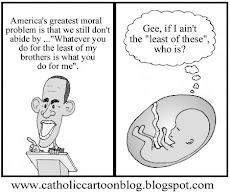

 Posts
Posts


